
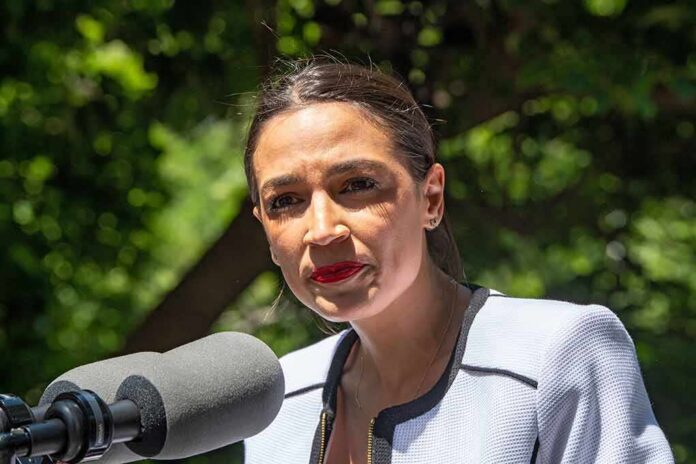
Senior Democratic strategists in key battlegrounds say Rep. Alexandria Ocasio-Cortez should stay off their campaign trails because “the polling is atrocious.”
Story Highlights
- Axios reports some swing-district Democrats asked AOC’s team not to visit.
- One senior strategist called her a “lightning rod” with poor polling in a swing seat.
- AOC allies argue she boosts turnout among young voters and communities of color.
- New York’s governor says AOC brings energy and momentum statewide.
What Happened and Why It Matters
Axios reported that some Democrats in the most competitive races asked Rep. Alexandria Ocasio-Cortez’s team to “stay away,” warning her presence could hurt their odds. One senior Democratic strategist working in a swing district said, “The polling is atrocious for her” and called her “a lightning rod.” The claims highlight a high-stakes choice for Democrats: energize the base with a national progressive star, or avoid backlash among moderate and independent voters in tight races.
Campaigns often make hard calls about surrogates when control of Congress is on the line. Party committees study local attitudes and decide who helps or hurts in each district. This case fits a familiar pattern in both parties. Big national figures can draw crowds and donations. They can also push swing voters away. That tension grows in places where a few thousand votes can decide the seat. Democrats appear to be calibrating district by district rather than using a one-size plan.
The Case Against AOC on the Trail
Strategists who want AOC kept out say her brand is too polarizing in purple areas. They worry local issues get drowned out by national culture fights when she visits. The Axios report quotes a senior strategist tying that fear to poor polling around her image in at least one key swing district. In a close race, even a small negative shift can flip a result. That is why some candidates prefer low-drama surrogates who reinforce a local, middle-class message.
Research on insurgent or strongly ideological figures shows mixed results outside friendly terrain. Analysts have found that progressive endorsements tend to do best in liberal strongholds and face headwinds where the electorate is more moderate or split. Campaign veterans say the goal in swing seats is to meet the median voter where they are. That often means narrowing the message to cost of living, public safety, schools, and local jobs, while toning down national ideological debates.
The Case for AOC as a Turnout Engine
AOC’s allies counter that she boosts turnout among young voters, communities of color, and disengaged Democrats. Local reporting on her upstate New York push said her goal is to mobilize those voters in and around Democratic areas. Her campaign has pointed to door-knocking, phone calls, and high-performing videos as tools that move voters toward Democrats, though those are campaign claims, not independent studies. Supporters argue attention and small-donor energy can lift close races.
AOC is test-running a Senate bid and swing-state Democrats just told her to stay home.
Candidates in the most competitive races are asking her team not to show up. One senior Democrat strategist put it bluntly: “The polling is atrocious for her. She’s a lightning rod.”
Montana… pic.twitter.com/nkB0Idc57S
— Patricia 🇺🇸 (@1109Patricia) September 28, 2026
New York Governor Kathy Hochul backed AOC’s statewide efforts, saying she brings energy and engages young people. She said she encouraged AOC and others to travel statewide to build momentum. That view reflects a different risk map: in blue or blue-leaning places, enthusiasm can matter as much as persuasion. The two strategies can both be true at once. Campaigns can invite AOC into friendly zones to spike turnout while steering her away from the most delicate swing districts.
What This Says About 2026 Politics
Both parties struggle with this balance. Base stars help raise money and fire up loyal voters. They can also alienate independents who feel national leaders ignore daily costs, crime, and local control. Voters across left and right now share a core worry: leaders play political games while families face rising bills and weaker services. The AOC debate shows how national brands can overshadow local needs, feeding the belief that politics serves insiders, not regular people.
How Voters Can Read the Signals
When a campaign declines a big-name surrogate, it often signals a persuasion-first plan. The candidates want to claim the middle and focus on inflation, taxes, energy costs, and public safety. When a campaign invites a polarizing star, it often signals a turnout-first plan. They want to flood the polls with base voters. In 2026, with President Trump in office and Republicans running Congress, Democrats in swing seats seem to be choosing persuasion in many places, while still chasing turnout elsewhere.
Sources:
x.com, msn.com, theguardian.com, cnn.com