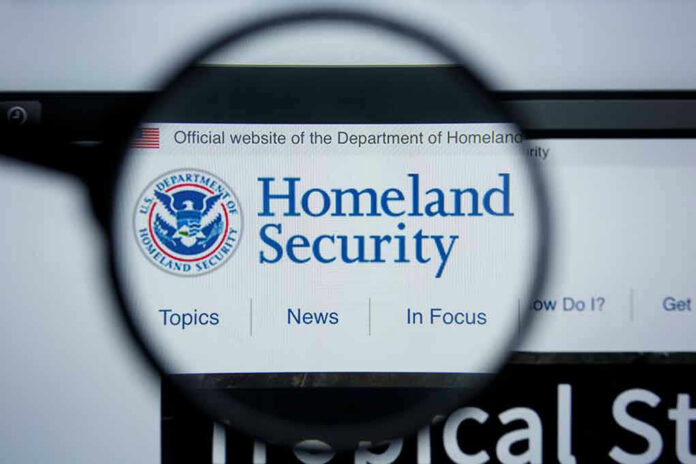
A federal judge halted Department of Homeland Security home visits tied to suspected noncitizen voting in nine states through Election Day.
Story Snapshot
- A preliminary injunction pauses Department of Homeland Security election sweeps in nine states through Election Day.
- The judge cited flawed government data that could wrongly target U.S. citizens.
- The court linked door-to-door questioning to possible voter intimidation under the Voting Rights Act.
- Department of Homeland Security defends its work as careful and focused on protecting citizens’ votes.
What The Court Ordered And Where It Applies
U.S. District Judge Araceli Martínez-Olguín issued a preliminary injunction on October 21, 2026. The order restricts Department of Homeland Security from running certain election-related field operations in California, Connecticut, Georgia, Missouri, Nevada, New York, Pennsylvania, Washington, and Wisconsin until after Election Day. The ruling pauses door-to-door interviews that target people flagged as possible noncitizen voters. The court allowed time for an appeal but kept the bar in place for the election period.
Reports describe agents visiting homes and asking residents about immigration status and recent voting. Those face-to-face interviews near an election created a clear record for the court to review. The court treated these visits as more than a database issue. It viewed them as direct contact that could chill legal voting or voter assistance activity during an active election cycle. The judge’s order is temporary and does not decide final liability.
Why The Judge Said The Data Was A Problem
Coverage of the ruling says the court found the government’s lists unreliable. The data, which flagged hundreds of thousands of potential unlawful voters, was described as known to include U.S. citizens by mistake. That error risk, the court reasoned, could leave lawful voters afraid of being questioned at home about their status and voting, which could deter them from taking part in elections. The ruling weighed these risks more heavily during the voting period.
The judge tied the interviews to the Voting Rights Act’s ban on intimidation, threats, or coercion of voters or those who help voters. The decision suggested that a program built on flawed matches, followed by home questioning, can cross a legal line when it creates a reasonable fear of government scrutiny for lawful voters. The record available to the public does not include the full order’s text, so some legal details remain limited to news summaries.
What The Government Says It Is Doing And Why
Department of Homeland Security leaders argue that the right to vote in federal elections belongs only to citizens and that federal law punishes noncitizen voting. The administration says investigators review internal records, voter rolls, and citizenship data from United States Citizenship and Immigration Services to find possible cases. Officials say the work is diligent and professional, with no quota, and that each unlawful voting case will be pursued.
🇺🇸 BREAKING: A federal judge has ordered DHS to stop its door-to-door voter fraud investigations in 9 states, finding that the agency relied on faulty data that could wrongly target American citizens.
The restrictions are set to remain through the Nov. 3 midterms, although the… https://t.co/tbUyj6rl5Q pic.twitter.com/x6LPmzaJUo
— NewsForce (@Newsforce) October 22, 2026
Recent reports say investigators reviewed tens of millions of records from government and independently obtained sources as part of this effort. Leaders frame the mission as protecting citizens’ votes from dilution by unlawful ballots. Those claims support a competing public interest: enforcing election law and deterring crime. The injunction puts that effort on pause in nine states while the court weighs the risk to lawful voters during the active election window.
How This Fits America’s Ongoing Election Fight
The clash highlights a recurring problem: when government uses big data to police elections, false matches can become real people at their front doors. Studies show confirmed noncitizen voting is rare compared to large counts generated by raw database sweeps. A Brennan Center review found only about 30 suspected cases out of 23.5 million votes in 2016, suggesting that error and bad matches can dwarf proven violations. That gap raises stakes for safeguards before any home visit occurs.
Both sides point to core values that many Americans share. Voters want secure elections and also want freedom from government intimidation. The judge said flawed lists and door knocks risk chilling legal voting, especially close to Election Day. Department of Homeland Security says careful enforcement prevents illegal votes that weaken citizens’ voices. With the written order not yet widely available and appeals possible, facts may evolve. For now, the court has put voter protection first during the election window.
What To Watch Next
Watch for an appeal or changes to Department of Homeland Security procedures. Clearer rules on data matching, proof standards, and interview scripts could shape what happens after Election Day. Transparency on error rates and how many citizens were wrongly flagged would inform public trust. Concrete examples, such as verified case files or sworn statements, would help test both the intimidation risk and the enforcement benefits claimed by the government.
Sources:
cbsnews.com, theepochtimes.com, ground.news, mezha.net, nytimes.com, news8000.com, independent.co.uk, justice.gov