Two weeks before the midterms, Hillary Clinton blasted Matthew McConaughey’s call to consider independents as “really unfortunate,” sharpening a bigger fight over who gets to shape voters’ choices.
Story Snapshot
- Clinton warned that backing independents now could help Republicans keep or gain power, limiting checks on President Trump.
- McConaughey urged voters to study their ballots and treat independents as real options, not spoilers.
- No evidence yet shows his message changed turnout or results in specific races.
- The clash reflects wider anger at a system many see as serving party elites over voters across the spectrum.
What Clinton Said And Why It Hit A Nerve
Hillary Clinton criticized Matthew McConaughey’s video urging support for independent candidates, calling the timing “really unfortunate” two weeks before the midterms. She argued that votes not cast for Democrats could help Republicans and leave President Trump with “two more unchecked years” to set the agenda. Her warning focused on practical election math, not ideology. In close races, even small shifts can matter. But her comments did not cite district-level data or specific contests where this risk was clearest.
Clinton’s argument echoed a common concern inside both major parties. Party leaders often fear “spoiler” effects in tight races under winner-take-all rules. The claim draws strength from past close elections, where third-party votes raised debate about margins. Still, the reports here do not provide proof that McConaughey’s call moved votes or lowered Democratic turnout. The coverage documents her quotes and the timing, but not measured impact in any race or state.
What McConaughey Asked Voters To Do
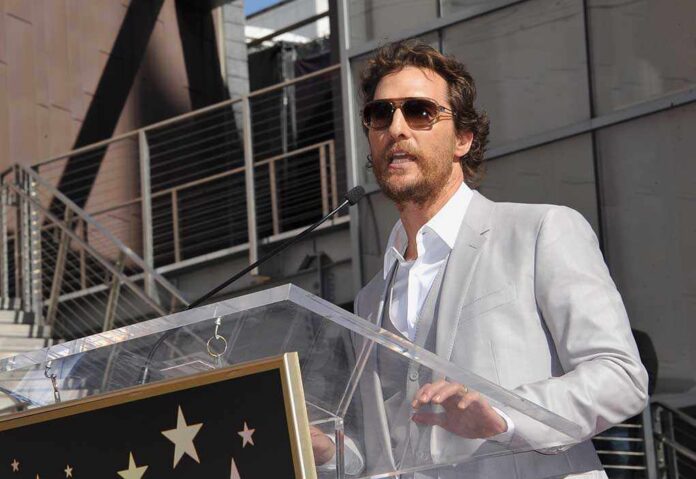
Matthew McConaughey told voters to look beyond the two major parties and study every name on their ballot. He said independents should be treated as potential winners, not as protests or spoilers. He stressed he was not endorsing any party or candidate. He framed it as “fairness and reality” and argued that more independent options could pressure both parties back toward the middle where many voters say they live.
McConaughey also said independent voters are now the largest political identity and deserve a real seat at the table. He described independents as “majority makers” who can push lawmakers to compromise when Congress is closely divided. Supporters like Senator Joe Manchin backed that view, saying his message about centering policy was “absolutely so accurate”. The message was broad and national, not tied to specific races or candidates.
What We Know And What We Don’t
The record shows a sharp timing clash: Clinton prioritized party control in the final sprint to voting, while McConaughey prioritized choice and ballot study. Reports quote both clearly, but they do not include full primary-source transcripts or race-by-race data to test either side’s strategic claims. There is also no polling or precinct analysis showing that his video shifted outcomes. That means the strongest facts are about their words, not about measurable election effects.
If Hilary Clinton raging about Matthew Mcconaughey endorsing independents doesn't convince you red vs blue is a uniparty. I don't know what will.
— sondiggity (@sondiggity) October 22, 2026
For voters across the spectrum, this fight taps a shared frustration. Many feel the system locks in two parties while everyday problems persist. Conservatives see elites pushing top-down agendas and ignoring costs. Liberals see power concentrated and inequality growing. Both worry that leaders care more about control than results. This moment underscores that divide: one side urges tactical unity to block the other, while the other side urges more choices to force accountability.
How This Fits The Bigger Pattern
Third-party or independent bids matter most when races are close, voter blocs overlap, and rules reward simple pluralities. That is why party figures warn about spoilers, while reform advocates press for more options or new voting systems. The Clinton-McConaughey exchange matches that script. It also shows how celebrity messages can spread fast without the granular district context campaigns rely on, leaving voters to weigh principle against strategy in the final days.
Sources:
thegatewaypundit.com, pjmedia.com, foxnews.com, us.headtopics.com, political.org, ground.news, washingtontimes.com