
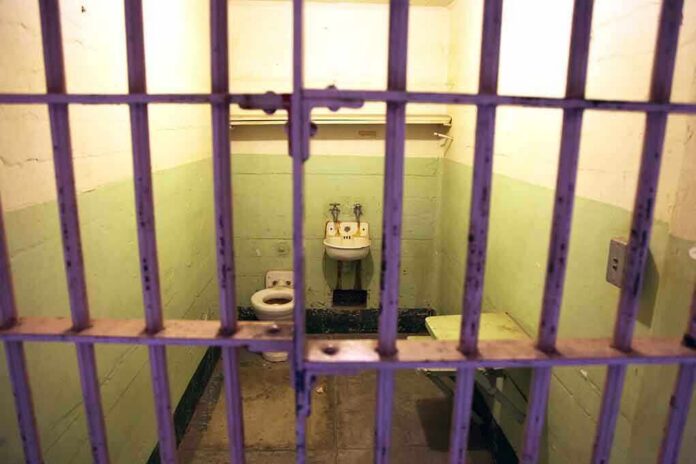
A convicted Bronx attacker is suing New York City for $1 million after he says he slipped in a Rikers Island shower with no mats, spotlighting basic safety lapses inside a failing jail system.
Story Snapshot
- The filing says missing shower mats at Rikers caused a December 2025 fall and elbow injury.
- Medical notes reportedly document a shower fall and elbow surgery, but deny head trauma.
- City jail standards require clean showers, yet do not mandate mats in the cited rule.
- A federal case found that water and no mats alone did not prove a constitutional violation.
What the lawsuit claims and what medical notes show
Newspaper reporting says River Jones filed a Bronx Supreme Court petition that blames his fall on the lack of mats in a Rikers shower at the George R. Vierno Detention Center in December 2025. The report quotes a physician record stating he had left elbow pain after slipping in the shower and later had elbow surgery. The same account says he denied head trauma and other injuries, despite broader injury claims in the petition.
The report focuses on one alleged hazard: a bare, wet shower floor without mats. It does not describe witnesses, video, or prior complaints that would show the City knew about a hazard and ignored it. That gap matters because premises claims often hinge on notice and causation, not simply that a fall happened. Without maintenance logs, inspection records, or officer reports, the case may face early challenges on proof.
What the City standards and case law say
New York City correctional standards require that people in custody have access to showers with hot and cold water and that the shower area be cleaned at least once a week. The cited provision does not say mats are required. The Department of Correction has also said it cleans showers daily and calls health and safety a top priority, citing heavy wear in older buildings that many people use every day.
Prior court rulings set limits. In a federal case involving a clogged drain, standing water, and alleged lack of mats at Rikers, the court held those facts did not show a constitutional violation. Negligence alone was not enough under federal civil rights law. That ruling does not bar a state negligence claim, but it shows courts often see wet floors and missing mats as ordinary risks without more proof of notice or extreme danger.
Why proof of notice and cause will decide the outcome
Slip-and-fall cases in jails often turn on whether officials created a hazard or had clear notice and failed to fix it in time. Records of earlier complaints, work orders, or inspections can make or break a claim. So can video or witnesses who describe the floor condition and warnings, if any. Without that kind of evidence, the City may argue this was an ordinary accident in a crowded, aging facility, not a legally actionable failure.
Some inmate cases have led to payouts when proof was stronger. The City paid $300,000 in a Rikers slip-and-fall after a jury was picked, showing these claims can carry real value. That result came after litigation pressure, not a final ruling on the merits. Each case stands on its own records: who knew what, when they knew it, and whether the hazard caused the injury that is claimed.
The bigger tension both sides feel
People on the right and left see the same pattern here. Taxpayers fear lawsuits over preventable hazards in public buildings. Families worry that even basic safety in government custody falls short. New York’s own rules expect clean, safe showers. Yet the system often cannot prove it fixed small problems before they became big ones. This case forces a simple test: do records show a known hazard that officials ignored, or only an accident in a hard place to run?
Sources:
nypost.com, ground.news, nycourts.gov