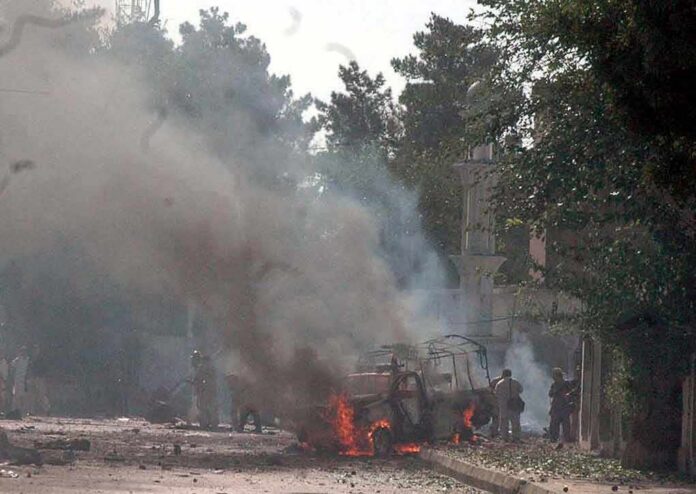
An armored vehicle carrying four Salvadoran technicians with Haiti’s new Gang Suppression Force was hit with explosives, set ablaze, and the men are now unaccounted for — the mission’s biggest attack to date.
Story Snapshot
- A Salvadoran armored vehicle was attacked near Port-au-Prince; four personnel are missing.
- The Gang Suppression Force separately confirmed an attack on its convoy.
- Helicopters sent to help drew gunfire as fighting flared in the area.
- No group has been publicly named as responsible for the ambush.
What Happened in Croix-des-Bouquets
Officials from El Salvador said four aviation technicians were returning to camp when attackers struck their armored vehicle with explosives in Croix-des-Bouquets, a community near Port-au-Prince. The vehicle caught fire, and the soldiers reportedly escaped before contact was lost. The Armed Forces of El Salvador reported the incident on October 19. Associated Press described it as the biggest attack since the international mission began operations in Haiti. The Gang Suppression Force confirmed an attack occurred, in a separate statement.
El Salvador said helicopters dispatched to locate the team came under fire from armed individuals as ground clashes continued. The military said intense fighting in the zone made search efforts by air and land hard to sustain. Media reports placed the incident in Croix-des-Bouquets or nearby Santo, both within the West Department around the capital. Authorities have not reported confirmed casualties. The four Salvadorans remain unaccounted for, and officials say they believe the men initially survived the ambush.
Why This Attack Matters for the Mission
Associated Press framed this as the first major strike on the international force, which aims to back Haiti’s National Police and push gangs out of key corridors. Such an attack tests force protection and logistics early in the deployment. It also signals that armed groups can mass firepower, use explosives, and challenge armored movement near the capital. The Gang Suppression Force acknowledgment confirms an operational clash, even as it did not publicly note the missing personnel in its statement.
Haiti’s armed groups are not isolated bands. Analysts describe them as tied into political and economic networks, including smuggling, extortion, and control of roads and ports. Those links help them raise money, buy weapons, and recruit. That structure makes them resilient against short missions and quick raids. It also explains why they fight hard to hold territory that funds their operations and influence.
The Larger Security Picture in Haiti
Past international missions in Haiti brought short-term drops in violence, but gains often faded when deployments wound down. Gangs adapted, rebuilt alliances, and filled gaps left by weak state institutions. Without lasting reforms in policing, courts, and governance, foreign troops face a cycle of clearing areas that later fall back under armed control. Policymakers who study Haiti warn that security gains must pair with durable reforms to stick.
🇭🇹 Four Salvadoran military aviation technicians remain missing after armed gangs ambushed their armored vehicle in Haiti. The vehicle burned, and helicopters attempting rescue took heavy fire. The missing El-Salvadoran troops serve with the international Gang Suppression Force. pic.twitter.com/NslfHE1cob
— freeledger (@thefreeledger) October 19, 2026
United Nations reporting this year described how criminal groups extended their reach beyond the Port-au-Prince metro area, further eroding state authority. The spread of control disrupts daily life, trade, and access to basic services. These conditions create pressure on any foreign-backed force. Units must secure routes, hold ground, protect aid and police, and support a government that struggles to govern contested spaces.
What to Watch Next
Commanders will work to locate the missing Salvadoran personnel while limiting risk to rescue teams. The Gang Suppression Force will likely review convoy tactics, explosive defenses, and air-ground coordination. Officials may also adjust patrol patterns to avoid predictable routes. Confirmation of the attackers’ identity, the weapons used, and the exact site will shape next steps. Clear facts on those points have not yet been released by authorities.
Sources:
abcnews.com, apnews.com, aljazeera.com, haitiantimes.com, miamiherald.com, ecoi.net, tnsr.org