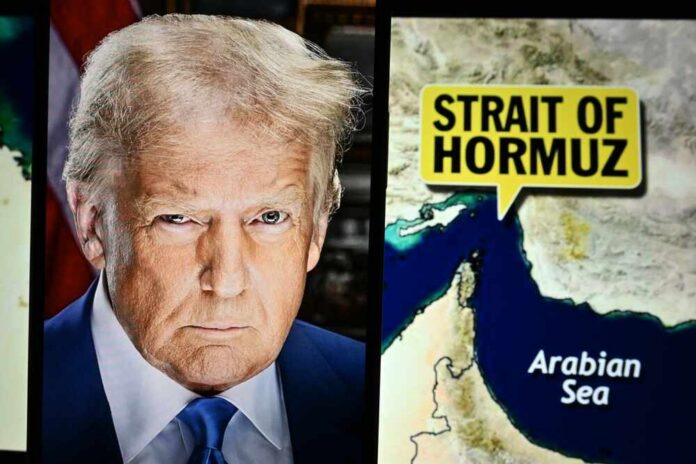
President Trump threatens a naval blockade of the world’s most critical oil chokepoint after Iran rejects U.S. demands, risking global energy chaos and potential military confrontation.
Story Snapshot
- Trump signals potential naval blockade of Strait of Hormuz following failed 21-hour ceasefire negotiations with Iran
- U.S. minesweepers already deployed as Trump claims military has “defeated” Iranian naval and air capabilities
- Hundreds of tankers stranded as shipping paralysis threatens one-third of global seaborne oil supplies
- China reportedly preparing weapons transfers to Iran, adding major power dimension to escalating crisis
Blockade Threat Follows Diplomatic Collapse
Twenty-one hours of ceasefire negotiations in Islamabad between U.S. and Iranian representatives collapsed without agreement, prompting Trump to amplify threats of decisive military action. The President shared an article on Truth Social describing a naval blockade as his “Trump card” if Tehran refuses to accept American terms. Vice President JD Vance announced the failure of peace talks, with the administration presenting clear red lines that Iran flatly rejected. Trump’s subsequent warnings emphasize overwhelming force, stating the U.S. is “loading up ships with the best ammunition” as negotiations crumble.
Strategic Waterway Becomes Battlefield
The Strait of Hormuz represents the world’s most critical maritime chokepoint, carrying approximately one-third of global seaborne oil through its narrow passage. U.S. Navy minesweepers have already begun clearing operations in the waterway, according to Trump’s statements. The President claims American forces have “defeated” Iran’s 158-ship navy, air force, anti-aircraft systems, and radar capabilities. However, conflicting reports muddy the actual military situation, with Iranian state television denying any U.S. vessel passage while American officials claim successful crossings. Iran warned one U.S. Navy destroyer it would be targeted within 30 minutes, forcing the vessel to reverse course.
Iran Rejects Terms, Proposes Controversial Tolls
Tehran has dismissed the blockade threat as a “self-made problem” created by Washington’s refusal to accept diplomatic solutions. Iran’s Supreme Leader declared “new management” over the strategic waterway, signaling Tehran’s assertion of control over the passage. Iranian officials proposed implementing controversial toll collection on vessels transiting the strait under Iranian management, a direct challenge to freedom of navigation principles. Security Chief Abraham Azizi maintains Iran possesses rapid targeting capabilities against any hostile forces. The regime insists diplomacy, not military domination, offers the only viable path forward, while hundreds of commercial tankers remain stranded.
China Factor Complicates Regional Crisis
Reports indicate China is preparing to send air defense systems and MANPADs to Iran through third-party routes, adding a major power dimension to what began as a bilateral standoff. Trump’s blockade strategy appears designed to apply pressure not only on Tehran but also on Beijing’s trade and energy flows with Iran. This development mirrors previous U.S. naval blockades against Venezuela, which inflicted severe economic damage on the targeted regime. The involvement of Chinese weapons transfers raises the stakes considerably, potentially escalating tensions beyond regional containment. Meanwhile, Trump noted the conspicuous absence of NATO support in the crisis, leaving American forces to confront the challenge largely alone.
Here We Go: Trump Announces Major US Action in Strait to Shut Down Iranhttps://t.co/nNbIoqhkDq
— RedState (@RedState) April 12, 2026
Global Commerce Faces Extended Disruption
The shipping industry faces severe paralysis with hundreds of tankers stranded and few willing to risk entering the contested waterway. Supply chains for oil, fertilizer, and other critical commodities face prolonged disruption that threatens global markets. Energy experts warn that even if the strait reopens immediately, normalization could require months of recovery time. Oil-importing nations confront potential price spikes while the standoff continues without resolution. The economic fallout extends beyond energy markets, affecting international commerce and manufacturing dependent on Persian Gulf shipping routes. Americans watching gas prices and inflation understand that Washington’s power plays in distant waters have real consequences for family budgets at home.
Sources:
Fox News: Trump Military Action Warning