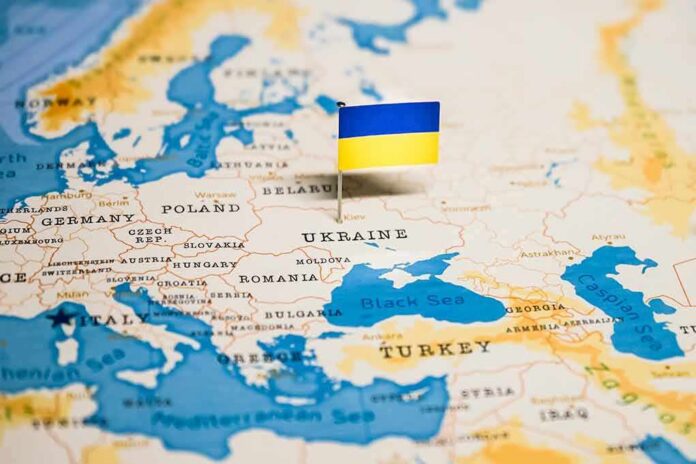
In wartime Ukraine, the dismissal of army chief Oleksandr Syrsky shows how street pressure, elite conflict, and presidential authority can converge in a single decision without leaving a clean line of causation behind.
Key Points
- Oleksandr Syrsky was removed as commander-in-chief after several days of coordinated protests demanding his dismissal and the reversal of a contentious defense reshuffle.
- President Volodymyr Zelensky appointed Major General Mykhailo Drapatyi as Syrsky’s replacement, a choice widely described as aligning with protesters’ preferences and with a broader leadership reconfiguration.
- Major international outlets framed the move as Zelensky “bowing to pressure” from the streets amid a deepening political crisis, but the presidency has offered only a general, “renewal of leadership” rationale.
- The evidence base supports a strong correlation between protests and the timing of Syrsky’s removal, while still leaving room for strategic restructuring and internal military tensions as significant drivers.
From defense reshuffle to army-chief dismissal: how the crisis built
The dismissal of Syrsky did not come out of nowhere; it followed a cascade of decisions and grievances that turned what might have been an internal reshuffle into a public political crisis. The sequence began with Zelensky’s removal of Defense Minister Mykhailo Fedorov, a young, tech-oriented figure who had cultivated a reformist profile and clashed repeatedly with the top command, including Syrsky. Fedorov’s ouster triggered protests in Kyiv and other cities under martial law—unusual both for their persistence and their direct focus on wartime leadership rather than broader socio-economic complaints.
Demonstrations were not isolated flash mobs. Reporting from Ukrainian and international outlets describes “mass protests” across several urban centers, with crowds outside the presidential administration on Bankova Street chanting for Syrsky’s dismissal and for a rethink of the defense reshuffle. In this context, protesters framed Syrsky not merely as a senior officer but as a symbol of an older, Soviet-trained command culture they believed was obstructing Fedorov’s modernization agenda. The protests thus bundled personnel grievances with a substantive critique of warfighting strategy and civil–military relations.
What exactly changed: Syrsky out, Drapatyi in
On July 21, Zelensky announced in a Telegram video that Oleksandr Syrsky was being removed as commander-in-chief and that Major General Mykhailo Drapatyi would take over as head of the armed forces. The Kyiv Independent and other outlets confirmed that this was formalized via presidential decrees, underscoring that it was not a temporary suspension but a full change of command. In the same address, Zelensky thanked Syrsky “for Ukraine’s strong front-line positions,” language that acknowledges his role but avoids any explicit critique or detailed explanation of the dismissal.
Drapatyi was not a neutral, unknown figure. Coverage consistently described him as a younger, battle-hardened commander associated with a “new generation” of Ukrainian officers, and as someone favored by Fedorov and sections of civil society pushing for reform. FRANCE 24 went further, calling the appointment “a victory for the protestors” and noting that Drapatyi was widely seen as the candidate protesters wanted to see in Syrsky’s place. That alignment between street demands and the eventual personnel outcome is central to the argument that Zelensky yielded to public pressure.
How strong is the “Zelensky blinked” narrative?
Several major outlets took the protest angle and made it the backbone of their interpretation. NBC News reported that Zelensky “fired his commander-in-chief… bowing to pressure” after the removal of Fedorov created the fiercest leadership crisis of his presidency. Le Monde described Zelensky as “forced” to dismiss Syrsky, recounting how demonstrators issued an ultimatum that he fire the general by a specific date and highlighting that he acted before that deadline expired. The Kyiv Independent likewise situated the dismissal “amid ongoing mass protests… in which demonstrators have demanded that Syrskyi be removed from his post.”
Other reporting reinforces the sense that the presidency was responding to a pressure campaign rather than treating protests as background noise. A Turkish outlet described Zelensky, facing a third consecutive day of protests, telling citizens that he was “listening to what people are saying” and had met with both Fedorov and Syrsky while promising that decisions about the army were being worked out. A former U.S. ambassador to Ukraine interpreted the episode as evidence that Zelensky was “listening and consulting” under protest pressure, explicitly connecting Syrsky’s dismissal to the days of demonstrations sparked by Fedorov’s removal.
Correlation versus causation: what the record does and doesn’t show
Despite the strength of this storyline, the evidentiary base is more circumstantial than definitive. The timing is clear: protests ramped up in the wake of Fedorov’s ouster; demonstrators demanded Syrsky’s dismissal and a change in military leadership; Zelensky first signaled that personnel decisions were under review; then he removed Syrsky and installed Drapatyi. That chronological linkage—protests first, dismissal second—would satisfy many observers as proof of causation in a political analysis, but it falls short of documentary confirmation.
There is no publicly available record of internal presidential or General Staff deliberations attributing the decision directly to protest pressure. No leaked memos, meeting minutes, or sworn testimony from aides or commanders indicate that protests were the decisive factor rather than one of several considerations. Zelensky’s own statements, as quoted, frame the change as a decision he has “decided” upon, thank Syrsky, and speak in general terms about reconfiguring the General Staff, but they do not cite the streets as the driver. This is consistent with standard wartime political practice: leaders rarely acknowledge being compelled by protest, even when timing suggests they are responding.
Internal tensions and strategic reshuffle: the counter-explanation
Alongside the protest narrative runs a quieter but credible counter-explanation: that Syrsky’s removal was a component of a broader strategic reshuffle driven by tensions between civilian and military leadership and by the demands of a long, attritional war. Months of reporting on Ukraine’s wartime command structure have described recurring friction between reformist civilians and traditionalist officers, especially around mobilization, casualty management, and the pace of technological modernization.
CNN, the Washington Post, and others have framed earlier top-level dismissals—most notably of General Valerii Zaluzhnyi in 2024—as efforts to “reboot the war effort,” resolve protracted leadership rifts, or realign command with Zelensky’s preferred operational approach. NBC News and other outlets have covered dismissals of mid-level commanders tied explicitly to battlefield losses and performance concerns. Against that backdrop, replacing Syrsky with Drapatyi looks less like a one-off concession and more like the continuation of a pattern in which Zelensky periodically reconfigures his security team to tackle strategic disagreements or perceived stagnation.
Some reporting on Syrsky’s case reinforces this structural view. International analyses noted “divisions” within the military hierarchy after Fedorov’s departure and emphasized disagreements over tactics and modernization as sources of crisis, not just the protests. Zelensky’s defense of the defense reshuffle—as a move to “build a team that can work together”—points toward internal cohesion issues. The appointment of Drapatyi, widely described as more attuned to new technologies and battlefield innovation, can plausibly be read as an attempt to resolve that conflict.
Weighing the two narratives: pressure and prerogative intertwined
When you put the two strands of evidence side by side, the most defensible reading is not that one entirely displaces the other but that they intersect. The protests were clearly large and sustained enough, in wartime conditions, to become a major variable in elite decision-making; thousands of people challenging the command structure in a country under invasion is inherently politically salient. Zelensky publicly acknowledged that Ukrainians were “justified” in protesting Fedorov’s dismissal and spoke of listening to them, which makes it difficult to treat the protests as irrelevant background.
At the same time, nothing in the record proves that the presidency had no prior intention of altering the command structure or that military-performance concerns and elite rifts were secondary. Evidence from previous dismissals and ongoing debates about mobilization, casualty rates, and technological adaptation suggests that Zelensky has been engaged in a longer-running project of reshaping the armed forces leadership. In such a context, protests might have accelerated the timing, hardened the choice of Drapatyi over other candidates, or made a leadership change politically necessary sooner than planned, without being the sole cause.
Why this episode matters beyond Ukraine
The Syrsky dismissal illuminates a broader pattern that recurs in wartime democracies and semi-democracies alike: high-profile military personnel changes become focal points for competing stories about who really wields power, and why. One story emphasizes that leaders cave under public pressure, casting them as reactive or weak. Another underscores their constitutional authority and strategic judgment, highlighting internal coherence and performance. Both stories can draw on partial truths, especially when the decision-making process is opaque by design.
In Ukraine’s case, the stakes are high. For domestic audiences, the episode tests whether wartime protests can influence core security decisions without destabilizing the war effort. For foreign observers and partners, it raises questions about the resilience and adaptability of Ukraine’s civil–military relations as the conflict drags into its fourth year. For Zelensky himself, it underscores the risk that repeated reshuffles of top commanders—however justified operationally—can be read as crisis management rather than a coherent long-term strategy.
What would settle the question—and why we may not get that clarity
Definitively adjudicating whether Zelensky “blinked” under protest pressure or pursued a planned strategic reshuffle would require access to information that is unlikely to be public any time soon: internal presidential communications, General Staff deliberations, and candid testimony from the participants. Wartime secrecy, institutional self-protection, and the political sensitivity of admitting external pressure all militate against such transparency.
This means that the Syrsky case will probably remain a textbook example of how correlation, public framing, and partisan interpretation can harden into narrative in the absence of direct evidence. Analysts and citizens alike are left to weigh the available facts: sustained protests demanding exactly the change that occurred; a president who acknowledges listening to protesters but speaks the language of leadership renewal; a replacement who fits both the street’s preferences and strategic modernization goals; and a war effort that has repeatedly seen top commanders replaced under a mix of performance, politics, and pressure. The decision was real; its meaning will be argued for years.
Today’s headlines: President Volodymyr Zelensky has dismissed Chief of the Armed Forces Oleksandr Syrsky after a wave of street protests that began following Defence Minister Mykhailo Fedorov’s removal. @CitedCurrent
— Cited Current (@CitedCurrent) July 24, 2026
Sources:
youtube.com, washingtonpost.com, cnn.com, bbc.com, wsws.org, france24.com, abcnews.com, atlanticcouncil.org, nbcnews.com, carnegieendowment.org, wsj.com, kyivpost.com