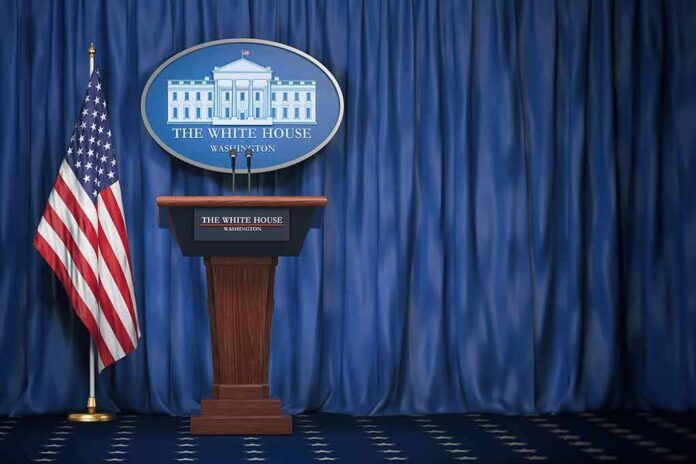
Behind closed doors at the White House, President Trump and President Zelenskyy quietly reopened a peace track that could reshape the Ukraine war — if the promises made there ever turn into real action.
Story Snapshot
- Zelenskyy called his latest White House session with Trump a “good meeting” focused on air defenses and restarting diplomacy with Russia.
- The talks revived a stalled process around a 20‑point peace and security plan that both leaders say is mostly agreed but still not finalized.
- The meeting fits a pattern: big words about “progress” and security guarantees, but few firm, public details that voters can verify.
- For many Americans, another closed‑door summit looks less like transparency and more like the deep state managing war and peace out of public view.
Trump and Zelenskyy Return to Closed-Door Diplomacy
On Tuesday, Ukrainian President Volodymyr Zelenskyy met President Donald Trump for about an hour of closed-door talks at the White House as Ukraine sought renewed military and diplomatic support in its war with Russia. Zelenskyy said afterward that the two leaders discussed licenses for Ukraine to produce Patriot air defense interceptors and “several other ideas” to help protect the country. He added that they spoke about diplomacy and that the process “must be reinvigorated,” signaling a push to restart stalled talks.
Zelenskyy also thanked the United States for what he called its “firm support,” even as shells and missiles continue to hit Ukrainian cities and front lines grow more tense. The meeting comes after months of heavy Russian strikes on Kyiv and other areas, along with Ukrainian long-range drone attacks deep into Russian territory. Trump has kept up separate calls with Russian President Vladimir Putin and Zelenskyy, presenting himself as the broker who can end the conflict on terms that protect U.S. interests.
Progress Claims: Security Guarantees and a 20-Point Plan
The new White House talks sit on top of a diplomatic track that has been slowly taking shape for months, centered on a 20-point peace and security framework. In earlier Florida meetings, Trump and Zelenskyy said that this draft deal to end the war was “about 90%” agreed, with both men describing territorial questions like the Donbas region as “very tough.” Reporting from Florida also noted that the United States had offered Ukraine security assurances similar to those given to some North Atlantic Treaty Organization members, with Trump saying a separate 15‑year guarantee was “nearly 95%” done.
Ukraine’s negotiators, working with Trump’s envoys Steve Witkoff and Jared Kushner and European officials, have described recent rounds in Berlin as “tangible progress.” Zelenskyy has said at times that the security guarantees are “100% agreed,” even while admitting that the exact terms are not fully clear and would need another meeting with Trump and European leaders. At the same time, he has pushed for stronger and longer protections, reportedly asking for guarantees that could stretch up to 50 years, far beyond what Trump has put on the table so far.
History of Heated Meetings and Thin Public Detail
This latest calm, closed-door meeting contrasts sharply with the leaders’ infamous Oval Office clash in February 2025, when a televised session ended in a heated argument and the collapse of a planned U.S.–Ukraine mineral resources agreement. That earlier meeting was supposed to lock in U.S. backing in exchange for access to Ukraine’s critical minerals, but the talks ended abruptly with no clear resolution. A planned joint news conference was canceled, raising doubts in Ukraine and at home about how stable U.S. support really was.
Even friendlier encounters have often ended with upbeat language but few specific commitments that the public can see. After a high-profile Washington summit with Zelenskyy and European leaders, the British Broadcasting Corporation reported that by day’s end there were “no tangible commitments” on security guarantees or peace terms, despite optimistic statements from Trump. In other rounds, Trump has promised to arrange a meeting between Putin and Zelenskyy and discussed massive weapons financing plans, yet Zelenskyy has had to remind reporters that “no formal agreement has been established yet.”
Why These Talks Matter — and Why Many Americans Distrust Them
For Ukrainians, every new meeting offers a chance to lock in air defenses, security guarantees, and a path out of a grinding war that has lasted more than four years. For Americans, though, the pattern feels familiar: closed-door negotiations, vague talk of “progress,” and deals that never quite reach daylight. Even National Public Radio coverage of the Florida talks noted that, while Zelenskyy claimed the security guarantees were fully agreed, the details remained “ambiguous” and more time was needed. That gap between big promises and clear, enforceable terms feeds public suspicion.
Zelenskyy has ‘good meeting’ with Trump at White House https://t.co/ZbmTKrrgGE
— UNB – United News of Bangladesh (@unbnewsroom) July 29, 2026
Many conservatives see these summits through the lens of past foreign policy failures, globalist deals, and endless spending that did little to secure borders or lower energy and food costs. Many liberals see them as another example of powerful leaders making life-and-death choices while the gap between rich and poor widens at home. Both sides increasingly share one core worry: decisions about war, peace, and billions of taxpayer dollars are being made by a small circle of elites, far from transparent public oversight. When Trump interrupts broader White House meetings to call Putin or narrows talks to a “leaders only” format, as some reports describe, it reinforces the sense that ordinary citizens are spectators, not participants, in choices that will shape their security and their wallets.
Sources:
facebook.com, youtube.com, nbcnews.com, bbc.com, abcnews.com, npr.org, aljazeera.com, cfr.org, whitehouse.gov