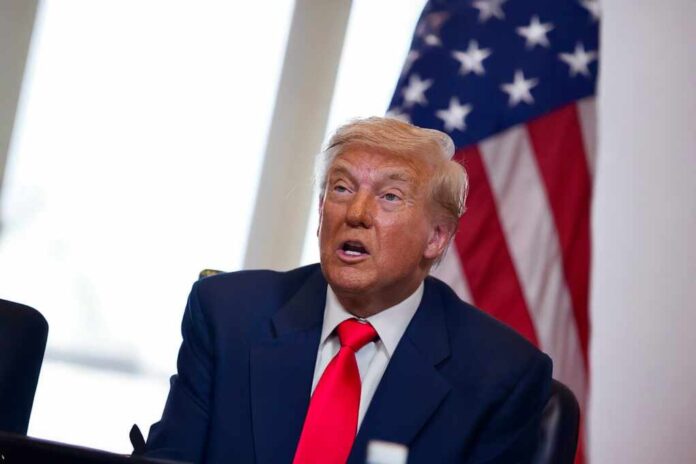
President Donald Trump’s push to reintroduce the death penalty in Washington, D.C., has reignited a constitutional clash over federal authority and local self-rule.
At a Glance
- Trump proposed capital punishment for D.C. murder cases during an August Cabinet meeting.
- The plan followed a homicide that ended a rare 12-day period without murders.
- Federal officers were recently deployed to D.C. in a crime reduction effort.
- The District abolished the death penalty in 1981 and has resisted reinstatement.
- Constitutional disputes loom over federal intervention in local criminal law.
Trump’s Call for the Death Penalty
In early August 2025, President Trump announced plans to enforce the death penalty for murder convictions in Washington, D.C., arguing the move was necessary to strengthen deterrence against violent crime. The announcement came after the killing of a 31-year-old man in Southeast D.C., which broke a nearly two-week stretch without reported homicides.
The administration has framed its proposal as a response to what it sees as inadequate local enforcement. Federal officials emphasized that Washington’s unique constitutional status gives the federal government greater latitude to impose such measures.
Watch now: Trump Wants Death Penalty For All Murder Cases in D.C. · YouTube
Federal Authority vs. Local Law
Earlier in the month, the Trump administration deployed a surge of federal law enforcement personnel to the District. Officials linked the presence of these forces to the temporary decline in homicides, although the latest killing reignited debate about the city’s ability to manage its own safety.
D.C. abolished capital punishment in 1981, with multiple attempts to reinstate it since failing. Unlike states, Washington, D.C., operates under the Home Rule Act of 1973, which provides partial self-governance but ultimately leaves Congress with broad authority over the city’s laws. This has long been a point of contention, with residents and local officials seeking expanded autonomy.
Constitutional Challenges and Implications
The Trump administration’s proposal is expected to face constitutional scrutiny and legal challenges. Opponents argue that overriding D.C.’s abolition of the death penalty undermines democratic self-rule, a principle many residents have fought to secure for decades. While the Supreme Court has consistently upheld Congress’s sweeping powers over the District, applying those powers to criminal sentencing has drawn strong opposition from civil rights organizations and local leaders.
Proponents of capital punishment contend that harsher penalties are needed to deter violent crime and deliver justice for victims. Critics counter that the death penalty carries risks of wrongful convictions, disparate application, and moral concerns. The debate in D.C. mirrors a broader national divide over both the legitimacy of the death penalty and the boundaries of federal authority in local governance.
Sources