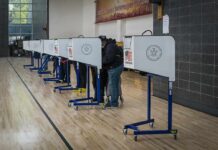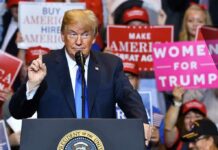
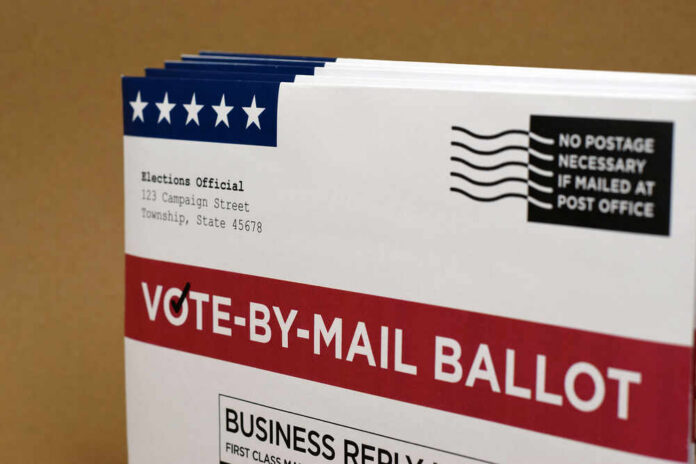
President Trump has signed a sweeping executive order restricting mail-in voting nationwide, igniting fierce debates over federal overreach into state election powers and true election integrity.
Story Highlights
- Trump signs order on March 31, 2026, mandating USPS barcodes on mail ballots and federal voter lists to prevent alleged fraud.
- States like California vow court battles, citing unconstitutional intrusion on their election authority under the Constitution.
- Builds on 2025 pledges, targeting Democrat-favored mail-in amid Trump’s fraud claims, despite expert consensus on legal limits.
- Affects millions reliant on mail voting, including elderly, rural voters, military, raising concerns of suppression versus security.
Trump Signs Order Targeting Mail-In Voting
On March 31, 2026, President Donald Trump signed an executive order imposing federal controls on mail-in voting. The directive requires the U.S. Postal Service to use special barcodes on ballot envelopes for tracking eligibility. States must submit voter lists to federal agencies like Homeland Security and Social Security for verification before ballots transmit. Trump framed this as essential to stop “massive cheating,” echoing his longstanding concerns from the 2020 election. Commerce Secretary Howard Lutnick defended the measures as securing accurate elections.
Federal Mandates Challenge State Authority
The order compels states to align with USPS processes if using federal mail for ballots, drawing lists from citizenship records and databases. It bars transmission of ballots not matching verified citizen lists aged 18 or older. California leaders immediately condemned it as an illegal power grab, promising litigation to protect their constitutional right to run elections. They highlighted mail ballots’ safety, relied on by millions, especially ahead of midterms where Republicans face challenges. This pits federal enforcement against state sovereignty.
Legal Experts Question Presidential Power
Election law experts assert the president lacks authority to dictate state election methods. Northeastern professor Jeremy Paul previously noted no executive order can eliminate mail-in voting or overhaul machines without Congress, a near impossibility. The Constitution assigns states control over election times, places, and manners. Protect Democracy and Brennan Center analyses confirm Trump’s March 2025 precursor order faced lawsuits for similar overreach, targeting grace periods with century-old precedents. Courts will likely block this swiftly, per former Justice Department lawyers.
White House spokesperson Harrison Fields emphasized voter ID and anti-cheating, countering Democratic “erosion of faith.” Yet fraud claims remain unproven, with no evidence of widespread issues despite Republican gains in 2024 mail voting. Military and overseas voters under UOCAVA face risks from disrupted processes. Litigation costs mount as states resist, potentially delaying 2026 preparations.
Impacts on Voters and Election Integrity
Up to 21 million ID-less citizens, elderly, rural, and military voters could face barriers, disproportionately affecting mail-reliant groups. Short-term legal fights risk confusion; long-term, partial enforcement via Attorney General actions might suppress turnout while boosting GOP in-person preferences. Conservatives cheer restored trust after 2020 suspicions, but endless court battles erode confidence further. States bear added admin burdens, and election tech firms see targeted changes like watermark paper pushes. True security demands constitutional paths, not unilateral edicts.
Sources:
Trump pledges effort to eliminate mail-in voting
Trump says he’ll sign an executive order to get rid of mail-in voting
Status of Trump’s Anti-Voting Executive Order
Preserving and Protecting the Integrity of American Elections