A coordinated wave of over 20 bombings across southwest Colombia has killed seven people and wounded dozens more, exposing the fragility of President Petro’s peace negotiations with guerrilla factions that critics say have emboldened terrorist groups rather than disarming them.
Story Snapshot
- Bus explosion outside police station in Villa Rica killed 7, injured 28 in coordinated attack across Cali region
- Estado Mayor Central, a FARC dissident faction, suspected in 20+ bombings targeting police and government buildings
- Attacks followed June 7 assassination attempt on presidential candidate Miguel Uribe Turbay, shot twice in the head
- Violence undermines Petro administration’s “total peace” policy as guerrillas pressure for concessions while escalating urban warfare
Coordinated Terror Campaign Strikes Major Colombian Hub
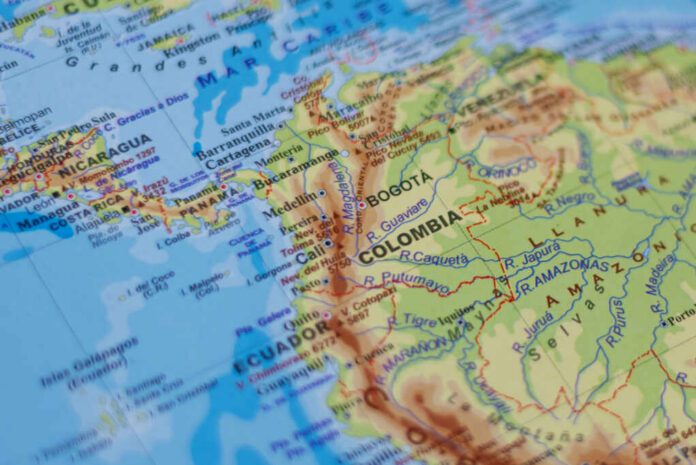
Colombian authorities reported more than 20 explosions and armed attacks across southwest Colombia with the deadliest incident occurring when a bus detonated in front of a police station in Villa Rica. The coordinated assault killed at least seven people, including two police officers, and injured 28 others across Cali and surrounding towns in Cauca and Valle del Cauca departments. The attacks utilized multiple methods including car bombs, motorcycle explosives, firearms, and possible drone strikes targeting police stations, municipal buildings, and civilian areas. Military forces prevented six additional attacks and captured two suspects allegedly preparing explosives, though the specific perpetrators remain unconfirmed.
FARC Dissidents Blamed Amid Failed Peace Talks
Colombian authorities attributed the attacks to Estado Mayor Central, a guerrilla faction that rejected the 2016 FARC peace agreement and controls drug trafficking and extortion networks in the southwest. EMC issued a statement on June 10 warning civilians to avoid police installations and accusing the government of failures in peace negotiations, though the group did not explicitly claim responsibility for the bombings. Army intelligence linked the attacks to an EMC leader without providing evidence, reflecting the murky attribution that has plagued Colombia’s security crisis. The dissidents have expanded their urban operations since 2016, challenging government authority in areas previously considered secure from guerrilla warfare.
Petro’s Peace Policy Under Scrutiny
The violence places President Gustavo Petro’s signature “total peace” initiative under intensified scrutiny from critics who argue that negotiations with armed groups have encouraged rather than reduced violence. Vice President Francia Márquez condemned the attacks and pledged to redouble security efforts, while Valle del Cauca Governor Dilian Francisca Toro urged Petro to convene a Security Council meeting. Experts including Elizabeth Dickinson of the International Crisis Group described the assault as a “well-coordinated offensive” demonstrating EMC’s alarming capacity to strike Colombia’s third-largest city. The attacks occurred just three days after an assassination attempt on presidential candidate Miguel Uribe Turbay, who remains in critical condition after being shot twice in the head, with unverified claims of guerrilla involvement further inflaming political tensions.
Economic and Security Implications for Southwest Region
Cali, an economic and tourism hub, faces disrupted business activity and investor confidence following the attacks. The bombings evoke memories of Colombia’s darkest years in the 1980s and 1990s when cartel and guerrilla violence terrorized urban centers with coordinated bombings. Analysts warn that the current escalation could signal a return to that era if the government fails to reassert control. The short-term impact includes heightened public fear and massive security deployments, while long-term consequences threaten to undermine peace negotiations entirely. For ordinary Colombians caught between government forces and armed groups, the violence represents the failure of political elites to deliver the stability promised after decades of conflict and the billions spent on security.
Explosive device on a bus kills 7 in southwest Colombia as violent attacks persist (Colombia) https://t.co/73ZNgy27tz
— Castanet (@CastanetNews) April 26, 2026
Cali Mayor Alejandro Eder declared the situation “under control” by June 10 evening after deploying additional security forces, though no further attacks were immediately reported. The government’s response highlights the ongoing challenge of protecting civilian populations while pursuing negotiations with groups that maintain territorial control through violence and intimidation. As both conservative and progressive Colombians question whether their leaders prioritize political survival over genuine solutions, the bombings underscore a broader crisis of governance where armed factions exploit weakness and ordinary citizens pay the price for failed policies.
Sources:
Multiple explosions reported in Colombian city of Cali – CNN
Police report 16 bomb, gun attacks across south-west Colombia; three dead – The Straits Times