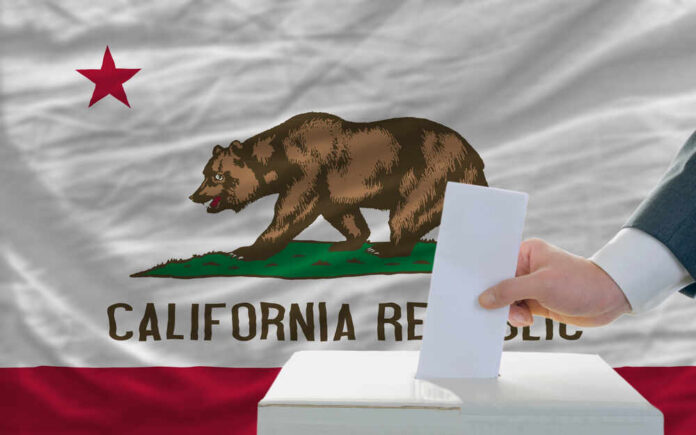
Republicans are mounting their most serious challenge in decades to flip California’s governorship in 2026, a development that could shatter the Democratic stranglehold on America’s most populous state and signal a dramatic political realignment.
Story Snapshot
- GOP strategists see a real opportunity to win California’s 2026 gubernatorial race for the first time in years
- California has been a Democratic fortress since 1992, with Republicans last winning statewide electoral votes in 1988
- Political analysts note growing voter frustration with entrenched one-party rule could create an opening for change
- A Republican victory would represent a seismic shift in American politics and challenge assumptions about blue state dominance
The Golden State’s Political Landscape Shifts
California has functioned as an impenetrable Democratic stronghold for over three decades, delivering its massive 55 electoral votes to every Democratic presidential candidate since Bill Clinton in 1992. The last Republican to carry the state was George H.W. Bush in 1988. Trump’s 2016 performance marked the weakest Republican showing since 1856, capturing just 31.5 percent of the vote. This history makes current Republican optimism about the 2026 gubernatorial race particularly noteworthy, as it suggests fundamental changes may be underway in voter sentiment across the nation’s largest state.
Why Republicans See an Opening
Political observers are describing the 2026 gubernatorial race as something Californians haven’t heard in years: a competitive contest where Republicans have a genuine chance to win. The buzz represents more than wishful thinking from partisan commentators. Democrats currently hold supermajorities in the state legislature and control virtually every statewide office, creating what many voters across the political spectrum view as unchecked one-party rule. This concentration of power has coincided with mounting crises in housing affordability, homelessness, taxation, and quality of life issues that transcend traditional partisan divisions and affect ordinary citizens struggling to maintain middle-class stability.
Historical Context and Electoral Mathematics
California’s 55 electoral votes represent roughly 20 percent of the 270 needed to win the presidency, forming a cornerstone of Democratic electoral strategy. Beyond presidential politics, any shift in California’s gubernatorial mansion would carry enormous symbolic and practical weight. The state’s size and influence make it a trendsetter for national policy debates. Hypothetical scenarios analyzed by the University of Virginia’s Center for Politics suggest that even partial competitiveness in California could fundamentally alter Republican electoral calculations, potentially offsetting Democratic advantages in other regions and forcing both parties to rethink their national strategies.
What This Means for Ordinary Americans
For voters frustrated with government unresponsiveness regardless of party affiliation, California’s potential political shift represents something larger than partisan scorekeeping. It speaks to a growing recognition that entrenched political establishments, whether Republican or Democratic, often prioritize self-preservation over solving real problems facing working families. Housing costs that make homeownership impossible, energy policies that drive up utility bills, taxes that erode paychecks, and quality-of-life deterioration in major cities have created bipartisan frustration. A competitive gubernatorial race could force both parties to address these kitchen-table concerns rather than rely on demographic inevitability or partisan rhetoric to maintain power.
California Dreamin': GOP's Chance To Flip The Golden State https://t.co/R0g326PALb
— zerohedge (@zerohedge) April 29, 2026
Whether Republicans can actually flip California remains uncertain, with no polling data yet available to substantiate the optimistic predictions. Democrats retain formidable structural advantages built over decades of organizing and demographic trends. However, the mere fact that serious political analysts are discussing Republican competitiveness in California represents a shift worth monitoring. It suggests that voter frustration with the status quo may be reaching levels that could overcome traditional partisan loyalties and create opportunities for political realignment in places long considered safely in one party’s column.
Sources:
California Dreamin’: Carving the Golden State Into Thirds – UVA Center for Politics
California Dreamin’: GOP’s Chance to Flip the Golden State – American Thinker