Pope Leo XIV’s condemnation of capital punishment collides head-on with the Trump administration’s push to expand federal execution methods, exposing a deepening rift between moral authority and state power that leaves ordinary Americans wondering whose values really matter.
Story Snapshot
- Pope Leo XIV condemned capital punishment globally urging U.S. abolition while Trump’s Justice Department expanded federal execution methods
- Trump administration reversed Biden-era moratorium, introducing firing squads, electrocution, and gas chambers to circumvent lethal injection drug shortages
- Pope’s remarks came during Africa trip, triggered by Iran’s executions, emphasizing life’s sanctity from conception to natural death
- Vatican’s 2018 Catechism revision declared death penalty “inadmissible” in all circumstances, creating tension with conservative law-and-order priorities
Vatican Doctrine Clashes With Federal Policy
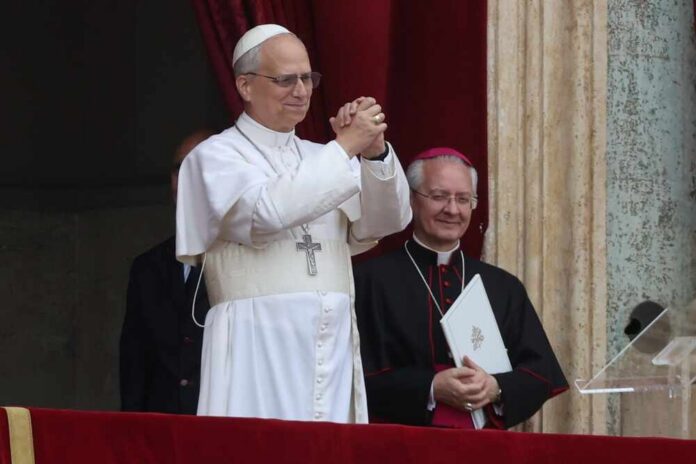
Pope Leo XIV delivered his condemnation aboard the papal plane returning from Africa stating unequivocally that he condemns capital punishment and affirming human life from conception to natural death. The following day, he sent a message to DePaul University in Chicago marking the 15th anniversary of Illinois abolishing the death penalty, directly calling for U.S. abolition. This timing proved remarkable: the Justice Department simultaneously announced expanded federal execution methods including firing squads, electrocution, and gas chambers to overcome lethal injection drug shortages and fulfill Trump’s campaign pledge to resume executions after Biden commuted 37 death row sentences.
Trump Administration Reverses Biden Moratorium
The Trump administration’s Justice Department rescinded the Biden-era moratorium on federal executions, signaling a return to aggressive enforcement of capital punishment for serious federal crimes. Drug shortages have hampered traditional lethal injection protocols, prompting officials to revive methods many Americans associate with darker chapters of history. The administration framed the move as strengthening the death penalty and delivering justice for victims’ families. Only three federal inmates remain on death row following Biden’s mass commutations, yet the policy shift represents a broader philosophical stance on crime and punishment that prioritizes retribution over the redemption-focused approach championed by religious leaders.
Religious Authority Questions Government Priorities
Pope Leo XIV’s position stems from the 2018 Catechism revision under Pope Francis, which declared capital punishment inadmissible and immoral in all circumstances, emphasizing human dignity even for grave offenders. The Church now teaches that effective prison systems can protect society while preserving the possibility of redemption. This creates uncomfortable questions for conservative Americans who value both religious tradition and tough-on-crime policies. The Pope’s message explicitly stated that dignity is not lost even after serious crimes, directly challenging the retributive justice framework that undergirds much conservative support for executions. Catholic commentators noted Leo made the death penalty opposition a crystal-clear priority for the universal Church, leaving little room for interpretation.
Deeper Issues Beyond Church-State Divide
The collision between papal authority and federal policy reveals something troubling about how decisions get made in Washington. While the Pope speaks from moral conviction about the sanctity of life, the Trump administration advances execution methods to overcome bureaucratic obstacles—drug shortages—rather than grappling with fundamental questions about state-sanctioned killing. Americans across the political spectrum increasingly recognize that government institutions often prioritize process and optics over principles. The timing feels especially jarring: federal officials announcing firing squad protocols the same day a global religious leader condemns executions suggests leaders operate in parallel universes, disconnected from each other and from citizens questioning whether anyone in power truly serves the common good rather than political agendas.
Pope Leo condemns capital punishment amid US execution push. A timely call for mercy and due process in shaping justice systems. Read more: https://t.co/xCG3pTU316 #Pope #CapitalPunishment #HumanRights #Justice #ReligionAndPolicy: https://t.co/2sqod7SGEx
— Global Banking & Finance Review (@GBAFReview) April 24, 2026
Pope Leo’s condemnation arose partially from Iran’s execution of opposition members amid the ongoing U.S.-Iran war, illustrating how capital punishment intersects with international tensions and authoritarian crackdowns. For conservatives frustrated by government overreach and liberals concerned about state violence, the death penalty debate transcends partisan labels. The fundamental question persists: can a government that claims to value life justify taking it, and do those making such decisions represent the values of everyday Americans or serve entrenched institutional interests? As federal execution chambers prepare for renewed activity, citizens of all political persuasions deserve answers grounded in something deeper than political expedience.
Sources:
Pope Leo condemns capital punishment during Africa trip amid Iran war
On way back to Rome, Pope Leo condemns state executions in Iran
Pope urges US, Iran to return to peace talks, condemns capital punishment
Pope urges US, Iran to return to peace talks, condemns capital punishment
Pope Leo condemns capital punishment amid US execution push
White House to bring back firing squads as Pope Leo XIV affirms Church opposition to death
Justice Dept. adopts firing squads same day Pope Leo backs death penalty abolitionists