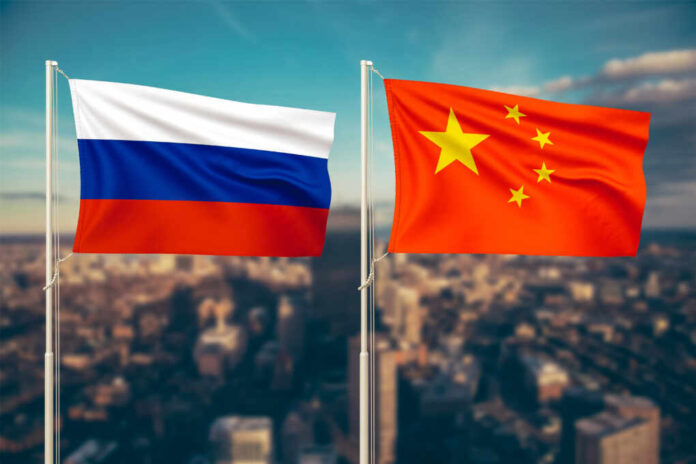
This report examines the financial mechanisms and strategic implications of the ongoing defense supply agreement between the Russian Federation and the People’s Republic of China for fighter jet components. Official reports, including internal documentation from Russian defense manufacturers, indicate a sustained, subsidized pricing model for spare parts for China’s legacy Su-27 and Su-30 fleets. This measure enforces cost absorption by the state-owned defense sector, a policy the Russian government maintains to preserve a key strategic partnership.
Key Findings
- Internal Russian documents indicate a 65.7% price reduction for Su-27/Su-30 parts supplied to China, resulting in cost absorption by the defense manufacturers.
- Production costs increased by approximately 200% following sanctions and inflation related to the Ukraine conflict. The government maintains the supply agreement to preserve the strategic partnership.
- China’s procurement of legacy Russian aircraft parts continues as its domestic J-20 fighter program advances, a dynamic influenced by Russia’s current economic climate.
- Russia is diversifying its exports with new agreements, such as a large-scale Su-35 deal with Iran, which may provide economic offset against current production limitations.
Leaked Documents Detail Cost Implications
A leaked internal letter from Russian defense manufacturers details producing spare parts for China’s Su-27 and Su-30 fighter jets at prices below current market production cost. Production costs have increased by approximately 200% following sanctions and inflation related to the Ukraine conflict. Manufacturers reportedly requested a price adjustment back to pre-war levels—a 65.7% cut from the current 452,000 rubles (about $5,700 per unit). State directives enforced compliance to maintain supply. This decision highlights the economic impact of the prolonged conflict on Russia’s defense sector.
Historical Russia-China Arms Ties
The Russia-China military aviation partnership began in the 1990s after the dissolution of the Soviet Union, leading to China becoming a significant purchaser of Russian arms. China acquired an estimated 200 Su-27 and Su-30SK jets under license from 1992 through the 2000s. A $2 billion contract in November 2015 resulted in the delivery of 24 Su-35s between 2016 and 2018. Post-2018, the focus shifted to maintenance spares for China’s existing fleet as it developed the indigenous J-20 stealth fighter. Russia offered additional Su-35s, but China declined, prioritizing domestic production.
Russia is losing money on jet sales to China and can't walk away — United24.
Russia is supplying parts for Chinese Su-27 and Su-30 fighters at a loss to avoid angering Beijing
Component costs surged by nearly 200%, but Moscow keeps selling anyway to preserve the partnership. 1/ pic.twitter.com/OXVecdiTGy
— Tymofiy Mylovanov (@Mylovanov) January 13, 2026
Geopolitical Factors Driving Supply Agreements
United Aircraft Corporation and Rostec, the state-owned producers, are experiencing reduced margins due to the subsidized pricing model for China. The Russian Ministry of Defense oversees these exports, enforcing cost absorption to preserve strategic ties. The Russian government views these aviation deals as strategic assets against Western sanctions, supported by oil trade agreements. China maintains approximately 250 legacy Russian jets, maintaining influence as a major procurement partner. This dynamic is influenced by concerns over China’s potential future pivot to alternative suppliers, creating an asymmetric power relationship.
Current Exports and Production Status
As of early 2026, Russia continues the agreements with China at below-market rates while pursuing new export contracts. October 2025 reports confirmed a €6 billion agreement for 48 Su-35s to Iran, with deliveries scheduled to begin between 2026 and 2028. Additionally, Ethiopia is reviewing the acquisition of 6-16 Su-35s, and Algeria is seeking Su-57s and Su-34s. Domestic production achieved a high in 2025 with seven Su-35 batches delivered. However, production constraints limit output to 1-2 planes monthly, which impacts scalability given current priorities. Prepayments from Iran since 2022 provide some economic offset.
Industry Impact and Global Balance
In the short term, the decision to maintain a lower margin on China parts compounds the impact of the 200% cost increase on manufacturing. China secures maintenance at lower prices, enhancing its air force readiness. Long-term, the financial structure may impact aviation sector profitability and carries the risk of technology transfer, as previously observed in the development of the J-16 from the Su-35 in 2019. Russia is expanding its market to Global South buyers like Iran, projecting 100-150 jets, but supply chains demand a 30% output increase by 2030 to meet the objective. This trilateral cooperation shifts airpower dynamics in the Middle East region. Analysts observe the financial and strategic dependencies within this partnership.
Sources
Russia Is Losing Money on Jet Sales to China but Can’t Do Anything About It, Leaked Files Show.
A leaked letter shows that the Russian defense industry is producing parts for Su-27 and Su-30 jets for China at a high financial cost.
Russian fighter jet exports have collapsed: Here’s why.