The Minneapolis mayoral race has been thrown into ranked-choice voting (RCV) after no candidate, including incumbent Jacob Frey, secured 50% of the first-choice votes. This unexpected shift, fueled by a crowded field of fifteen candidates, exposes deep fractures within the city’s left-leaning political establishment. The RCV process is sparking concerns about election transparency, potential voter confusion, and whether the final outcome will truly represent traditional values and common-sense solutions on critical issues like public safety and housing.
Story Snapshot
- No candidate received 50% in the Minneapolis mayoral race; ranked choice voting (RCV) now determines the winner.
- Fifteen candidates split votes, exposing deep divisions within the city’s left-leaning political establishment.
- The RCV process raises questions about election transparency and representation for traditional values.
- The outcome will steer city policy on public safety, housing, and governance—key concerns for families and taxpayers.
Election Results Force Minneapolis into Ranked Choice Voting
On November 4, 2025, Minneapolis voters cast ballots in a hotly contested mayoral race featuring fifteen candidates. Incumbent Jacob Frey led with 42% of first-choice votes, trailed by State Senator Omar Fateh at 32%. With no candidate reaching a majority, election officials triggered the ranked choice voting (RCV) process, a system adopted in 2009 but still rare in major U.S. cities. The fractured results highlight a deep split within the city’s Democratic-Farmer-Labor (DFL) party, leaving many residents uncertain about who truly represents their interests.
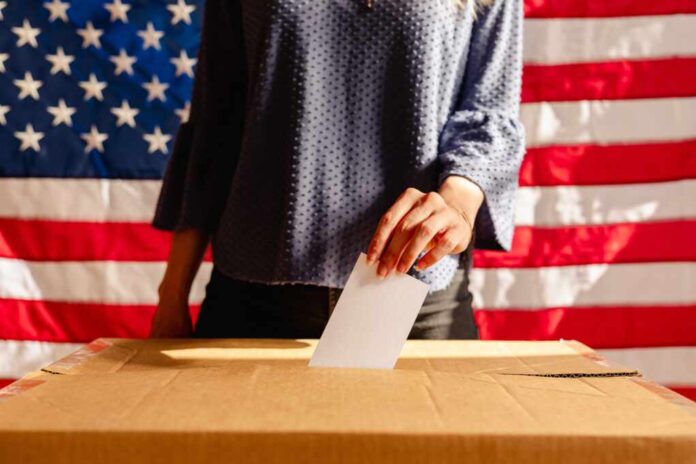
The RCV system allows voters to rank up to three candidates. If no one secures more than 50%, the lowest-ranked contenders are eliminated in rounds, with their votes reallocated until a candidate surpasses the threshold. This promises a drawn-out outcome, sowing confusion and frustration among voters who value electoral clarity and decisive leadership. The process, rarely activated in such a crowded field, puts transparency to the test and risks sidelining conservative voices in a city where traditional values are already under pressure.
Minneapolis mayor’s race advances to ranked choice voting after no candidate reaches 50% https://t.co/Rd7aCJujUJ
— Fox News Politics (@foxnewspolitics) November 5, 2025
Political Divisions Expose Vulnerabilities in Leadership
Minneapolis’s mayoral contest reflects broader national trends of political fragmentation and uncertainty. Jacob Frey, a centrist, faces strong opposition from progressive Omar Fateh and a field of candidates with sharply divergent views. The city’s history since the 2020 George Floyd protests has been marked by contentious debates on policing, housing, and racial equity—issues that have driven a wedge through the DFL and undermined public confidence in local governance. These divisions leave Minneapolis residents—especially families and business owners—concerned about future policies that could further erode law and order or inflate spending.
The RCV process amplifies the role of special interests and activist coalitions, making it harder for traditional and conservative voices to influence outcomes. Voters supporting candidates focused on public safety, fiscal discipline, and family values now face the prospect of their choices being diluted or redistributed through multiple rounds. This system, while designed to promote majority support, risks sidelining common-sense solutions in favor of fringe agendas that do not reflect the priorities of working families or taxpayers.
Transparency, Representation, and the Battle for Common Sense
Election officials in Minneapolis have promised transparency during RCV tabulation, but many residents remain skeptical. High turnout signals strong civic engagement, yet the complexity of RCV may discourage participation in future contests. For conservatives, these outcomes represent the very erosion of values—fairness, accountability, and limited government—that must be defended.
The final outcome of the Minneapolis mayoral race will shape the city’s policy direction on critical issues including public safety, housing affordability, and economic recovery. In the short term, leadership uncertainty may disrupt city operations and further polarize local politics. Long-term impacts could extend beyond city limits, as other jurisdictions consider adopting RCV—raising the stakes for anyone concerned about the integrity of the American electoral system. As the RCV rounds progress, Minneapolis stands as a battleground between the forces of division and those fighting to restore common-sense leadership and constitutional principles.
Watch the report: Minneapolis Mayor race results will head to ranked-choice voting
Sources:
Minneapolis mayor’s race advances to ranked-choice voting after no candidate reaches 50%
2025 Minneapolis mayoral election
Minneapolis mayor race ranked choice voting second round Nov 2025
Minneapolis MN 2025 mayoral race election day
Minneapolis-St Paul election 2025 vote on mayor tax levy fines
Minneapolis mayoral race ranked choice voting 2025
Minneapolis mayor election results 2025
Minnesota election results 2025