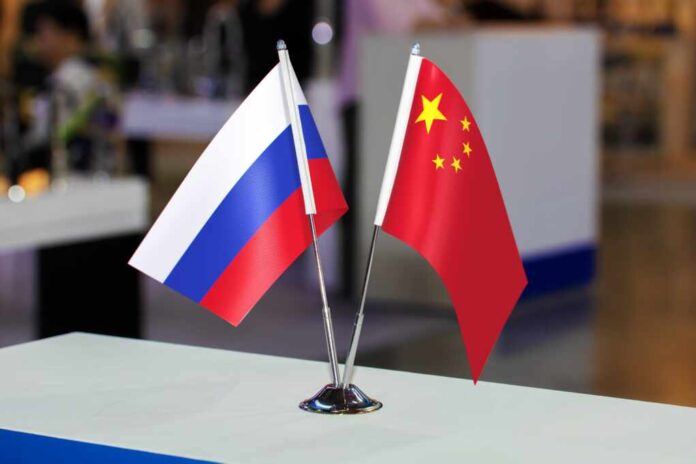
Russia and China held joint naval drills in early August 2025 simulating the destruction of an “enemy” submarine, following a U.S. order to position nuclear submarines near Russian waters to reinforce deterrence.
At a Glance
- On August 1, 2025, the U.S. Navy directed two Ohio-class nuclear submarines to “appropriate regions” near Russia.
- From August 3 to August 6, 2025, Russian and Chinese fleets conducted coordinated exercises off Vladivostok.
- The final drill phase in the Sea of Japan focused on sonar tracking, torpedo launches, and command coordination.
- Japan’s Ministry of Defense monitored the exercises and underscored the need to keep sea lanes open and safe.
Background
On August 1, 2025, the U.S. Navy announced that two Ohio-class nuclear-powered submarines had been redeployed to areas adjacent to Russian maritime zones. The move was described as part of a broader strategy to strengthen deterrence after recent Russian naval operations and public statements by senior Russian officials. U.S. defense authorities emphasized that the submarines would operate under normal peacetime patrol protocols and did not represent an immediate escalatory maneuver.
In response, Russian and Chinese naval forces initiated a series of joint maneuvers beginning on August 3, 2025, near Vladivostok. Over the next four days, surface combatants, maritime patrol aircraft, and submarine-tracking vessels from both countries practiced coordinated tactics. The exercises underscored a deepening military partnership that has seen over 100 joint drills since 2003.
Joint Anti-Submarine Drill
More than ten surface ships and multiple patrol aircraft from Russia and China participated in anti-submarine warfare drills in the Sea of Japan. Crews executed realistic sonar detection sequences, simulated periscope identification, and live-fire torpedo exercises against a target submarine. Command centers practiced data sharing and secure communications under operational conditions that mirrored potential real-world scenarios.
Watch now: Russia, China Counter Trump’s Nuclear Threats in Sea of Japan · YouTube
The timing of this joint exercise—less than one week after the U.S. submarine deployment—was highlighted in official statements as a “routine demonstration” of interoperability. Moscow and Beijing framed the operations as a necessary counterbalance to what they termed increased U.S. naval presence in their traditional security spaces. Both navies affirmed compliance with international maritime law and safety regulations during the drills.
Strategic Implications
These drills reinforce a pattern of growing military cooperation between Russia and China, aimed at presenting a united front in the Asia-Pacific theater. Analysts note that showcasing advanced anti-submarine capabilities may deter undersea incursions and signal to regional actors the depth of Sino-Russian defense ties. For the United States and its allies, this coordination underscores the challenge of operating naval assets in contested waters without escalating tensions.
Maintaining clear communication channels, such as pre-exercise notifications and crisis hotlines, will be essential to prevent miscalculations as opposing fleets operate within close proximity. Future drills and counter-deployments will be closely watched by Japan, South Korea, and other regional partners. The evolving dynamic highlights the importance of risk-management protocols to safeguard against unintended incidents in a densely trafficked strategic corridor.
Sources