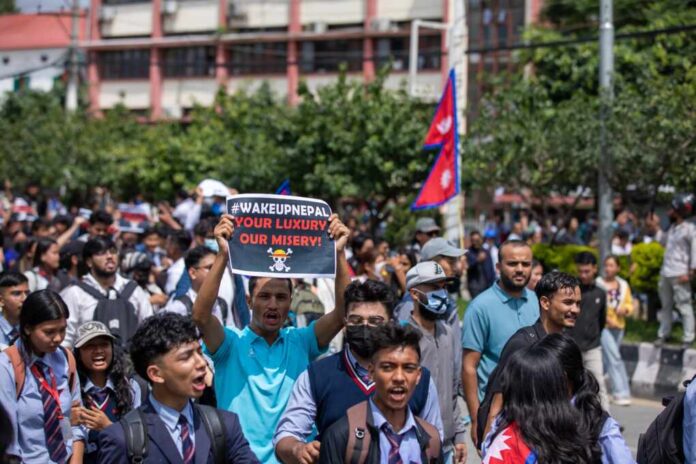
In recent months, Generation Z-led protests across multiple continents have resulted in the resignations of prime ministers and significant governmental shifts. These movements, characterized by their digital coordination and decentralized nature, have emerged in response to issues such as government corruption, economic inequality, and digital censorship.
Story Highlights
- Prime ministerial resignations occurred in Bangladesh, Nepal, and Madagascar following digitally coordinated youth activism.
- Protesters in eight countries are utilizing social media platforms for organization and communication, bypassing traditional political channels.
- Demonstrations have been met with government crackdowns, leading to casualties in some regions.
- The decentralized structure of these protest groups presents new challenges for governmental responses.
Digital Mobilization and Political Change
Generation Z protesters have influenced political landscapes by compelling the resignations of three prime ministers within a short timeframe. In August 2024, Sheikh Hasina of Bangladesh resigned after nationwide student protests. Nepal’s K.P. Sharma Oli followed in September 2025, after his government implemented a ban on 26 social media platforms. Christian Ntsay of Madagascar also resigned as President Andry Rajoelina dissolved the government amidst youth-led demonstrations concerning utilities and corruption.
These movements are notable for their extensive digital coordination, leveraging platforms such as TikTok, Instagram, and Discord. Unlike previous forms of youth activism, these protests are organized through anonymous, decentralized networks, which have made governmental infiltration and disruption challenging. The capacity for rapid mobilization allows for real-time tactical adjustments and widespread dissemination of grievances.
Nepal’s Parliament after 36 hours of youth uprising: PM KP Sharma Oli resigns.
Proof that when the people stand united, power shakes — and falls.
Change isn’t given, it’s taken pic.twitter.com/YqdH7vC0ZQ— Nunu (@Dreams_realites) September 9, 2025
Transnational Connections and Shared Tactics
Youth protesters in various countries, including Nepal, Morocco, Peru, Paraguay, Kenya, and the Philippines, have drawn inspiration and tactical approaches from one another, fostering an interconnected network of resistance. Moroccan demonstrators adopted the slogan “We want hospitals, not stadiums,” while Paraguayan students protested education budget cuts; both movements shared strategies through social media.
Cultural symbolism has also contributed to unifying these movements. Protesters in Madagascar utilized flags inspired by the Japanese anime “One Piece,” and groups across different nations have employed memes, art, and pop culture references to convey messages and maintain morale. This cultural approach aims to attract global attention and build solidarity among participants who express similar frustrations regarding elite corruption and economic inequality.
Government Responses and Escalating Tensions
Governments have responded to the protests with a combination of concessions and suppressive measures, contributing to a volatile situation in several regions. Security forces in some countries have reportedly used lethal force against demonstrators, resulting in casualties. The exact numbers of these casualties remain unconfirmed due to reporting restrictions and censorship in affected areas.
The intensity of these confrontations reflects underlying structural issues that have motivated youth engagement. Economic challenges, climate change impacts, and the COVID-19 pandemic have exacerbated existing inequalities, leading to disillusionment among young populations regarding traditional political systems. Reports of elite corruption and government spending have also generated public outrage among a generation facing limited opportunities and infrastructure deficiencies.
Uncertainty Regarding Long-Term Political Transformation
While some movements have achieved immediate successes, such as government resignations and policy adjustments, the prospect of lasting structural reforms remains uncertain. Protesters continue to utilize digital platforms to maintain momentum and advocate for constitutional changes and anti-corruption measures from interim governments. However, significant systemic transformation faces obstacles from established interests.
The global nature of these protests introduces new challenges for both activists and authorities. Traditional containment strategies have proven less effective against digitally coordinated movements that can rapidly adapt tactics and sustain transnational support networks. This represents a shift in youth activism that governments worldwide are continuing to address, with implications extending beyond the immediate protest areas.
Watch the report: Nepal To Madagascar: Youth Protests Spark Military Takeover In Indian Ocean Nation, President Flees
Sources:
- Global Insights Special Report – Gen Z Protests
- Gen Z Protests 2025 Madagascar – Pulse Ghana
- 2025 Nepalese Gen Z Protests – Wikipedia
- The Rise and Spread of Gen Z Protests – Vision of Humanity