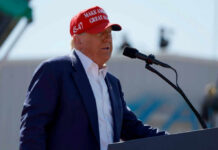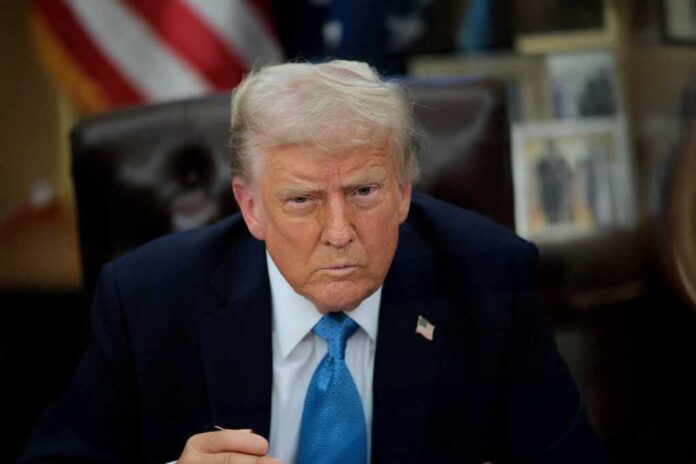
President Trump’s blistering return to the United Nations exposed what many see as the UN’s failures on border security and peace, sparking new debate on America’s sovereignty and immigration crisis.
Story Snapshot
- Trump’s UN speech criticizes the world body for promoting illegal migration and neglecting American interests.
- Major immigration crackdowns have begun, ending lenient policies and restoring strong border enforcement.
- Executive orders have expanded ICE raids, ended sanctuary protections, and triggered mass deportations.
- Legal challenges and debate intensify over constitutional rights, due process, and state-federal cooperation.
Trump’s UN Address Targets Globalism and Open Borders
On his first return to the United Nations as President in 2025, Donald Trump delivered a pointed attack against the international body, accusing it of failing to bring peace and, more critically, of encouraging illegal migration into the United States. Trump’s remarks resonated with Americans who felt the previous administration’s globalist leanings undermined national security and sovereignty. He framed the UN as out of touch with American families’ concerns, insisting that the U.S. would no longer tolerate policies that erode its borders or threaten its values.
Trump mocks UN on peace and migration in blistering return https://t.co/AZX76dBeRY
— Elijah Traven (@starandsixpence) September 23, 2025
Massive Immigration Overhaul Follows Trump’s Promises
Fulfilling key campaign promises, Trump’s administration immediately undertook sweeping actions to reverse what supporters saw as years of unchecked illegal immigration and lax enforcement. Executive orders signed on inauguration night declared a national emergency at the southern border, blocked most asylum seekers, and ended “catch and release” policies. The administration suspended refugee admissions and moved to end birthright citizenship for children of non-permanent residents, steps that directly addressed long-standing conservative frustrations with what they viewed as loopholes exploited under previous policies.
The policy changes also included designating certain international cartels as terrorist organizations, aiming to enhance legal tools for border security. Trump’s swift action sent a clear message: the era of porous borders and ambiguous enforcement had ended. Conservative Americans, particularly those in border states, welcomed these moves as overdue corrections that prioritized national safety and American jobs.
ICE Raids Expand, Sanctuary Protections Eliminated
One of the most dramatic shifts came as Trump appointed Tom Homan as “border czar” to direct Immigration and Customs Enforcement (ICE). The administration eliminated restrictions on ICE activities, allowing raids in sensitive locations such as schools and churches. Large-scale operations unfolded across major cities, targeting undocumented immigrants regardless of their community ties or circumstances. The so-called “sensitive locations” policy, once a safeguard against family disruption, was scrapped in favor of aggressive enforcement.
By June 2025, Department of Homeland Security reports indicated that over 200,000 migrants had been deported in just a few months. These mass deportations involved military aircraft and, at times, the use of restraints, underscoring the seriousness of the administration’s crackdown. Critics argued this approach sowed fear and uncertainty, but supporters viewed it as a necessary response to years of neglect and legal loopholes that threatened public safety and the rule of law.
Legal Pushback and Constitutional Concerns
The administration’s sweeping changes have triggered a wave of legal challenges. The Attorney General authorized law enforcement to enter migrant homes without warrants, igniting debate over Fourth Amendment protections. Trump also called for action against attorneys representing migrants, claiming their efforts amounted to obstruction. These moves raised questions about balancing national security with constitutional rights, a clash that courts and policymakers are now forced to address.
Further, the federal government is pressuring states and localities to fully cooperate with immigration enforcement, threatening penalties for noncompliance. This has reignited debates over states’ rights, local autonomy, and the appropriate scope of federal power. For conservative Americans, the focus remains on restoring accountability and order, but the legal landscape continues to evolve as constitutional questions are tested.
Watch the report: Trump takes aim at migration and climate policies in scathing UN speech | BBC News
Sources:
Trump criticises countries’ migration and climate policies in UN speech
‘You’re destroying your countries’: Key moments from Trump’s UN speech