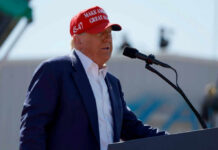
President Donald Trump criticized Goldman Sachs’ CEO David Solomon over warnings that U.S. tariffs are increasingly being passed on to consumers, intensifying debate on inflation’s trajectory and trade policy impacts.
At a Glance
- Goldman Sachs estimated 64% of tariff costs will soon fall on consumers, up from 22%
- July’s headline inflation held at 2.7% year-over-year
- Core inflation rose to 3.1% year-over-year, its highest since January
- Trump dismissed concerns, framing tariffs as leverage in trade talks
- Economists warn tariffs could push inflation toward 3.2% by year-end
Bank Warning Sparks Political Clash
Goldman Sachs released an analysis this week projecting that U.S. tariffs—expanded under recent trade policies—are increasingly being absorbed by consumers rather than foreign exporters. The bank’s data suggests that by late 2025, roughly 64% of these costs will be passed directly to domestic buyers, compared to just 22% earlier in the year.
In response, former President Trump publicly rebuked Goldman Sachs CEO David Solomon, telling him to “focus on being a DJ” instead of warning about tariffs. Trump, who has made tariffs a centerpiece of his economic agenda, insisted that the measures strengthen U.S. negotiating power with trading partners. The exchange underscores a deepening political divide over whether tariffs are an inflationary threat or a strategic necessity.
Watch now: Trump Blasts Goldman Sachs CEO Over Tariffs · New York Post
Inflation Context and Market Reactions
The tariff dispute comes as the U.S. reported July inflation figures largely in line with expectations. Headline Consumer Price Index (CPI) growth remained at 2.7% year-over-year, supported by easing gasoline prices. However, core CPI—which strips out volatile energy and food components—rose to 3.1%, marking its fastest pace since January.
Markets initially welcomed the steady headline figure, as investors saw it as compatible with Federal Reserve rate-cut scenarios later in the year. However, analysts noted that tariff-related price increases could undermine that outlook, potentially forcing the Fed to remain cautious. If passed-through costs accelerate, inflation could approach or exceed 3.2% by the end of 2025, complicating monetary policy decisions.
Tariffs, Policy, and Economic Risks
Economists remain split on the long-term effects of tariffs in the current economic environment. Supporters argue they protect domestic industries and create leverage in trade negotiations. Critics counter that they operate as indirect taxes on consumers, eroding purchasing power and introducing volatility into price stability goals.
The rising pass-through rate identified by Goldman Sachs is particularly significant. A shift from 22% to 64% consumer absorption in less than a year signals that businesses are running out of ways to shield customers from increased import costs. Over time, this dynamic can embed inflationary pressures more deeply, making them harder to reverse without slowing economic growth.
For now, the Fed’s stance remains data-driven, with policymakers weighing incoming inflation figures, wage growth trends, and global trade developments. The outcome of this debate—both politically and economically—will likely shape U.S. inflation management strategies through 2026.
Sources