
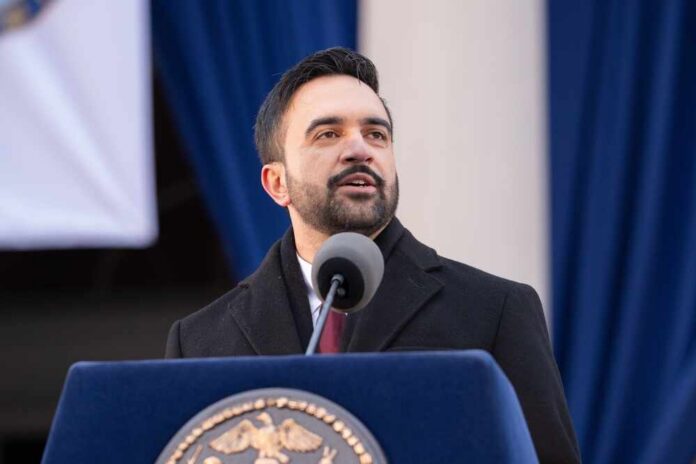
New York City’s new mayor is calling to abolish ICE at the very moment Americans are watching what weak enforcement can cost—both in public safety and in basic respect for the rule of law.
Quick Take
- NYC Mayor Zohran Mamdani has publicly backed abolishing Immigration and Customs Enforcement, calling it a “rogue agency” and alleging it undermines public safety.
- Recent incidents tied to immigration enforcement and illegal reentry are fueling a fresh clash between city hall “sanctuary” instincts and federal enforcement priorities.
- DHS has disputed the mayor’s framing in at least one case, arguing a detained NYC Council employee was in the country illegally and had an arrest history.
- NYC’s policy limiting cooperation with ICE to specific warrant-backed detainers remains central to the dispute, raising questions about local-federal law enforcement boundaries.
Mamdani’s Abolish-ICE Push Collides With a National Enforcement Moment
Mayor Zohran Mamdani, newly in office, has moved quickly to place himself at the center of the national fight over immigration enforcement. In recent public remarks, he said he supports abolishing ICE and portrayed the agency as acting with impunity, alleging it targets people regardless of immigration status and facts of specific cases. The remarks arrive as federal enforcement activity has intensified and as high-profile incidents have sharpened public concern about illegal reentry and crime.
Mamdani’s rhetoric reflects a broader Democratic trend that treats immigration enforcement as inherently abusive. The practical issue for New Yorkers is simpler: a city can promise “humanity” while also delivering public safety, but those goals collide when offenders exploit enforcement gaps. The available reporting does not provide independent expert analysis on the feasibility of abolishing ICE, leaving voters with competing political narratives rather than clear operational alternatives for deportations, detention, and cross-jurisdiction coordination.
The Flashpoints: A Fatal Shooting, a Detention, and a Subway Killing
Three developments are driving the current controversy. First, an ICE officer fatally shot Renee Good, a 37-year-old mother of three, in Minnesota—an event that helped spark renewed scrutiny of ICE tactics. Second, ICE detained a New York City Council employee during a routine immigration appointment on Long Island, prompting outrage from city officials and supporters. Third, an 83-year-old Air Force veteran, Richard Williams, was allegedly shoved onto subway tracks and killed by a person identified as an illegal immigrant from Honduras described as previously deported multiple times.
The reporting available is detailed on the mayor’s statements and the basic outlines of each incident, but it also flags limits: key aspects of the Williams case and immigration-status verification are not fully fleshed out in the summarized material, and there is no deeper data on enforcement outcomes or the broader trend line in NYC. Even so, the political stakes are obvious. When public safety becomes a lived experience—subway platforms, neighborhood streets, and city services—abstract arguments about abolishing agencies get tested fast.
What NYC Law Requires—and Why Federal Officials Are Pushing Back
NYC’s current approach restricts cooperation with ICE. Under city law, ICE is only notified when there is a detainer backed by a judicial warrant (I-200 or I-205) and the person has a qualifying recent conviction for a violent or serious crime. That standard is a major point of friction because it narrows the pipeline for federal immigration action, even when immigration violations exist, and it puts city policy between federal agents and removable non-citizens.
Federal officials have contested the mayor’s narrative in at least one prominent example. DHS stated the detained NYC Council employee was in the U.S. illegally and referenced an alleged criminal history that included an assault arrest. That disagreement matters because it highlights the core issue voters care about: whether officials are presenting full facts when they condemn enforcement operations, and whether “sanctuary” policies inadvertently shield people who should not be on the streets. The available sources do not include court records or independent verification of the claimed criminal history.
Why Conservatives See a Pattern: Local Power Plays Versus the Rule of Law
Conservatives tend to focus less on slogans and more on outcomes: order, accountability, and equal application of the law. Calls to abolish ICE raise constitutional and governance questions because immigration enforcement is a federal responsibility, and local officials cannot simply wish away federal authority. At the same time, cities can use policy levers—detainer rules, jail-release practices, and cooperation limits—to frustrate enforcement, and that is where voters often see government overreach in the opposite direction: local leaders nullifying national law.
Zohran Mamdani Calls To Abolish ICE As Illegal Aliens Murder New Yorkers | Drew Hernandez https://t.co/4ZgboikqS6 #gatewaypundit via @gatewaypundit
— Swamp Fox Jim ✝️🇺🇸🏈🗽 (@jim76960437) March 30, 2026
In 2026, with the country strained by war overseas and voters skeptical of endless commitments, Americans have less patience for leaders who appear to gamble with safety at home. The reporting on Mamdani emphasizes moral language—“humanity” and critiques of impunity—while offering few concrete mechanisms for handling repeat immigration violators or detainee transfers without ICE. Limited data is available in the provided sources about replacement structures, budget impacts, or measurable safety outcomes, so the debate remains mostly political rather than operational.
Sources:
Mayor Mamdani supports abolishing ICE, calls for ‘humanity’ in dealing with immigrants
Mamdani endorses planned NYC ‘No Kings’ rally, derides ICE as ‘rogue agency’