California just made it a felony for law enforcement to seize ballots or touch core election systems without tightly defined legal grounds, raising fresh questions about who really controls the vote — elected sheriffs, federal agents, or partisan state officials.
Story Snapshot
- Governor Gavin Newsom signed SB 73 days before California’s June 2 primary, with the law taking effect immediately and framed as a shield against allies of President Trump.[2][3]
- The law bans unauthorized ballot seizures, restricts law enforcement presence and access at polling places, and limits warrantless access to voting machines and voter data.[2][3][4]
- Supporters say SB 73 protects voters and election workers from intimidation and abuse of power; critics warn it may hand more control to partisan officials and weaken independent law enforcement oversight.[2][3][4]
- The Riverside County sheriff’s seizure of more than 600,000 ballots under a warrant became the central example used to justify the law, even though that incident involved an ongoing investigation.[3][4]
Newsom’s New Election Security Law and Why It Landed Now
California Governor Gavin Newsom signed Senate Bill 73 into law just days before the June 2 statewide primary, using an urgency clause so the statute took effect immediately.[2][3][4] Newsom’s office explicitly tied the move to “growing threats of election interference and intimidation,” naming allies of President Donald Trump as a driving concern and warning about attempts to undermine confidence in elections and disrupt lawful administration.[2] The bill passed the legislature largely along party lines, with Democrats backing tighter limits on law enforcement near the polls and Republicans objecting.[3]
Officially, SB 73 “strengthens California’s election protections” by safeguarding voters, election workers, and ballot security from interference, intimidation, and unauthorized law enforcement activity.[2] The law arrives in a national climate where both parties accuse the other of trying to rig the process, and where older voters on the right see “deep state” meddling while older voters on the left fear voter suppression and political strong‑arming. By passing a sweeping security bill at the last minute, California leaders signal that they do not trust federal authorities or local sheriffs to exercise power responsibly around elections.[2][3]
What SB 73 Actually Does to Law Enforcement and Ballot Access
The new law creates specific legal firewalls around ballots, voter data, and polling-place operations that directly limit law enforcement discretion.[2][3][4] It prohibits any person from granting law enforcement agents — including federal agents — unauthorized access, disruption, modification, or seizure of voter rolls, voter lists, or certified voting technology, unless there is a court order or an investigation into specific violations of California election law.[2] It restricts peace officers from interfering with election administration or disrupting election workers, except in urgent public safety emergencies.[2][3]
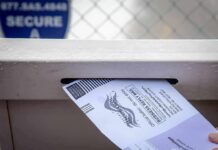
SB 73 also makes it a crime, punishable by fines or up to three years in prison, to knowingly take a package containing voted ballots from the custody of elections officials.[2][4] The measure bans military personnel from voting locations and reiterates that the California attorney general, secretary of state, or local elections officials can seek injunctions and civil penalties against any person or entity that removes ballots from official custody.[3][4] The law further prohibits warrantless searches or seizures of voting machines and voter rolls, tightening rules that govern how and when police can enter election spaces or touch election hardware.[3][4]
The Riverside County Ballot Seizure That Sparked the Crackdown
State leaders repeatedly point to Riverside County Sheriff Chad Bianco’s seizure of more than 600,000 ballots from his county’s registrar earlier this year as the incident that exposed gaps in California law.[3][4] Bianco, who is running for governor, said he was looking for evidence of fraudulent voting, and his deputies presented a search warrant to take the ballots.[4] CalMatters reports that, under SB 73, the county registrar would have violated the law by allowing the handover, despite that warrant.[4]
The new statute explicitly makes it illegal for a registrar to surrender ballots or voting equipment to law enforcement agents in a situation like Riverside, and criminalizes the act of taking cast ballots from an election official’s custody.[2][4] Supporters argue that without such a rule, politically ambitious sheriffs or federal officials could seize ballots or equipment and create chaos, feeding conspiracy theories and intimidating election workers.[2][4] Critics counter that the Riverside case shows the law reaches conduct carried out under judicial supervision, raising concerns that elected officials in Sacramento are walling off their own operations from independent probes.[3][4]
Power Shifts: From Local Sheriffs to State Election Officials
Beyond ballot seizures, SB 73 shifts practical power over election security from local law enforcement toward statewide political offices.[2][3][4] The law authorizes the California attorney general, secretary of state, and local election officials to move quickly in court to block suspected election interference, giving them standing to seek injunctive relief and civil penalties.[2][3] It also requires the California Department of Justice to issue guidance to county election officials on handling law enforcement requests for access to areas where ballots are cast, processed, or handled.[2]
Governor Gavin Newsom signed legislation to tighten California’s election security, limiting law enforcement’s access to ballots, voter lists, rosters, or certified voting technology, ahead of the June 2nd state primary election.#AmericaFirst #MAGA
— Sina (@Sina2yankee) May 28, 2026
For citizens who already believe “the elites” protect their own while ordinary people face a different justice system, this design cuts both ways. On one hand, the law answers real anxiety about armed officers near voting sites and about powerful actors rummaging through ballots in the name of “investigations.”[2][3][4] On the other, it concentrates gatekeeping authority in statewide offices that are themselves partisan, heightening fears that those who run elections will also be able to shut down outside scrutiny when it becomes politically inconvenient.[2][3][4][7]
Sources:
[2] Web – Governor Newsom signs legislation to further protect California …
[3] Web – Newsom signs bill to protect CA ballots, says Trump ‘doesn’t believe …
[4] Web – California bans cops from seizing election ballots – CalMatters
[7] YouTube – Gov. Gavin Newsom Signs New California Elections Bill Into Law …