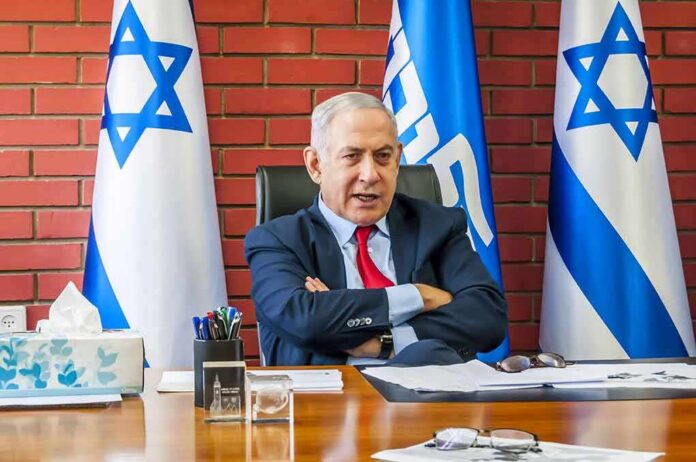
New York City’s socialist mayor is openly exploring how to put a visiting foreign leader — Israel’s prime minister — in handcuffs on U.S. soil.
Story Snapshot
- Mayor Zohran Mamdani has vowed to order police to arrest Israeli Prime Minister Benjamin Netanyahu if he visits New York City, citing an International Criminal Court warrant.
- Legal experts, the New York governor, and federal laws say a city mayor has no power to arrest a sitting foreign head of government under an international court order.
- The dispute exposes a deep clash between local activism and federal control over foreign policy, and it feeds public anger at government elites and global institutions.
- Netanyahu and Israeli officials are brushing off the threat, while Republicans in Congress move to block any attempt to carry it out.
Mamdani’s pledge: Arrest a foreign leader in New York
Zohran Mamdani, New York City’s Democratic Socialist mayor, has repeatedly promised that if Benjamin Netanyahu sets foot in the city, he will tell the New York Police Department to arrest him. Mamdani says he is morally bound to enforce the International Criminal Court arrest warrant for alleged war crimes in Gaza and has called Netanyahu a “war criminal” and accused Israel of genocide. He first made the arrest pledge during his 2025 mayoral campaign and has stood by it since taking office, saying he intends to “carry this out.”
The International Criminal Court, based in The Hague, issued warrants for Netanyahu in November 2024, accusing him of war crimes and crimes against humanity linked to Israel’s military response in Gaza after the 2023 Hamas attacks. Mamdani argues New York should act as a “city of international law” and honor those warrants, not just for Netanyahu but also for other leaders wanted by the court, such as Russian President Vladimir Putin. His stance has made him a hero for some pro-Palestinian activists and a symbol of “woke” global justice politics for many critics.
Legal reality: Why experts say the arrest cannot happen
While Mamdani’s pledge is clear, the legal path is not. The United States is not a member of the International Criminal Court and has passed federal laws that block cooperation with it, including sanctions aimed at the court after it targeted Israeli officials. Legal scholars note that arresting a sitting head of government like Netanyahu would violate long-standing rules of head-of-state immunity and federal control over foreign policy. One professor described Mamdani’s threat as “political, not legal,” stressing that the mayor does not have the power to arrest a visiting leader against federal policy.
New York Governor Kathy Hochul has publicly rejected Mamdani’s claim of authority, stating flatly that “the New York City mayor does not have the power to do that.” She pointed to federal laws that protect foreign officials from detention and say local governments cannot obstruct them while they are in the United States on official business. Even Mamdani himself has admitted he is unsure of his actual authority and is in “active conversation” with the city’s Law Department, searching for any possible loophole. So far, no credible legal path has been identified.
Political backlash: Congress, Israel, and public frustration
Mamdani’s vow has fired up both sides of America’s political divide. Republicans in Congress, already hostile to the International Criminal Court, are pushing bills to punish or block cities that try to enforce ICC warrants against allied leaders like Netanyahu. They argue that a local mayor cannot hijack national foreign policy to score political points and warn that such moves could damage U.S. alliances and put American officials at risk abroad. For many conservatives, Mamdani’s promise looks like another example of radical local leaders ignoring the Constitution to chase globalist, activist agendas.
Israeli officials, meanwhile, are mostly dismissive. Netanyahu has said Mamdani will not stop him from visiting New York and has continued planning trips tied to United Nations meetings. Israel’s foreign minister has laughed off the threats, refusing to treat them as a serious legal concern. Their confidence rests on the same point that frustrates many Americans on both left and right: national leaders expect the U.S. system to protect them, even when an international court says they should face justice. That gap between legal immunity and moral outrage feeds the sense that there is one set of rules for elites and another for everyone else.
Deeper tensions: Local justice vs. federal power
This fight is part of a wider trend in U.S. politics, where city and state leaders use dramatic promises to show they are tougher on human rights than Washington. Mamdani’s plan mirrors pledges by other local officials who say they would enforce ICC warrants on foreign leaders if given the chance, even though constitutional doctrine and past cases show that no sitting head of state has been arrested in a country that does not recognize the court. These vows can energize voters who see international law as the only way to hold powerful leaders accountable.
New York City Mayor Zohran Mamdani said in an interview with The New York Times that he was in “an active conversation” with the city’s Law Department on whether he had the authority to arrest Israeli Prime Minister Benjamin Netanyahu, if he comes to New York City as expected for
— Wunderkind (@EngineerNGR) July 19, 2026
For many Americans, across party lines, the spectacle is troubling. On one side, they see a local mayor floating an impossible arrest that could turn New York into a stage for global drama instead of focusing on crime, housing, and high costs of living. On the other, they see federal leaders blocking any outside legal pressure on allies, even when serious war crime charges are involved. Both reactions confirm a growing belief that the system mainly protects the powerful, whether they are foreign heads of state, global institutions, or U.S. officials themselves.
Sources:
redstate.com, jpost.com, timesofisrael.com, youtube.com, yahoo.com, thenationalnews.com