
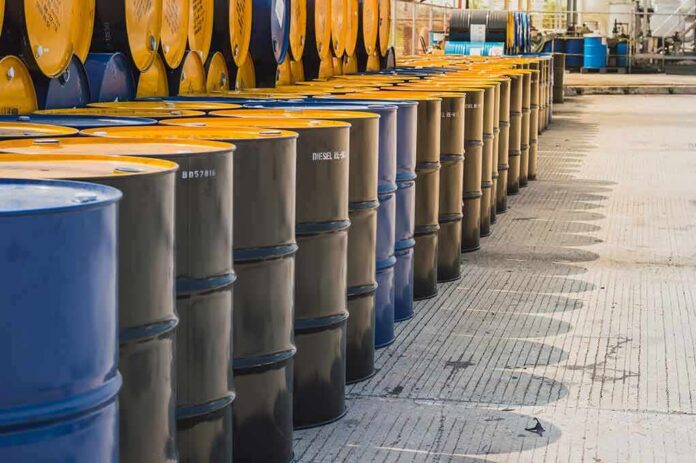
The Energy Department said it will deploy up to $150 million under the Defense Production Act to boost U.S. fuel refining capacity, aiming to add millions of gallons per day of gasoline, diesel, and jet fuel.
Story Snapshot
- The Energy Department plans to use Defense Production Act Title III funds to expand U.S. petroleum refining.
- Officials say projects could raise output by millions of gallons per day and strengthen fuel security.
- The move targets gasoline, diesel, jet fuel, and related logistics to support national defense.
- Specific refinery awards and timelines were not named; selection is ongoing.
What the Government Announced and Why It Matters
The Energy Department announced plans to invest up to $150 million through Defense Production Act Title III to expand domestic petroleum production, storage, and logistics at U.S. refineries. The department said the goal is to strengthen America’s fuel supply and support national defense. The projects are expected to be carried out with private partners. Officials said the effort could raise refining output by millions of gallons per day across gasoline, diesel, jet fuel, and other products, if selected projects deliver as planned.
The Defense Production Act lets the federal government use purchase commitments, loans, loan guarantees, and grants to grow industrial capacity when it supports national security needs. Title III is the part that funds new or expanded production lines. The department framed the program as a way to harden fuel supply chains that the military and the broader economy rely on. A contemporaneous account described the presidential action as covering domestic petroleum production, refining, and logistics capacity.
How This Could Affect Prices, Supply, and Security
Fuel prices hit families and businesses in every state, and refining capacity plays a role. More capacity can help during outages, storms, or war-driven supply shocks. Still, pump prices depend on more than refineries. Crude oil costs, shipping routes, regional pipelines, taxes, and demand also shape what drivers pay. The department argues added capacity will lower prices. The announcement, however, did not quantify the expected price drop or provide modeling to show the near-term effect.
From a security view, the plan tries to reduce U.S. exposure to tight global fuel markets. When refineries run flat out, a single fire or storm can ripple through supply. Added capacity or storage can cushion those hits. The Defense Production Act approach also signals that reliable fuel is a national priority, not just a private matter. That signal can draw private co-investment. Legal analysis points to Title III tools as a way to speed financing for industrial upgrades that the market might delay.
Key Gaps: Which Refineries, How Much, and How Fast
The announcement did not name the refinery projects, total awards, or timelines. It said the selection was still in progress and that details would come later. Reporting at the time found no public record of a refinery award under this program, which means the goals remain plans until agreements are signed and funded. Engineering work, permits, and labor all take time. Some analyses say restarts or expansions can run one to four or more years, depending on the site.
The department’s claim of “millions of gallons per day” of added output gives a direction but not a baseline or schedule. Officials did not release plant-by-plant assumptions, throughput increases, or the split among gasoline, diesel, and jet fuel. Without those details, it is hard for the public to map the promised gains to regions that face the sharpest shortages. Clear documentation would also help check whether projects meet the national-defense aims set out by the presidential action.
What to Watch Next: Awards, Permits, and Proof of Impact
The first milestone is the award list: which facilities, how much money, and what each project must deliver. Award documents could show matching funds, performance targets, and schedules for new capacity. That would let the public see whether funds restart shuttered plants, expand running ones, or build storage and logistics that unlock more throughput. Publication of the executed agreements would also clarify how federal dollars interact with larger industry co-funding.
Trump just signed a presidential memo invoking the Defense Production Act for oil. It declares U.S. petroleum production, refining, pipelines, storage, and marine terminals “essential to the national defense” and hands implementation to the Secretary of War.
Under Section 303 of…— Rodrigo Natali (@rodrigo_natali) October 23, 2026
Implementation will hinge on permits and execution. Refinery projects must meet environmental and safety standards and secure state and local approvals. Those steps often drive timelines more than financing does. If the government and industry move fast and stay transparent, added capacity could land before the next peak demand season. If permits stall or sites need deep repairs, gains may take years. The department has not issued detailed schedules, so progress will be judged by signed deals and visible work on the ground.