A bloody Labor Day weekend in Chicago left dozens shot and several dead, and President Trump says the city “will die” unless Illinois leaders let federal agents step in.
Story Snapshot
- At least 41 people were shot and three died in Chicago over the weekend, including a mass shooting in Washington Park.
- President Trump renewed his call for Governor JB Pritzker to request federal help, saying Chicago violence is “unchecked and at record levels.”
- Pritzker and Mayor Brandon Johnson have repeatedly rejected federal intervention, calling it unnecessary and politically motivated.
- Courts have already found some past federal deployments to American cities illegal, adding legal uncertainty to Trump’s threats.
Another Violent Weekend Fuels the Fight
Chicago police reported at least 41 people shot and three killed over the weekend, with 15 victims hit in a single mass shooting in Washington Park. Other recent weekends have been just as bad. One stretch left 58 people shot, and another left 67 shot with nine dead, including a wounded police officer. The repeated bloodshed has become the backdrop for Trump’s ongoing push to send federal help to the city.
Trump Says the City “Will Die” Without Help
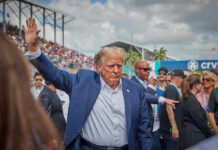
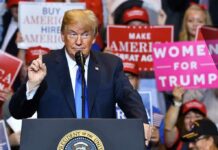
President Trump said Chicago’s violence is “unchecked and at record levels” and warned the city “will die” if the federal government isn’t invited in by the mayor or governor. He said he is “awaiting the call” from local leaders. Trump has also floated using the Insurrection Act, a law that lets presidents use military force domestically, and said Pritzker should “beg him for help”.
Acting Attorney General Todd Blanche joined the criticism, blaming Pritzker for refusing federal assistance despite 37 shootings in one two-day stretch. Trump’s team argues federal agents and resources, like those used in Washington, D.C., could quickly reduce shootings in Chicago the way they claim it worked there.
Pritzker Says No One Has Actually Asked
Governor Pritzker has pushed back hard, saying no one from the White House has ever formally reached out to coordinate help. He said in a news conference that “no effort has been made to coordinate or to ask for our assistance” and that local law enforcement was never contacted. Pritzker also said there is “no emergency in Chicago that calls for armed military intervention,” rejecting the idea that troops are needed.
Pritzker has gone further, accusing Trump of using crime as a “distraction” from his own problems and calling him a “wannabe dictator” for threatening to send troops without state approval. He pointed to a past incident where he said federal agents “murdered a father and shot an innocent woman” during a previous operation, then tried to cover it up. Mayor Johnson signed an order blocking local police from joining federal patrols.
Money and Agents Already Cut, Pritzker Says
Pritzker claims the fight isn’t really about refusing help. He says federal money that used to flow to Illinois has been cut, along with the number of Federal Bureau of Investigation (FBI), Bureau of Alcohol, Tobacco, Firearms and Explosives (ATF), and Drug Enforcement Administration (DEA) agents available to help fight crime on the ground. He says he would welcome that kind of support and has asked for it directly, just not troops or an occupation-style federal takeover.
#PRESIDENT #TRUMP #ON #CHICAGO #VIOLENCE
The President of the United States addressed the Chicago gun violence including the #Mass #Shooting over the weekend that left over 41 ppl shot, 4 dead, including a 15yo boy.
The #Mass #Shooting in Washington Park is the worst Chicago… pic.twitter.com/83767kERhG
— Chitown_Crime_Chasers (@CCC_CrimeChaser) September 2, 2026
A Familiar Standoff With No Easy Answer
This clash follows a pattern seen in other cities, where spikes in violence trigger federal intervention threats and local leaders call them illegal power grabs. Courts haven’t settled the question cleanly. Legal analysts note presidents generally lack authority to send troops to police American streets without a state’s request, and past deployments to cities like Portland faced legal challenges over how far federal power reaches.
Federal involvement in local policing isn’t rare, but formal action is. Of 79 federal interventions tracked since 1995, only 20 led to actual consent decrees, showing Washington usually stays out unless local leaders invite it in. That history leaves both sides pointing fingers, Trump demanding an invitation he says will save lives, and Pritzker insisting no real offer of help has ever arrived.
Sources:
youtube.com, latimes.com, abc7chicago.com, stl.news, politico.com, foxnews.com, abcnews.com, wabcradio.com, nypost.com, nbcchicago.com, fox32chicago.com, washingtonexaminer.com, msn.com, whitehouse.gov