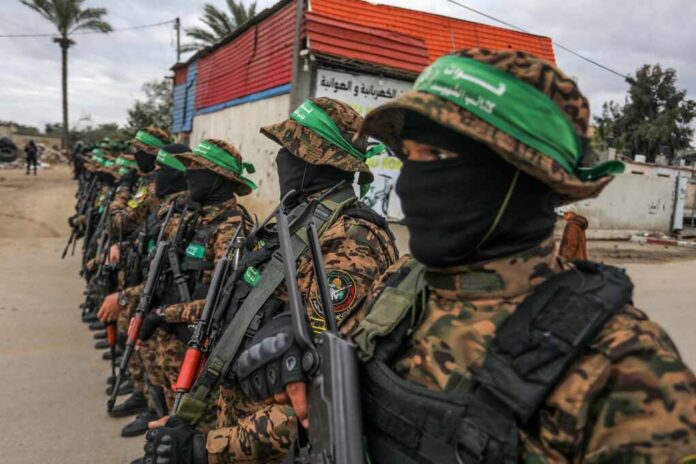
Just weeks after seemingly signing onto President Trump’s Gaza peace framework, Hamas chief Khaled Mashal has openly vowed never to disarm, exposing exactly why real peace in the Middle East keeps getting sabotaged by terrorists and their apologists. This defiance, delivered in a key Istanbul speech, directly contradicts the core conditions of the Phase 2 peace plan—disarmament and international oversight—and lays bare the group’s unchanged ideological goal of Israel’s destruction. The thin coverage of Mashal’s speech in Western media leaves many in the dark about Hamas’s true intentions, creating a dangerous blind spot for American policy and security.
Story Snapshot
- Hamas leader Khaled Mashal publicly rejects core elements of Trump’s twenty-point Gaza peace plan, including any disarmament.
- The speech lays bare Hamas’s unchanged goal of Israel’s destruction, despite its tactical acceptance of a ceasefire framework.
- Trump’s Phase 2 plan hinges on Hamas giving up arms and accepting transitional governance and international oversight in Gaza.
- Western media’s thin coverage of Mashal’s speech leaves many Americans in the dark about Hamas’s true intentions.
Trump’s Gaza Plan Meets Hamas’s Open Defiance
On October 9, 2025, Israel and Hamas agreed to a ceasefire built on the first phase of President Trump’s twenty-point Gaza peace plan, which focused on stopping the shooting, exchanging hostages and prisoners, and installing a temporary technocratic committee to manage basic governance in Gaza. That phase created cautious optimism that Hamas might finally prioritize rebuilding over rockets, especially after it accepted hostage releases without demanding full and immediate Israeli withdrawal.
Phase 2 of Trump’s plan goes far deeper, demanding concrete security changes that matter to American and Israeli families alike. It calls for Israeli withdrawal to a defined “Yellow Line,” deployment of multinational security forces, Hamas disarmament, and the establishment of transitional governance with international oversight to unlock reconstruction funds. In plain terms, Trump’s framework offers Gaza rebuilding and political normalization in exchange for Hamas surrendering its terror arsenal and accepting external accountability.
Hamas Chief Khaled Mashal Defies Trump Gaza Plan, No Disarmament https://t.co/bsfwDZrUyS via @BreitbartNews
— Just Regular Rob (@reg1776) December 8, 2025
Mashal’s Istanbul Speech: No Disarmament, No Oversight, No Change
On December 6, 2025, Khaled Mashal took the stage in Istanbul and threw down a clear marker: no disarmament, no relinquishing control of Gaza, and no international trusteeship of the territory. His address reaffirmed Hamas’s ideological core—armed “resistance” until Israel is destroyed—directly contradicting the spirit and substance of the agreement his organization had just signed onto weeks earlier. For Americans tired of double talk from extremists, this speech removed any illusion about Hamas’s long-term intentions.
Mashal’s rhetoric was not the language of compromise but of permanent war. Analysts noted that his phrasing echoed the same hateful slogans that preceded the October 7, 2023 massacre, which killed roughly 1,200 Israelis and dragged the region back into bloodshed. By tying Hamas’s “honor” to its weapons and rejecting any outside oversight, Mashal signaled that guns, tunnels, and rockets—not schools, hospitals, or jobs—remain the group’s true priority. That stance collides head-on with Trump’s insistence on disarmament as the non-negotiable price of peace.
Ceasefire on Paper, Ideological War in Practice
Even as Mashal rejected Trump’s core conditions, Hamas delegations continued shuttling to Cairo to meet Egyptian intelligence officials about ceasefire violations and escalation concerns. On December 7, senior Hamas figures sat with mediators to discuss incidents along the Gaza border and complaints about Israeli military activity beyond the Yellow Line. That dual track—public defiance paired with quiet technical talks—matches Hamas’s long-running pattern of tactical flexibility layered over strategic intransigence.
Inside Hamas, a divide has opened between leaders like Mashal abroad and figures in Gaza such as Khalil al-Hayya. Al-Hayya has hinted that Hamas might someday discuss “storing” or “freezing” weapons if Israel fully ends its presence, language that sounds more pragmatic but still avoids the actual disarmament Trump’s plan requires. For Americans used to watching bad-faith negotiations with Iran and other regimes, this looks familiar: temporary concessions at the margins without giving up the instruments of terror that keep civilians on both sides living in fear.
Media Blind Spots and What Americans Aren’t Being Told
One of the most striking aspects of Mashal’s December 6 speech is how little coverage it received from major Western outlets. While policy insiders and regional analysts dissected his comments, much of the public never heard that Hamas’s top political chief had just rejected disarmament and reaffirmed a goal of annihilating Israel. For a country like ours that keeps sending aid dollars into the region, that media gap leaves taxpayers and voters without the full story they need to judge any future deals.
Conservative audiences who remember years of slanted coverage of Israel will recognize the pattern: dramatic Israeli decisions and alleged missteps receive wall-to-wall analysis, while explicit genocidal rhetoric from Hamas leaders is downplayed or ignored. When extremist groups openly say they will not lay down their weapons, Americans who value national security, strong borders, and peace through strength deserve to hear that unfiltered. Without that transparency, elites can sell fantasy agreements that look good on paper but collapse in reality.
What Is at Stake for U.S. Security and Constitutional Values
For Trump’s administration, the Gaza plan is part of a broader push to restore American leverage, support allies who share our values, and stop rewarding terror. The success or failure of Phase 2 will signal whether armed Islamist movements can still veto peace by holding civilians hostage behind human shields. If Hamas remains armed and in de facto control, Iran’s influence grows, regional proxies feel emboldened, and future attacks become more likely—raising the chance that American forces or assets are eventually dragged in
American conservatives watching this process see familiar red lines: disarming terrorists before reconstruction, insisting on real oversight before aid, and refusing to pretend that groups dedicated to erasing a U.S. ally are “partners for peace.” Those principles echo our own debates at home about law and order, border security, and refusing to let violent ideologues dictate terms. In that sense, what happens with Mashal, Hamas, and Trump’s plan is not some distant abstract dispute—it is a test of whether strength and clarity can still defeat extremism in a dangerous world.
Watch the report: Hamas Refuses Disarmament: Khaled Mashaal’s Defiant Stance on Gaza Control
Sources:
Hamas leader rejects disarmament, resists US stabilization plan for Gaza
Hamas refuses disarmament in Gaza, Mashaal declares | The Jerusalem Post
Report: Hamas chief Mashaal rejects disarmament, key elements of Trump plan