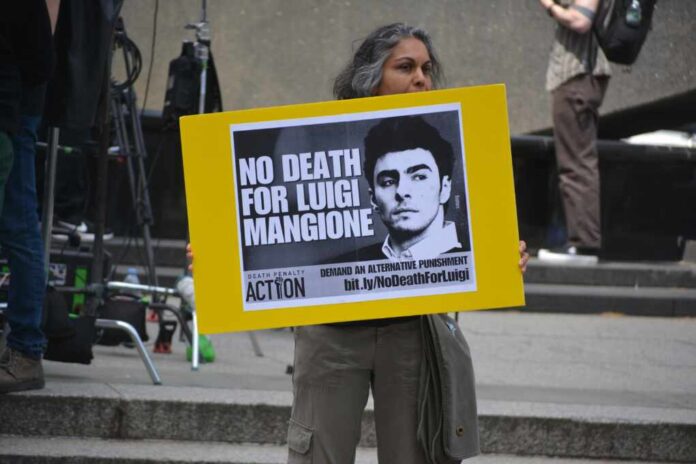
The high-profile December 2024 assassination of UnitedHealthcare CEO Brian Thompson has rapidly become a landmark case at the intersection of modern technology, constitutional law, and the debate over capital punishment. Luigi Nicholas Mangione, the 26-year-old accused, allegedly used a 3D-printed firearm in the attack, a detail that has immediately intensified national discussions surrounding Second Amendment rights and the challenges posed by emerging weaponry. With federal prosecutors aggressively pursuing the death penalty and the defense seeking to suppress key evidence, the trial’s outcome is poised to set major precedents for corporate security and public policy.
Story Highlights
- Luigi Mangione is charged with the murder of UnitedHealthcare CEO Brian Thompson.
- Controversy surrounds the use of 3D-printed firearms in crime.
- Defense seeks to suppress evidence found in Mangione’s backpack.
- Federal prosecutors aggressively pursue the death penalty.
High-Stakes Legal Battle Over 3D-Printed Gun Evidence
The December 2024 assassination of UnitedHealthcare CEO Brian Thompson has become a focal point in the debate over gun rights and justice. Luigi Nicholas Mangione, a 26-year-old from Maryland, faces charges of stalking and murdering Thompson. The case has drawn national attention, particularly due to the use of a 3D-printed firearm, which Mangione allegedly used in the attack. This modern twist has raised alarm among those concerned about Second Amendment rights and the potential for government overreach.
The prosecution argues that the bullets, gun, and notes found in Mangione’s backpack are crucial evidence linking him to the crime. However, the defense contends that these items were obtained through unconstitutional means, seeking to suppress them in court. The admissibility of this evidence is a critical factor that could significantly impact the trial’s outcome and Mangione’s fate.
Bullets in Luigi Mangione’s Bag Convinced Police That He Was Unitedhealthcare CEO Killing Suspect https://t.co/h7NsAJ6BBW
— The Japan News (@The_Japan_News) December 9, 2025
Federal Death Penalty Pursuit Highlights Stakes
Federal prosecutors are pursuing the death penalty, citing the high-profile nature of the victim and the premeditated nature of the crime. They argue that Mangione’s actions were ideologically motivated, with writings discovered in his possession suggesting intent to target health insurance executives. This move has sparked a debate over the use of capital punishment, particularly in cases involving modern weaponry like 3D-printed guns.
The legal proceedings have been marked by intense debates over constitutional rights, with the defense arguing that pretrial publicity and public commentary have prejudiced Mangione’s right to a fair trial. The case underscores the tensions between public safety and individual liberties, as the courts balance these competing interests.
Implications for Corporate Security and Policy
The murder of a Fortune 500 CEO in a public setting has prompted major corporations to reassess security protocols for executives. The case has also highlighted the challenges posed by emerging technologies like 3D printing in law enforcement and public safety. As the legal battle unfolds, it will likely influence future discussions on gun regulation and corporate security measures.
As the trial progresses, the outcome will have significant implications for both legal precedent and public policy. The stakes are high, not only for those directly involved but also for broader societal debates on justice, gun rights, and corporate vulnerability.
Watch the report: Bullets in Luigi Mangione’s bag convinced police that he was UnitedHealthcare CEO killing suspect
Sources: