Bishop Douglas Lucia ended Father Fred Daley’s 18-year pastorate and reassigned the parish leadership, igniting a community backlash over whether age, doctrine, or politics drove the call.
Story Snapshot
- The Diocese of Syracuse named a new pastor for All Saints and St. Lucy’s, citing retirements effective January 2.
- Father Fred Daley, age 79, told parishioners the bishop wanted someone younger; many said the move was forced.
- Parishioners tied the dispute to LGBTQ+ ministry and a recent political event at the church, though the diocese framed it as transition planning.
- Catholic law gives bishops broad authority to reassign pastors amid priest shortages and parish consolidations.
What the Diocese Changed and When It Takes Effect
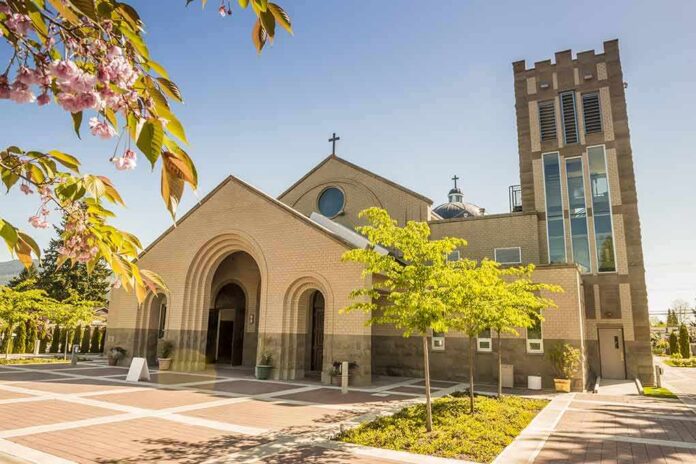
The Diocese of Syracuse announced that Father John Manno will serve as pastor of both All Saints and St. Lucy’s in Syracuse, effective January 2. The diocesan notice listed the move “upon the retirement” of Rev. James Mathews and Rev. Fred Daley, and outlined a reduced weekend Mass schedule across both sites. The update came after local expectations that Daley would expand leadership to St. Lucy’s following Mathews’s retirement, which made the reversal feel abrupt to parishioners.
Father Fred Daley told parishioners that Bishop Douglas Lucia thanked him for 18 years of service but believed a younger pastor should take the role. Parishioners gathered and objected to the change, voicing support and calling the retirement forced. A series of letters to the editor and local reports amplified those reactions and framed the decision as against the wishes of Daley and many at All Saints. These public responses fueled a debate about the bishop’s reasons and the parish’s future.
Why This Parish Stood Out Inside the Diocese
Supportive coverage described All Saints as welcoming to LGBTQ people, with Pride symbols and public participation in city Pride events. Reports highlighted a June 2025 Pride-themed Mass that used rainbow imagery and included a transgender Episcopalian speaker, which drew criticism from some corners. A parish council member said Bishop Lucia summoned Daley several times over Mass practices, LGBTQ Pride activities, and hosting a political get-out-the-vote event, tying those issues to the current tension. These accounts came from advocacy and local outlets, not diocesan statements.
Some parishioners linked the timing of the retirement to the event with Representative Alexandria Ocasio-Cortez, suggesting the change was punitive. Those claims reflect parish perspective rather than official confirmation. The diocesan announcement emphasized retirements and pastoral consolidation, not discipline or doctrine. The contrast between official phrasing and parish suspicion widened mistrust and fed a narrative of top-down control versus local ministry priorities.
What Church Law Allows and How Shortages Shape Choices
Catholic canon law states a pastor ceases from office by removal or transfer effected by the diocesan bishop, or by resignation accepted by the bishop. Another canon says a bishop can remove a pastor if ministry becomes harmful or ineffective, following legal procedure. These rules grant broad authority to bishops, especially during restructuring. That authority often clashes with lay expectations when beloved pastors are reassigned or retired, even after long service.
Dioceses nationwide are consolidating parishes because of fewer priests, aging clergy, and shifting attendance. Reports from nearby regions describe reassignments and mergers as part of a decade-long trend to keep churches staffed and solvent. Leaders cite the need to link parishes, trim schedules, and focus limited clergy where needs are highest. That context makes a transition in Syracuse plausible under standard planning, even if local emotions and unique parish identity raise separate questions.
Why This Matters Beyond One Parish
This dispute captures a larger trust gap between institutions and people they serve. Parishioners saw a decision that upended a plan they thought was set and removed a pastor tied to an inclusive mission. The diocese published a brief notice citing retirements and scheduling changes. The lack of a detailed rationale left room for theories about culture-war pressure or political fallout, which deepens the divide between the pews and the chancery.
As I said, Bishop Lucia will be persecuted for doing the right thing here by removing Fr. Fred Daley. Judging by Twitter comments alone you'd think the battle is won. It isn't. Just look at some of the comments over on Facebook ⤵️
Syracuse local media is also sharpening its… https://t.co/E6BxGMmDLj pic.twitter.com/LiOxoZQybB
— Daniel O'Connor (@DSDOConnor) November 9, 2026
For readers across the political spectrum, the questions feel familiar: Who holds power, who gets heard, and what values drive leaders’ choices? Some see overdue alignment with church teaching. Others see the sidelining of a ministry they believe helps real people. Both groups watch a system that often speaks in formal memos while communities demand clear answers. Until leaders explain decisions with concrete reasons, suspicion will fill the silence, and trust will keep eroding.
Sources:
lifesitenews.com, syracuse.com, newwaysministry.org, centralcurrent.org, thecatholicsun.com