
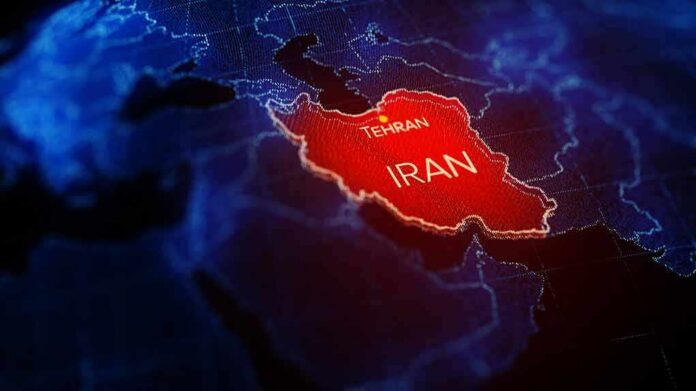
When inspectors can’t see, governments turn to spies—and cash. Washington’s new, up to $20 million reward for information on Iran’s nuclear program is not a publicity stunt; it is a deliberate pivot from arms-control transparency to human intelligence in an environment where routine monitoring has broken down.
At a Glance
- The State Department’s Rewards for Justice program is offering up to $20 million and possible relocation for credible information on Iran’s nuclear program—facilities, equipment, scientists, and movements.
- The offer reflects a structural loss of visibility: international inspectors report major gaps in access and data on Iran’s nuclear activities.
- Targeting “who and where” signals a focus on actionable intelligence for deterrence, interdiction, or strike planning—if required.
- This is one tool among longstanding U.S. authorities and precedents for rewards tied to nuclear proliferation and state-linked threats.
What Washington Put on the Table—and Why It Matters
The U.S. government has posted an offer of up to $20 million—plus potential relocation—for information about Iran’s nuclear program, explicitly naming facilities, equipment, associated personnel (including within the scientific community), and the movement of any of the above. That language is not a vague fishing expedition; it is a defined intelligence target set aimed at mapping the infrastructure, people, and logistics that make any sensitive program function. The posting sits on the State Department’s Rewards for Justice (RFJ) platform, the same mechanism used for high-end counterterrorism, sanctions-evasion, and state-directed cyber cases.
The threshold here is significance rather than technical novelty. Nuclear programs are ecosystems: procurement pipelines, centrifuge workshops, fuel-cycle facilities, scientific cadres, and security logistics. You don’t interdict capability by knowing a single plant’s coordinates; you do it by understanding the network—who moves parts, who signs off on maintenance, who escorts shipments at night. RFJ’s phrasing makes that priority unmistakable.
From Safeguards to Sources: The Loss of Visibility
The reward’s timing aligns with a documented collapse in monitoring. In recent reporting cycles, the International Atomic Energy Agency (IAEA) has detailed sustained limits on its verification and monitoring in Iran, including the cessation of many JCPOA-related activities and an inability to verify key nuclear-material balances at declared sites. The result is not a policy argument but an operational fact: inspectors cannot provide the clarity they once did, and some facilities’ status and associated materials cannot be verified for safeguards purposes. Independent technical assessments echo the picture of degraded access and unresolvable gaps in the data record, which in turn erode confidence that routine safeguards alone can reconstruct events inside Iran’s program.
In this context, RFJ’s turn to human sources is unsurprising. When cameras, seals, and on-site access are curtailed, the only remaining levers are remote sensing, signals intelligence, and human reporting. Of those, insiders who can describe floor plans, shift rotations, access points, and undocumented movements are uniquely valuable; they convert suspicion into targeting data or, conversely, allow policymakers to discount alarm where the facts don’t support it.
What the Reward Is—and Is Not
RFJ’s offer is a channel and an incentive, not a foregone policy of attack. The United States has long operated statutory frameworks to reward information tied to the illegal handling of special nuclear material and related threats to national security; the mechanism is familiar, even if the headline number is large. The $20 million cap signals how Washington prices the risk: credible, actionable insight into Iran’s nuclear complex could alter military planning, calibrate sanctions enforcement, or enable covert disruption. That makes it worth paying for.
It is also worth stating what the offer does not claim. It does not assert that Iran has made a current political decision to build a nuclear weapon; historically, the distinction between capability, undeclared activity, and a weapons decision has been the fulcrum of debate. But capability plus opacity is its own danger. The IAEA’s constrained posture prevents clear answers on inventory, status, and intent; intelligence fills that void to prevent strategic surprise—whether the next step is deterrence, diplomacy, or interdiction.
The Target Set: Facilities, Equipment, People, and Movement
The specific call for information on facilities and equipment suggests a priority on the physical plant of enrichment—centrifuge cascades, feed and withdrawal points, ancillary workshops, power and ventilation routes, and hardened underground galleries where precision munitions calculus matters. Equipment lineage—who machined rotor tubes, who balanced bearings, where spares are cached—reveals resilience and single points of failure. Scientists and technical managers are the connective tissue: their career paths and assignments expose organizational charts and tacit knowledge transfer. Finally, “movement” matters because the most sensitive activity often travels—under cover of routine logistics, between affiliated companies, or through military custodianship—leaving patterns an insider can decode.
RFJ’s broader docket reinforces this network-centric approach. Adjacent reward postings pursue Iranian cyber operators, IRGC-associated financial mechanisms, and hostage-taking infrastructure—each a spoke on the same wheel of state-linked activities Washington seeks to map and disrupt. The Iran nuclear-specific notice simply extends that method to the fuel cycle and its human capital.
How We Got Here: From Archives to After-Action Gaps
Two decades of Iran nuclear oversight have seesawed between revelations and regime adaptations. Seized archives once showed a more advanced early weapons-organizational effort than many assessed, underscoring how formal programs can be masked by civilian cover and distributed tasks. Later, the JCPOA era brought intrusive monitoring; its unravelling—and Iran’s curtailment of implementation—erased much of that visibility, including retention of data that inspectors once banked for continuity of knowledge. Today’s dispute is not resolved by claims of peaceful intent or, conversely, alarmist certainty; it rests on whether anyone with credibility can unlock the black boxes that opacity has created. That is precisely the bet RFJ is making.
Technical analysts outside the IAEA have translated those access losses into risk language the policy system understands: unaccounted stockpiles, unverifiable activities, and compliance questions that can’t be closed without eyes and ears inside facilities. In such conditions, rewarding human sources is not escalation; it is due diligence.
US offers $20m reward for information about Iran's nuclear programme,
The State Department's Rewards for Justice is also offering to potentially relocate the person who provides such details.#Iran https://t.co/6Mlw8CVAYn
— प्रमोद कुमार ( Journalist ) 🕉 (@News_Politics24) November 7, 2026
Implications: Deterrence, Diplomacy, and Decision Advantage
Intelligence is strategy’s time machine. Verified particulars—how deep a tunnel runs, how many cascades are live, which contractor hides spares—shrink uncertainty and expand options. For deterrence, specificity sharpens red lines and makes bluffing costly. For diplomacy, it allows targeted demands and credible verification proposals rather than generic admonitions. For contingency planning, it shortens the kill chain or, just as importantly, avoids miscalculation born of rumor. A multimillion-dollar bounty that draws a single high-grade defector or a precise site diagram can therefore pay for itself many times over—in avoided crises as much as in successful interdictions.
Sources:
thegatewaypundit.com, rewardsforjustice.net, go.rewardsforjustice.net, khan.co.kr, uscode.house.gov, foreignpolicy.com, congress.gov, isis-online.org, iaea.org