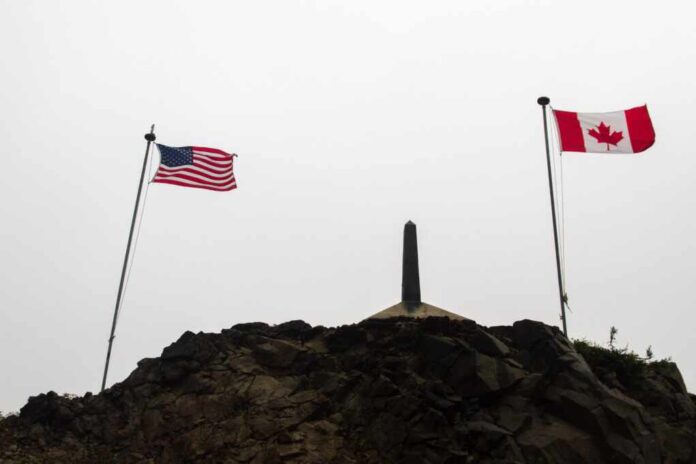
A powerful magnitude 7.0 earthquake recently struck the remote wilderness along the Alaska-Canada border, bringing seismic risk into sharp focus. Despite the quake’s strength, the sparsely populated area and strong preparedness measures limited the impact, with no major damage or tsunami threat reported. The event serves as a stark reminder of the seismic activity in the Alaska-Yukon region and underscores the importance of public education and robust infrastructure.
Story Highlights
- A magnitude 7.0 earthquake struck a remote area near the Alaska-Canada border.
- The quake caused no major damage or injuries, and no tsunami warning was issued.
- Communities like Yakutat and Haines Junction experienced moderate shaking.
- The event underscores the importance of preparedness in seismically active regions.
Details of the Earthquake
A magnitude 7.0 earthquake struck near the Alaska-Canada border at 11:41 a.m. local time. The epicenter was located about 230 miles northwest of Juneau, Alaska, and 155 miles west of Whitehorse, Yukon. Despite the quake’s strength, no significant damage or injuries were reported, thanks in part to the area’s sparse population.
Authorities, including the United States Geological Survey and Natural Resources Canada, have confirmed that no tsunami threat was issued following the event. The quake’s shallow depth of 10 km contributed to the strong shaking felt in communities like Yakutat and Juneau, yet the remoteness of the epicenter limited the impact.
A powerful, magnitude-7.0 earthquake struck in a remote area near the border between Alaska and the Canadian territory of Yukon. https://t.co/OwRPw0abIs pic.twitter.com/Tfd9NmxZGU
— ABC7 Eyewitness News (@ABC7) December 6, 2025
Implications and Reactions
The earthquake serves as a stark reminder of the seismic risks inherent to the Alaska-Yukon region, which lies along the Pacific-North American plate boundary. This area is one of the most seismically active regions in the world, frequently experiencing magnitude 5+ earthquakes. The recent event highlights the importance of continued investment in monitoring systems and public education to enhance regional resilience.
Local emergency management agencies, along with the Alaska Earthquake Center, are using the event to reinforce earthquake preparedness messaging, promoting practices like “Drop, Cover, and Hold On.” This proactive approach aims to safeguard communities against future seismic events, emphasizing the need for robust infrastructure and emergency resources.
Community and Specialists Perspectives
Communities in Yakutat, Haines Junction, and surrounding rural areas were the most affected, although the impact was minimal. Residents have shared their experiences on social media, with many expressing relief at the lack of serious damage. Specialists like Allison Bird from Natural Resources Canada stress the importance of preparedness and the effectiveness of current building standards in mitigating potential damage.
Seismologists and geoscientists continue to monitor aftershocks and refine earthquake parameters. The data from this event will contribute to better understanding fault behavior and recurrence intervals, reinforcing the need for performance-based design in critical infrastructure across the region.
Watch the report: 7.0 Magnitude Earthquake Hits Remote Alaska-Yukon Border: What Happened and Why It Matters
Sources:
- Magnitude 7.0 earthquake strikes remote wilderness along Alaska-Canada border
- Magnitude-7.0 earthquake hits remote wilderness along Alaska-Canada border