President Noboa’s drastic elimination of diesel subsidies has ignited violent protests, threatening Ecuador’s stability.
Story Highlights
- President Noboa declared a 60-day state of emergency in seven provinces.
- Diesel prices surged from $1.80 to $2.80 per gallon, sparking mass protests.
- Military and police deployed to control escalating violence and highway blockades.
- Economic reforms face fierce resistance from Ecuador’s impoverished population.
Escalating Protests in Ecuador
On September 16, 2025, Ecuador’s President Daniel Noboa announced a 60-day state of emergency following widespread protests against the elimination of a $1.1 billion diesel subsidy. This decision, which raised diesel prices from $1.80 to $2.80 per gallon, has led to significant unrest, with road blockades and violent clashes erupting across the country. Protesters, particularly those from the transport and agricultural sectors, are struggling against the rising fuel costs that threaten their livelihoods.
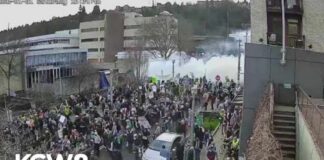
The state of emergency grants the military and police expansive powers to clear roadblocks and manage protests, which have been particularly intense in Quito and other provinces. Demonstrators have resorted to aggressive tactics, prompting law enforcement to use tear gas and deploy bulldozers to dismantle obstructions. Despite the government’s efforts to maintain order, the unrest underscores deep-seated frustrations with economic policies that have exacerbated the cost of living for many Ecuadorians.
Ecuadoran President Daniel Noboa declares a 60-day state of emergency in seven provinces over protests against his elimination of fuel subsidies pic.twitter.com/fShig6Ktn1
— TRT World Now (@TRTWorldNow) September 17, 2025
Economic and Social Impact
The elimination of diesel subsidies has resulted in a 56% increase in fuel prices, directly impacting transportation and agricultural sectors, which rely heavily on diesel. This surge in costs is expected to ripple through the economy, raising prices for goods and services and disproportionately affecting the poorest citizens. Nearly one-third of Ecuador’s population lives in poverty, making them particularly vulnerable to these price hikes.
President Noboa has positioned the subsidy cuts as a necessary measure to redirect funds toward social assistance and agricultural support programs. However, the immediate economic strain and public backlash highlight the challenges of implementing fiscal reforms in a country with a history of political instability linked to similar policies.
Watch report:Ecuador: Protests and Clashes in Ecuador, President Noboa Declares Emergency | Race To Power
Political and Security Ramifications
The current crisis serves as a significant test of President Noboa’s leadership and political capital, especially following his recent reelection on a platform promising security and economic reform. The deployment of military forces and the suspension of assembly rights reflect a robust government response aimed at quelling unrest but also raise concerns about potential overreach and the precedent it sets for handling future dissent.
The involvement of powerful opposition groups, like the Confederation of Nationalities of Ecuador (Conaie), which has historically played a pivotal role in toppling governments, adds a layer of complexity to the current unrest. Although Conaie has not officially joined the protests, their potential participation could further escalate tensions and challenge the government’s reform agenda.
Sources:
Ecuador Declares State of Emergency as Police Clash with Protesters Over Diesel Subsidy Removal
Noboa Eliminates the Diesel Subsidy, Protests Announced in Ecuador
Protesters Clash with Police in Quito Over Fuel Subsidy Cuts
Protesters Clash with Police in Quito Over Fuel Subsidy Cuts