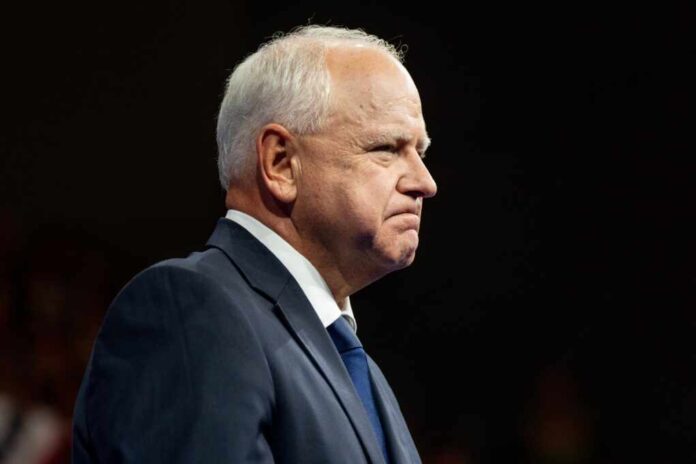
Federal prosecutors have exposed a massive Medicaid fraud scandal, potentially reaching $9 billion in Minnesota since 2018, which has ignited a political firestorm and placed Governor Tim Walz under intense scrutiny. Republican lawmakers are now demanding Walz’s resignation, accusing his administration of gross oversight failures in the 14 high-risk programs implicated. While Governor Walz is actively defending his administration and refuting the $9 billion figure, the scale of the allegations has drawn national attention, leading to increased federal investigation and upcoming Congressional hearings to investigate the systemic failures.
Story Highlights
- Federal prosecutors allege $9 billion in Medicaid fraud since 2018.
- Republican lawmakers demand Governor Tim Walz’s resignation.
- Governor Walz disputes the fraud figures and defends his administration.
- Congressional hearings are set to investigate the matter further.
Massive Fraud Allegations Shake Minnesota
In December 2025, federal prosecutors led by First Assistant U.S. Attorney Joe Thompson exposed a massive Medicaid fraud potentially amounting to $9 billion, spanning 14 high-risk programs in Minnesota since 2018. This revelation ignited a political firestorm, with Republican lawmakers calling for Governor Tim Walz’s resignation, accusing his administration of gross oversight failures. Walz, however, refuted the figures, emphasizing his administration’s proactive anti-fraud measures.
The scale of the alleged fraud has drawn national attention, with the Trump administration intensifying federal scrutiny of Minnesota’s programs. The U.S. House Oversight Committee, led by Rep. James Comer, has scheduled hearings for early January 2026. The hearings aim to delve into the systemic failures that allowed such fraud to burgeon under the Democratic leadership of Governor Walz.
INSANE 🚨 The amount stolen in the fraudulent Medicaid programs in Minnesota isn’t hundreds of millions, it isn’t $1 billion, it’s $9 BILLION DOLLARS
HALF of the money in all 14 Medicaid programs WAS FRAUD
Minnesota News reporter got out of a conference with the lead prosecutor… pic.twitter.com/H4HlCnf9Ji
— Wall Street Apes (@WallStreetApes) December 19, 2025
Political Ramifications and Public Reaction
The political ramifications of this scandal are profound, occurring in the shadow of Governor Walz’s 2026 re-election campaign. Republican legislators, including state Sens. Bill Lieske and Nathan Wesenberg, have been vociferous in their demand for accountability, highlighting past warnings that were allegedly ignored. Walz, defending his administration, proposed a $39 million anti-fraud funding plan, criticizing the GOP for politicizing the issue.
Public reaction has been one of frustration and disbelief, particularly among conservative circles that see this as another example of government mismanagement. Critics argue that the alleged $9 billion fraud represents a significant failure of governance, eroding trust in welfare programs and straining Minnesota’s budget.
Federal Oversight and the Path Forward
The Trump administration’s heightened focus on Minnesota is evident as federal agencies, including the FBI and DHS, ramp up their investigations, conducting door-to-door inquiries and implementing more rigorous verification processes for high-risk payments. Despite these efforts, former FBI agent Jonathan Gilliam criticized the measures as insufficient, labeling them a mere superficial fix.
As the Congressional hearings approach, the spotlight remains firmly on Governor Walz and his administration. The outcome of these proceedings could significantly impact both state and national political landscapes, highlighting the need for diligent oversight and accountability in government programs.
Watch the report: About half of Medicaid’s $18B in claims paid to Minnesota programs may be fraudulent, official says
Sources:
Minnesota Republicans Demand Walz Resign Over Fraud
Minnesota’s New Medicaid Fraud Prevention Fix Won’t Make Any Difference, Former FBI Agent Says
Minnesota Fraud House Committee Hearing January 2026
Amid Fraud Concerns, Minnesota Adds Extra Review to High-Risk Medicaid Programs