U.S. Central Command says its Hormuz crackdown has stopped more than $25 billion in Iranian oil sales, and independent tanker trackers show visible seaborne exports plunging toward zero in early fall.
Story Snapshot
- U.S. Central Command estimated the blockade blocked over $25 billion in Iranian crude exports.
- Independent trackers reported Iranian oil at sea outside the zone dropped to zero by mid-October.
- New U.S. task force widened pressure to land borders and the Caspian Sea.
- Some analysts and U.S. documents say Iran still finds ways to export oil.
What CENTCOM claims and why it matters
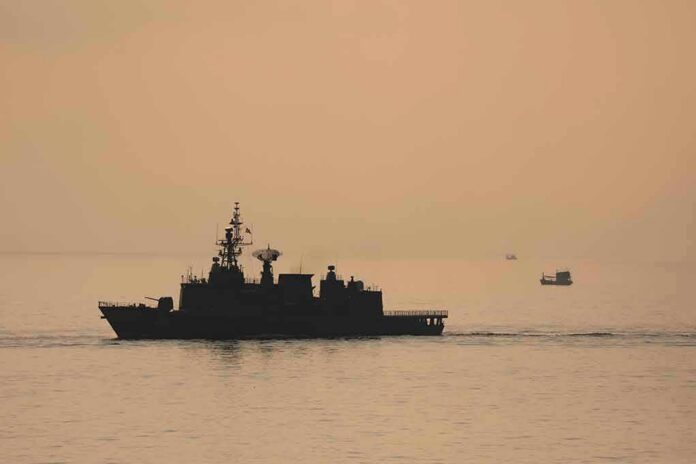
U.S. Central Command (CENTCOM) told reporters its naval effort in and around the Strait of Hormuz blocked more than $25 billion in Iranian crude exports this year. Reuters reported the estimate on November 7, tying the figure to an expanded campaign that now targets land routes. The dollar amount signals more than ships turned away. It claims deep economic impact on Tehran’s main cash source. For Americans, the number suggests Washington can still shape global flows without spiking pump prices.
Reporters at CNBC and the Washington Post echoed the CENTCOM estimate and described the effort as cutting into exports, not just harassing tankers. The command also stood up Task Force Iron Gate in Tampa. Its job is to restrict high-end arms movement and sanctioned cargo not only by sea but across borders and the Caspian Sea region. That move points to a bigger strategy. It aims to close off detours that often let sanctioned oil slip through under new paperwork or flags.
What shipping data shows on the water
Radio Free Europe/Radio Liberty, citing the firm Kpler, reported that Iranian oil on the water outside the blockade zone fell from 88.8 million barrels in mid-July to zero by mid-October, after last cargoes discharged in China. Benzinga, citing Vortexa and Reuters, reported Iranian seaborne crude exports dropped to zero in the second week of September from a two-week average near 230,000 barrels per day, and stayed there into early October. Those snapshots match the idea that ship movements slowed sharply.
These figures do not prove every sale stopped. They show what trackers could see. Tanker data firms depend on ship signals and satellite clues. Gaps can hide ship-to-ship transfers or dark fleet moves. Still, the sudden dip to “zero visible exports” across two sources is striking. It supports the claim that U.S. pressure disrupted normal tanker routes to Iran’s main buyer, China, during that window. The scale, timing, and convergence of the datasets explain why many outlets led with the disruption story.
The campaign expands beyond the sea lanes
Reuters reported that Task Force Iron Gate expands the mission inland to choke off sanctioned goods and advanced weapons along Iran’s borders and across the Caspian Sea. That answers a known sanctions problem: when navies block tankers, trade can shift. Cargo can move by rail, truck, or via third-country ports. By adding overland pressure, Washington is trying to seal leaks before oil or components pop up with new paperwork far from Hormuz. This reflects lessons from past sanctions evasion networks.
Policy veterans note that results on paper can mask ground truth. The government often reports big headline numbers. But detailed vessel-by-vessel proof may stay classified. CENTCOM’s $25 billion figure is an estimate, not a public ledger. Independent audits of the tanker datasets would help. Even so, the combined case is compelling on its basic point: visible seaborne crude flows from Iran dropped hard as the U.S. effort ramped up in late summer and fall.
Where the counterpoints land, and why they matter
The U.S. State Department has stated that Iran continues to export oil to global markets, which argues against any claim of a total stop in sales. A Stanford-linked analysis also says Iran’s exports rebounded after 2021 and relied on dark fleets, ship-to-ship transfers, yuan payments, and barter to keep trade alive into 2026. These points do not erase the visible collapse in tracked flows. They do warn that Tehran adapts, hides volumes, and uses discounts instead of open channels.
Oil Exports, Deterrence and Escalation Risks | 3/3
[VERIFIED – US DOCUMENT STATEMENT]
The November 18 USNAVCENT blockade update extends the declared enforcement measures to vessels receiving Iranian oil cargo through ship-to-ship transfers. Under the stated US position, such…— Littoral Insight (@LittoralInsight) November 20, 2026
Iranian officials say they will break the blockade and keep exporting oil, while reports describe budget workarounds if cash gets tight. For Americans across the spectrum, the split message sounds familiar. Washington touts a big win; Tehran claims endurance. The likely truth sits between. The U.S. operation appears to have squeezed Iran’s easiest sales hard and fast. But covert routes and non-cash swaps likely softened the blow. That tension will shape prices, risk, and policy next.
Sources:
globalsecurity.org, rferl.org, washingtonpost.com, reuters.com, benzinga.com, ua.news, criticalthreats.org, aljazeera.com, amp.dw.com