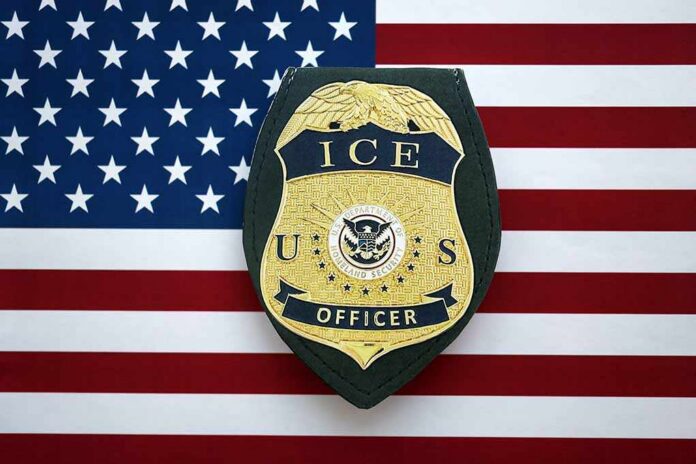
Grand jurors in Texas indicted a federal immigration officer after video showed his SUV cross a median and hit a fleeing man, sharpening a clash between local justice and federal power.
Story Snapshot
- Harris County grand jury indicted the officer for aggravated assault with a deadly weapon.
- Surveillance and body-camera video reportedly show steering toward the man before impact.
- Immigration and Customs Enforcement (ICE) rejects intent claims and calls the case political.
- The case spotlights when states can charge federal officers for on-duty conduct.
What the Indictment Says and Why It Matters
Harris County prosecutors announced an indictment for aggravated assault with a deadly weapon against Immigration and Customs Enforcement officer Mario Alberto Morales on October 30, 2026. The charge alleges he intentionally, knowingly, or recklessly injured Miguel Parra-Hernández by striking him with a vehicle. Prosecutors cited surveillance and body-camera videos, and a 911 call, as evidence presented to grand jurors. An indictment is not a conviction, but it signals jurors saw enough evidence to move the case forward.
Associated Press and local outlets reported that surveillance footage showed the SUV cross a median and move toward Parra-Hernández as he ran, followed by the impact. Prosecutors also played body-camera video that, according to the reports, showed sharp steering movements just before the collision. Parra-Hernández suffered multiple leg fractures and remains in federal custody at a rehabilitation facility, which underscores the severity of the event and the stakes of the charge.
Competing Accounts From ICE and the Defense
ICE leaders called the allegations of intent reckless and false and described the local case as political theater, pushing back on Harris County’s framing. Morales’s attorney said the collision was an accident and not a crime. He argued Morales tried to close distance during the pursuit and did not mean to hit Parra-Hernández. News reports quoted Morales saying, “I was coming in and I hit him with the car,” a statement that admits impact but not intent. These claims will be weighed against the videos in court.
Defense reports also said Morales told deputies he did not brake before the impact but denied he meant to strike the man. That detail, if accurate, could cut both ways at trial. The state may argue no braking supports its theory of intent or recklessness. The defense may argue split-second judgment under stress, obstacles in the lot, or focus on the fleeing target. The videos and any expert crash analysis will likely be key to resolve those rival readings.
Why This Case Taps a Deeper Fear About Power
This case mirrors a broader worry shared by many Americans: when government power grows, do basic rules still protect people equally? Here, a local jury said the evidence deserved a trial, while a federal agency dismissed the case as politics. That gap feeds a belief that insiders are shielded while regular people are not. The facts now have a forum. Jurors will see the videos, hear from experts, and test both sides’ claims against the law and common sense.
Beyond intent, the video-recorded sequence itself raises policy questions. Car chases carry heavy risks for officers, suspects, and bystanders. Research shows more pursuits often mean more crashes, and stricter rules can lower harm. Communities want safety and fair enforcement, not preventable injuries in parking lots. Clear pursuit rules, stronger training, and transparent reviews after collisions are steps that can reduce doubt and rebuild trust across the political spectrum.
State Charges Against Federal Officers: What the Law Allows
Texas can bring state charges against a federal officer if the conduct fell outside what was necessary and proper to carry out federal duties. Courts have long recognized that there is no blanket immunity. Instead, officers can claim Supremacy Clause immunity only when actions were authorized by federal law and reasonably tied to their job. That means this case could turn, in part, on whether a jury or judge sees the driving choices as within lawful bounds of duty.
Expect early legal fights over removal to federal court and immunity claims. Those steps are common in cases involving federal agents. Still, the center of gravity remains the videos and injuries. If the footage shows steering toward a fleeing person across a median, the state’s case may look strong to jurors. If the defense shows obstacles, blind spots, or split-second hazards, reasonable doubt could grow. For now, the record supports the collision and injuries; intent will be for the courtroom.
Sources:
cbsnews.com, apnews.com, abcnews.com, us.cnn.com, cbs12.com, fox26houston.com, statecourtreport.org, davisvanguard.org