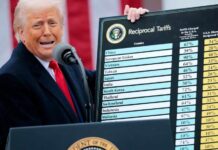
Trump’s sweeping tariffs on Taiwan’s screw exports are shaking U.S. supply chains and threatening small manufacturers, raising urgent questions about trade policy and American industry.
Story Snapshot
A new 20% tariff on Taiwanese screws threatens U.S. manufacturing and jobs.
Small and medium Taiwanese factories face closures and layoffs, risking economic distress.
American importers struggle with rising costs and disrupted supply chains.
Japan and South Korea gain competitive advantage due to favorable trade agreements.
U.S. Tariffs Spark Crisis in Taiwan’s Screw Industry
On July 31, 2025, President Trump signed an executive order imposing a 20% provisional tariff on Taiwanese screws and fasteners, effective August 7. Combined with existing trade barriers, this decision has pushed Taiwan’s leading export sector into turmoil. Small and medium-sized manufacturers in Taichung industrial parks, already squeezed by previous duties, now warn of factory closures and mass layoffs. U.S. importers, who shifted sourcing to Taiwan after 2018 tariffs on China, are facing rising costs and scrambling for alternatives. The shockwaves are being felt in both countries, with Taiwan’s government under pressure to secure relief and American manufacturers bracing for supply disruptions.
Factories in Taiwan, once a backbone of global screw supply, are reportedly being put up for sale as the new tariffs take hold. Industry groups and labor unions are sounding the alarm: without prompt government intervention, thousands of workers could lose their jobs and entire communities may face economic decline. The Ministry of Economic Affairs is exploring negotiations, but with Japan and South Korea benefiting from lower tariffs thanks to free trade agreements, Taiwan’s competitive edge is eroding rapidly. U.S. buyers, including major companies like Great Products and AlphaUSA, now face the dual challenge of higher prices and uncertain access to critical components—an issue that could slow down domestic production and raise costs for American consumers.
Trump’s Tariffs Are Damaging America’s Biggest Foreign Source of Screws
Taiwan has long been the top provider of screws to the United States. But its factories are struggling to survive under tariffs on steel and aluminum.@nytimes— Linda Hill (@bulldoghill) September 22, 2025
Trade Policy’s Unintended Consequences
The intent of reciprocal tariffs is to protect American industry and level the playing field against foreign competitors. Yet, the reality is more complex. After 2018’s tariffs on Chinese fasteners, U.S. companies leaned heavily on Taiwan, whose high-quality products filled the gap. Now, with fresh duties in place, American manufacturers are forced to either absorb higher costs or seek new suppliers, possibly from countries with favorable trade deals. Meanwhile, Taiwan’s lack of a free trade agreement with the U.S. leaves its exporters at a significant disadvantage. The result is a shake-up in global supply chains, likely to trigger both short-term disruptions and longer-term shifts in market share—potentially benefiting regional rivals and undercutting U.S. manufacturing stability.
Labor leaders in Taiwan, including the Chinese Federation of Labor, have warned of mass unemployment if the tariffs remain. The Taiwan Machine Tool and Accessory Builders’ Association highlights the structural risks: factory closures, lost competitiveness, and the risk of a permanent decline in the fastener sector. Some upstream steel producers in Taiwan view the tariffs as a way to rebalance trade, but the consensus among downstream manufacturers is overwhelmingly negative. U.S. policymakers argue the tariffs are needed to spur domestic growth, but critics caution that these measures may backfire, hurting American businesses and consumers through higher prices and supply chain bottlenecks.
Broader Impacts on U.S. and Global Manufacturing
The economic fallout extends beyond screws and fasteners. Other Taiwanese export sectors—including machine tools, ICT, and textiles—are also at risk, as protectionist measures disrupt established trading relationships. For American manufacturers, the rising cost and uncertain availability of imported components could slow construction, automotive, and technology production. Local economies in Taiwan’s industrial regions face rising unemployment and social distress, while U.S. importers must navigate a more unpredictable market. As global supply chains realign, the long-term implications may include a permanent shift in sourcing, with Japan and South Korea poised to capture greater market share at Taiwan’s expense.
Industry experts note that currency policy adjustments could provide temporary relief for Taiwan, but fundamental challenges persist. The lack of a comprehensive free trade agreement with the U.S. remains a critical weakness, especially as competitors enjoy lower tariffs and easier access. Meanwhile, the debate continues over the effectiveness of tariffs as a tool for protecting American jobs and industries. While some see them as vital for reindustrialization, others warn that such measures risk unintended consequences, including higher costs and instability for both producers and consumers.
Watch the report: Americans say Trump’s tariffs are causing the US to ‘collapse from within’ | ABC NEWS
Sources:
Tariffs on screws are already hitting manufacturers – FastBull
Trump’s tariffs and Taiwan’s fastener industry – Fastener World