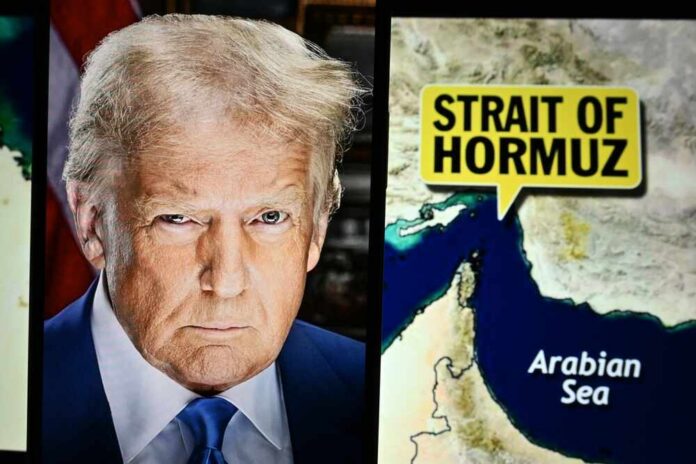
Trump’s 48-hour ultimatum to Iran over the Strait of Hormuz is putting “America First” voters in a familiar bind: pay more at the pump, or slide into another war that was supposed to end.
Quick Take
- President Trump warned Iran that “all hell will reign down” if it does not reopen the Strait of Hormuz within 48 hours.
- The Strait’s disruption is intensifying global energy anxiety and could keep U.S. gasoline prices elevated.
- Reports indicate the conflict has entered roughly its sixth week, with U.S. operations expanding and aircraft losses being reported.
- MAGA-aligned voters and commentators appear split: some prioritize defeating Iran’s nuclear ambitions, while others reject another open-ended Middle East fight tied to Israel’s security.
Trump’s 48-hour deadline ties U.S. war aims to a global energy choke point
President Donald Trump used social media and a national address on April 4–5, 2026 to issue Iran a 48-hour ultimatum: reopen the Strait of Hormuz or face major escalation, including strikes on energy and infrastructure targets. Trump framed the demand as a way to end the crisis quickly and prevent Iran from gaining nuclear capability. The message also referenced earlier deadlines and was delivered as the conflict neared week six.
For conservatives focused on kitchen-table economics, the Strait of Hormuz is not an abstract map feature. It is one of the world’s most critical shipping lanes, carrying a large share of global oil, and disruptions have historically pushed fuel prices higher. Reporting from international outlets has described mounting anxiety among major importers and efforts to reroute shipments, but reroutes are limited and costly. That reality keeps pressure on the White House to force a reopening fast.
What’s confirmed, what’s contested, and what remains unverified in wartime claims
U.S. messaging has emphasized battlefield dominance, including claims that Iran’s naval and air capabilities have been shattered and that further destruction could follow if Tehran does not comply. At the same time, reports have described U.S. aircraft losses and ongoing searches for missing personnel, a reminder that even a stronger military can take hits. Independent verification of sweeping claims about Iran’s remaining capabilities is limited, and reporting has noted uncertainties in details and timelines.
Iranian statements, as cited in coverage, have rejected U.S. demands and promised to fight until the United States and Israel are “humiliated” or forced to retreat. That gap between public positions matters because it suggests the conflict may not end with one ultimatum or one wave of strikes. When war goals include both nuclear prevention and coercing a strategic chokepoint to reopen, the mission can expand quickly—especially if each side believes time and pressure favor them.
Why MAGA voters are divided—and why the split looks different than past GOP fights
Many Trump supporters spent years watching Washington fund foreign interventions while the southern border, inflation, and crime dominated life back home. That history is driving skepticism now, even among voters who support tough action against Iran’s nuclear program. The tension is simple: protecting U.S. interests and deterring adversaries is one thing; underwriting an indefinite conflict—especially one the public sees as entangled with Israel’s security calculus—is another.
The constitutional and practical questions a fast-moving escalation raises
Major escalation decisions put Congress, transparency, and accountability under stress. The Constitution gives Congress authority over declarations of war, yet modern conflicts often widen through executive action and rapidly changing battlefield realities. Conservatives who care about limited government and checks and balances are right to ask what the defined objectives are, what the off-ramps look like, and how the administration will measure success beyond “shock and awe” rhetoric and ambitious promises to finish quickly.
In the near term, the Strait’s status will influence energy prices, shipping insurance, and broader market volatility—costs that land directly on American families. In the medium term, aircraft losses, uncertain negotiations, and hardened positions on both sides could pull the U.S. deeper into a conflict that voters thought Trump would avoid in a second term. The key variable is whether reopening Hormuz becomes a narrow objective—or the trigger for an expanding campaign.
Sources:
‘All hell will reign down’: Trump gives Iran 48-hour ultimatum over Strait of Hormuz