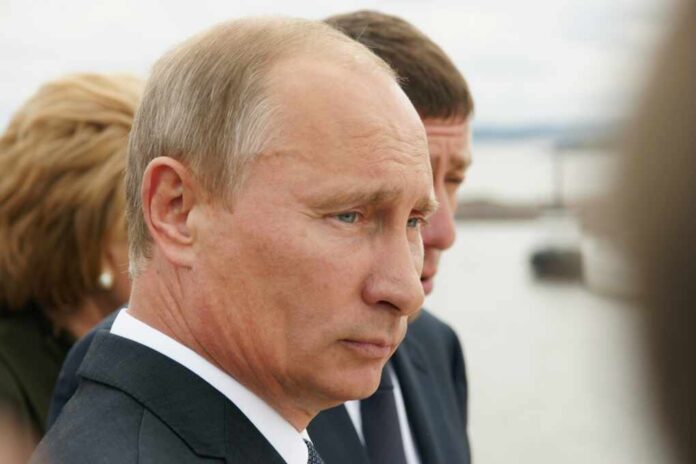
Putin is now publicly crediting Trump-led talks for a possible end to the Ukraine war—while setting conditions that could lock in Russia’s gains and leave Washington holding the bill.
Story Snapshot
- Vladimir Putin told reporters on May 9 that the Russia-Ukraine conflict is “coming to an end,” and he thanked the United States for facilitating talks.
- President Donald Trump announced a U.S.-brokered three-day ceasefire (May 9–11) alongside a proposed 1,000-for-1,000 prisoner swap.
- Ukraine signaled it is preparing logistics for the POW exchange, but a broader peace deal remains undefined and fragile.
- Putin suggested a Zelenskyy meeting could happen only after peace terms are finalized, a stance critics view as leverage rather than flexibility.
Putin’s “Coming to an End” Claim Ties Directly to Trump’s Ceasefire
Vladimir Putin’s latest remarks were delivered after Russia’s Victory Day events on May 9, when he told reporters the war in Ukraine is “coming to an end” and expressed gratitude to the United States for helping facilitate talks. The statement aligns with President Donald Trump’s announcement of a U.S.-brokered ceasefire running May 9 through May 11, paired with a proposed 1,000-for-1,000 prisoner exchange. The immediate question is whether this is a tactical pause or a real pivot.
Putin also framed the dispute as ultimately “between Russia and Ukraine,” even while publicly crediting Washington’s role. That framing matters because it signals a negotiating posture: accept U.S. mediation when it produces concrete outcomes, but insist the end state is defined by Moscow and Kyiv. In practical terms, that can reduce transparency for Americans who have financed major portions of the conflict response and now want accountability, clear objectives, and an exit ramp that protects U.S. interests.
The 1,000-for-1,000 POW Swap Could Be the First Real Test
The proposed prisoner-of-war exchange—1,000 captives from each side—stands out as the most measurable deliverable tied to the ceasefire window. Putin said Russia is awaiting Ukraine’s response, while Ukrainian leadership indicated preparations are underway for the swap’s logistics. If executed, the exchange would bring relief to thousands of families and could build momentum for additional confidence-building steps. If it stalls, it will reinforce skepticism that headline announcements can outpace realities on the ground.
Recent history is working against optimism. Earlier ceasefires around May 6–8 reportedly failed amid mutual accusations of continued attacks, and short-lived pauses have repeatedly collapsed since the war expanded in 2022. That context is why the current three-day ceasefire is best understood as a test of command-and-control and political will rather than proof of a settlement. A limited ceasefire can reduce casualties briefly, but it does not answer core disputes over territory, security guarantees, or sanctions.
Victory Day Optics and Scaled-Back Hardware Signal Pressure, Not Surrender
Russia’s Victory Day parade provided a highly symbolic backdrop for Putin’s comments. Reporting noted tighter security and a scaled-down display that omitted heavy weapons, an unusual choice compared with prior years. Those optics can be read in multiple ways, but they reinforce one point: Moscow is managing domestic messaging carefully while exploring off-ramps. For U.S. observers, the lesson is to separate pageantry from policy—because public signals do not necessarily reveal what’s being demanded behind closed doors.
Outside analysts have pointed to sustained battlefield costs and political fatigue as potential drivers of negotiations, but hard numbers and battlefield assessments remain contested across sources. What is clear is that both sides have incentives to claim they’re acting responsibly while blaming the other for failures. That dynamic can also bleed into U.S. domestic politics: Americans who feel elites mishandled foreign interventions will demand proof that any new “deal” is enforceable, verifiable, and aligned with constitutional priorities at home.
Putin’s Condition for a Zelenskyy Meeting Highlights the Core Risk
Putin indicated he is open to meeting Ukrainian President Volodymyr Zelenskyy in a third country only after peace terms are finalized. That sequencing is a major tell. Preconditioning a leader-level meeting on completed terms can be interpreted as an attempt to lock in leverage, narrow Kyiv’s negotiating space, and present the final package as a near take-it-or-leave-it arrangement. It also limits the chance for visible, face-to-face de-escalation that can help sell concessions to skeptical publics.
Putin: Russia's conflict with Ukraine 'coming to an end' https://t.co/wL7KkaNGCH #News #BreakingNews
— Aporia News (@AporiaNews) May 10, 2026
For the Trump administration, the near-term win is clear: active U.S. mediation produced a ceasefire window and a high-profile humanitarian proposal. The harder question is what comes after May 11. If talks move toward a “frozen conflict” where Russia retains territory, critics will argue the West rewarded aggression; if talks collapse, Americans may be asked to fund another cycle of escalation. Either way, voters frustrated with globalism and endless spending will demand that Washington define success in concrete terms—and stop treating the public like an afterthought.
Sources:
Putin, Russia fighting Victory Day parade under tight security
Is the Russia-Ukraine conflict ending? Putin shares new outlook
Putin says he thinks war in Ukraine coming to end as Trump-brokered 3-day ceasefire begins