Two hikers face life-altering injuries after a surprise bear attack on one of Yellowstone’s most popular trails, raising urgent questions about visitor safety in America’s most iconic national park.
Quick Take
- Two hikers attacked on Mystic Falls Trail near Old Faithful on May 4, 2026—the first bear injury of the year at Yellowstone
- A 28-year-old male and second victim airlifted to Eastern Idaho Regional Medical Center; conditions undisclosed by authorities
- National Park Service closed five trails, multiple campsites, and fishing areas; investigation ongoing with no bear yet located
- Eyewitness Craig Lerman discovered the first victim and called 911, potentially preventing further tragedy
- Incident underscores growing tension between park access and wildlife safety as visitation peaks and bears emerge hungrier after hibernation
A Rare but Preventable Crisis
Yellowstone National Park receives approximately 4 million visitors annually across its 3,500 square miles of wilderness. Despite this massive influx, bear attacks remain extraordinarily rare—averaging roughly one injury per year across the entire park. The May 4 attack on Mystic Falls Trail shattered the park’s safety record for 2026, occurring in early May when bears emerge from hibernation in a heightened state of hunger and aggression. The trail, a popular 3-mile loop leading to a 70-foot waterfall near Midway Geyser Basin, represents exactly the kind of high-traffic area where visitors expect relative safety.
The Attack and Emergency Response
According to witness accounts, the attack involved one or more bears on the Mystic Falls Trail near the iconic Old Faithful area. Maryland hiker Craig Lerman discovered the first victim—a 28-year-old male—calling for help after encountering bear prints and bloody personal items including a hat and watch. Lerman immediately called 911 and provided first aid while emergency services responded. Both victims were airlifted by helicopter to Eastern Idaho Regional Medical Center. The National Park Service has not disclosed the second victim’s age, the severity of injuries, or current medical conditions, citing privacy concerns.
Closures and Investigation Underway
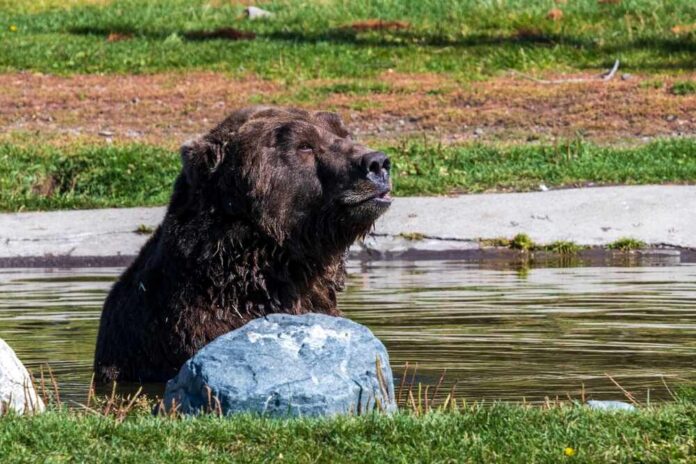
The National Park Service responded swiftly, closing Biscuit Basin, the Southern Fairy Falls Trailhead to Grand Prismatic Overlook section, Firehole River fishing areas, and multiple backcountry campsites. These closures remain in effect “until further notice” as investigators work to identify the bear or bears responsible. Eyewitness Lerman identified the attacker as a grizzly bear, though the National Park Service has not officially confirmed the species. No bear has been located or killed as of May 6, and authorities have provided no timeline for reopening affected areas.
Context of Rising Encounters
This attack marks the first bear-related human injury in Yellowstone during 2026, but it is not unprecedented. In September 2025, a 29-year-old hiker suffered serious injuries in a surprise grizzly encounter near Pelican Valley and Turbid Lake Trail. The last fatal bear attack in Yellowstone occurred in 2015 when Lance Crosby, 63, was killed near Lake Village. Wildlife experts note that grizzly bears are approximately twice as lethal as black bears, and early May presents heightened risk as bears seek food after months of hibernation. Rising post-COVID visitation from 2021 to 2025 has intensified human-bear interactions across the park.
2 hikers injured in bear attack at Yellowstone National Park
https://t.co/Vish4gvwAE— CBS Sacramento (@CBSSacramento) May 5, 2026
Safety Protocols and Visitor Responsibility
The National Park Service emphasizes three core safety measures: carrying bear spray, making noise while hiking, and maintaining a minimum 100-yard distance from bears. Bear spray, when deployed correctly, proves highly effective at deterring attacks. However, many visitors either fail to carry spray or use it incorrectly during surprise encounters. Mystic Falls Trail, despite its popularity, remains bear habitat where such surprises can occur. The NPS manages approximately 50 to 60 bear management areas throughout Yellowstone, with varying restrictions based on seasonal activity and food availability.
Broader Questions About Park Access
The incident reignites ongoing debates about balancing public access with wildlife protection. Conservation advocates argue that bears should never be preemptively killed for human presence in their habitat, while recreation groups push for enhanced signage, enforcement, and trail management. The National Park Service faces pressure to maintain both visitor experience and ecosystem integrity. If investigators determine the attacking bear was food-conditioned—habituated to human food—permanent trail restrictions may follow, potentially limiting access to one of Yellowstone’s most cherished destinations.
Sources:
2 hikers injured in bear attack along popular Yellowstone attraction – KSL.com
Two hikers injured by at least one bear in Yellowstone National Park – East Idaho News
Bear attack injures 2 hikers in Yellowstone National Park – AccuWeather
Help me! Help me! Hiker finds Yellowstone grizzly attack victim, calls 911 – Cowboy State Daily
Bear attack hikers injured Yellowstone National Park – CBS News
Bear attack Yellowstone National Park leaves 2 hikers injured – Fox News