A NATO member sharing over 800 miles of border with Russia is now calling for Europe to open dialogue with Moscow, raising questions about whether the West’s unified front against Russian aggression is beginning to crumble under the weight of economic strain and political fatigue.
Story Snapshot
- Finnish President Alexander Stubb declares Europe must eventually engage in direct political dialogue with Russia despite ongoing Ukraine conflict
- Stubb insists talks must be EU-coordinated rather than bilateral, signaling concern over fractured European responses
- Growing chorus includes Belgian Prime Minister and Estonian President, suggesting broader shift in European attitudes
- Push comes as U.S. foreign policy focus shifts away from Europe amid Middle East conflicts and Trump administration priorities
Finland’s NATO President Breaks Ranks on Russia Policy
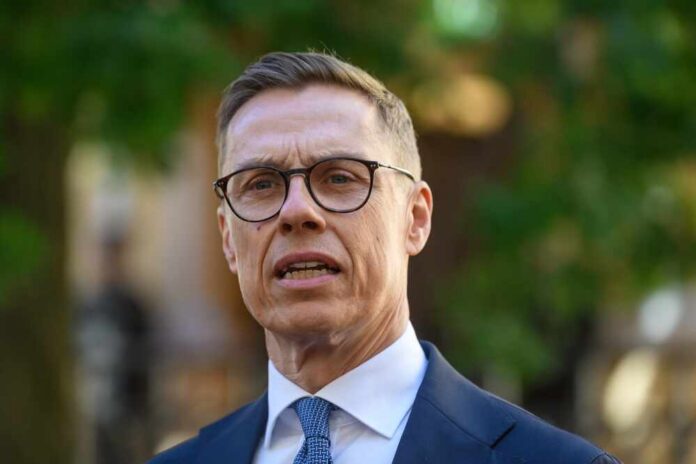
Finnish President Alexander Stubb stated at London’s Chatham House that Europe is “approaching the moment” when dialogue channels with Russia must reopen. Stubb, whose country joined NATO in April 2023 following Russia’s Ukraine invasion, emphasized that geographic reality makes engagement inevitable regardless of current hostilities. His comments mark a significant departure from the hardline stance previously maintained by frontline NATO states. The Finnish leader stressed that any talks must be coordinated through the European Union rather than individual nations pursuing separate agreements, reflecting concerns about Moscow exploiting divisions among European capitals.
European Leaders Echo Call for Pragmatic Engagement
Belgian Prime Minister Bart De Wever joined Stubb’s call in telling L’Echo that dialogue represents practical necessity rather than capitulation. Estonian President Alar Karis, whose nation shares historical grievances with Russia similar to Finland’s, has also advocated for joint preparation among Baltic and Nordic allies for eventual negotiations. The alignment of these leaders from countries with direct security concerns about Russian aggression suggests a pragmatic reassessment of Europe’s long-term strategic position. Former Finnish President Sauli Niinistö reinforced this position arguing that Europe cannot indefinitely avoid engagement with its largest neighbor.
Shifting Geopolitical Realities Drive Policy Reconsideration
Stubb’s push for dialogue coincides with what he described as emerging “world disorder” characterized by U.S. retrenchment from European affairs and escalating Middle East conflicts. In an interview with Estonian broadcaster ERR, Stubb noted that American delegation of Europe-Russia diplomacy has effectively stalled, partly due to conflicts in Iran drawing Washington’s attention elsewhere. The Finnish president told Italian newspaper Corriere della Sera that if U.S. policy priorities diverge from European security interests, the EU must be prepared to initiate talks independently. This reflects growing European anxiety about relying on American security guarantees under the Trump administration’s “America First” doctrine.
Ukraine Support Continues Despite Dialogue Advocacy
Stubb has maintained support for Ukraine even while advocating eventual Russian engagement, backing measures against Russia’s shadow fleet of sanction-evading vessels and supporting continued military aid. This dual approach attempts to balance immediate security assistance with longer-term diplomatic realism. The Finnish leader participates in the “Coalition of the Willing,” a Nordic-Baltic group coordinating defense policy and preparing frameworks for potential negotiations. However, Ukrainian officials view premature dialogue as potentially legitimizing Russian territorial gains, creating tension between frontline NATO members and the conflict’s primary victim. Kremlin spokesman Dmitry Peskov stated that Moscow remains open to talks but claims Europe has not reciprocated genuine interest.
Finland President Stubb Says ‘It’s time for Europe To Start Talking With Russia’
READ: https://t.co/IyMqPF3xdE pic.twitter.com/bHrSN5RHrX
— The Gateway Pundit (@gatewaypundit) May 11, 2026
Political and Economic Pressures Mount on European Unity
The growing support for dialogue reflects deeper fractures within the European Union between nations prioritizing sanctions enforcement and those facing severe economic consequences from prolonged confrontation. Finland’s 830-mile border with Russia creates unique vulnerability that colors Stubb’s pragmatism, as permanent hostility with such a neighbor presents long-term security and economic challenges regardless of NATO membership. Energy costs remain elevated across Europe due to sanctions cutting off Russian natural gas supplies, generating public frustration that nationalist and populist parties have exploited. Critics warn that dialogue signals without concrete Russian concessions on Ukraine could weaken sanctions enforcement and embolden Moscow’s aggression. The debate exposes fundamental questions about whether European governments serve their citizens’ immediate economic interests or maintain costly commitments to abstract principles of territorial integrity and international law.
Sources:
Finnish President Joins Growing Chorus for Reopening EU-Russia Dialogue – Hungarian Conservative
Stubb says Europe-Russia dialogue to happen eventually – TASS
Finnish President Stubb Envisions Potential Resumption of Europe’s Dialogue with Russia – News.by