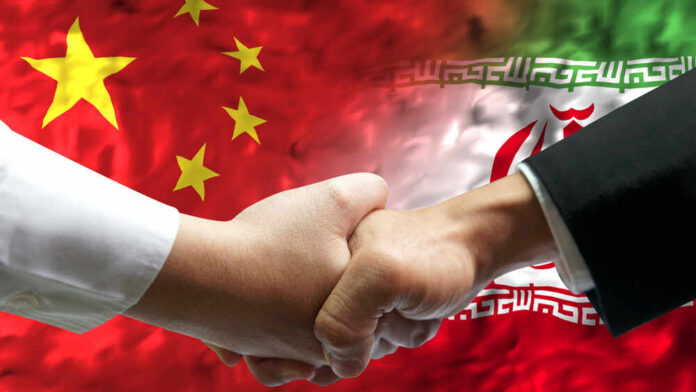
A U.S.-seized Iranian cargo ship near the world’s most important oil choke point has turned into a high-stakes test of whether Beijing is quietly helping Tehran—or whether Washington is being dared to prove it.
Quick Take
- U.S. forces seized the Iranian-flagged cargo ship Touska on April 19 in the Gulf of Oman near the Strait of Hormuz, and inspectors have not publicly confirmed what was onboard.
- President Trump said the vessel carried a “gift from China” for Iran, but he did not publicly specify the cargo or present evidence in his remarks.
- China’s Foreign Ministry denied the allegation and warned against “false association and speculation,” while also criticizing the U.S. interception in a “sensitive and complex” region.
- The incident lands amid U.S.-China tariff tensions and an expiring U.S.-Iran ceasefire window, raising the risk of escalation at sea and in markets.
Seizure Near Hormuz Puts Maritime Enforcement Back in the Spotlight
U.S. forces seized the Iranian-flagged cargo ship Touska on April 19 in the Gulf of Oman near the Strait of Hormuz, a narrow corridor that carries a major share of global energy shipments. The interception fits into the administration’s broader effort to block weapons transfers and other sanctioned flows into Iran. The ship remains in U.S. custody while its cargo is examined, but the contents have not been disclosed.
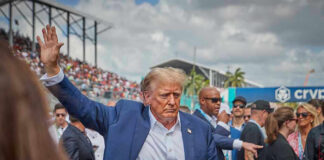
President Trump amplified the stakes on April 21 by telling CNBC the ship contained a “gift from China” for Iran, language that suggests military or weapons-related material without pinning down specifics. That vagueness matters because enforcement actions at sea depend on facts that can be documented, not just insinuations. If inspectors ultimately confirm prohibited cargo, the seizure becomes a concrete deterrent; if not, the episode risks becoming another fog-of-war political fight.
China Denies Any “Gift,” Warns Against Using the Claim as a Tariff Pretext
China’s Foreign Ministry responded the same day, denying the allegation and rejecting what it described as speculation and false linkage. Beijing’s position, as reported, is that the seized vessel was a “foreign container ship,” and it framed the U.S. action as “forced interception” in a region it called sensitive and complex. China also warned it would take countermeasures if the claim was used as a pretext for additional tariffs, widening the dispute beyond security into economics.
Those dueling narratives—Washington hinting at illicit support and Beijing demanding proof—are not just messaging. They shape whether allies, shipping insurers, and neutral states see the U.S. as enforcing legitimate restrictions or as pushing unilateral power in international waters. The administration’s challenge is straightforward: disclose enough verified information to justify the seizure without compromising intelligence sources. China’s challenge is equally clear: explain why an Iran-linked ship reportedly traveled a route tied to Chinese ports.
What Shipping Data and Intelligence Claims Suggest—And What They Don’t
Shipping and route details indicating the Touska made multiple stops in Zhuhai, a major port in southern China, before transiting through Southeast Asia toward Iran. That alone does not prove a weapons shipment, but it does raise a practical question: what kind of cargo would motivate a vessel to “run the blockade,” as one maritime transparency expert suggested. The same analysis cautioned the origin of any suspicious cargo remains unknown.
U.S. intelligence assessments that China was preparing to deliver air defense systems to Iran within weeks, but that claim has not been publicly confirmed as connected to the seized ship. This distinction is crucial for public trust. Conservatives and liberals alike have grown skeptical of government narratives after years of selective disclosures and politicized briefings. If officials expect the public to accept tougher enforcement and higher risk at sea, they will need verifiable facts, not just strategic ambiguity.
Why This Matters at Home: Energy Prices, Trade Friction, and Confidence in Institutions
The Strait of Hormuz is where foreign policy meets family budgets, because even a perceived escalation can ripple into shipping costs and energy markets. For conservatives already frustrated by inflation and high energy costs, any disruption tied to Middle East conflict or great-power tension is not an abstract concern. For liberals worried about inequality, price spikes hit lower-income households first. Either way, repeated crises that are heavy on rhetoric and light on evidence deepen the sense that elites manage risk poorly.
China denies US-detained ship in Middle East contained ‘gift’ for Iran https://t.co/DsiZcu6CZh pic.twitter.com/kCKLTWEjPR
— NA404ERROR (@Too_Much_Rum) April 22, 2026
The next decisive factor is what inspectors actually find and what the administration chooses to release. If the cargo is confirmed as dual-use components or weapons-related material, the seizure strengthens U.S. leverage against Iran and tests China’s claim of neutrality. If the cargo is legal commercial goods, the administration will face renewed scrutiny about escalation and credibility. With Trump scheduled to visit Beijing next month, both sides have incentives to posture—yet also strong reasons to avoid a provable misstep.
Sources:
“Thought I had understanding with Xi”: Trump says ship seized by US had ‘gift’ from China for Iran
China-linked route exposed after US seizes Iran-bound ship suspected of ‘dual-use’ cargo
China voices concern over US seizure of Iranian cargo ship (live blog update)
Trump says US caught Chinese ‘gift’ for Iran, testing red line