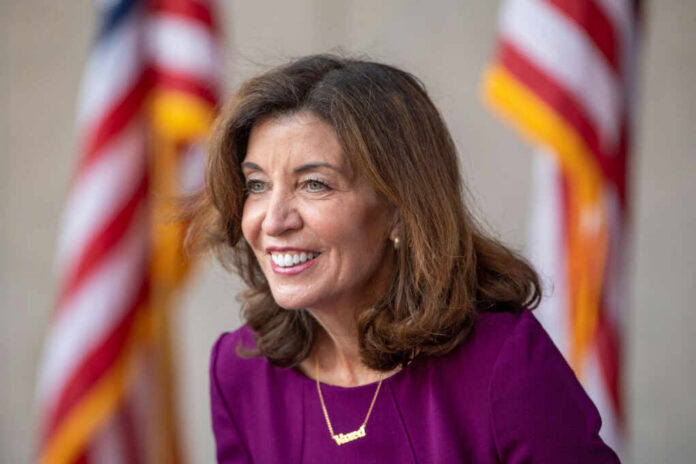
New York Governor Kathy Hochul just slammed the brakes on driverless robotaxis, killing a proposal that would have opened the door for companies like Waymo to operate autonomous vehicles without safety drivers—a stunning setback that exposes how liberal state governments continue to strangle innovation with red tape while tech companies pour billions into expansion.
Story Snapshot
- Governor Hochul withdrew her robotaxi legalization proposal from the state budget after legislators refused to support the framework
- Waymo invested heavily in lobbying New York officials after announcing a $16 billion funding round for nationwide expansion
- New York’s restrictive laws still require human safety drivers with hands on the wheel, blocking commercial driverless operations
- Waymo’s NYC testing permit expires March 31, 2026, leaving the company’s future in America’s largest taxi market uncertain
Hochul Caves to Political Pressure After Waymo Lobbying Blitz
Governor Kathy Hochul pulled her robotaxi proposal from the state budget on February 19, 2026, after months of intense lobbying by Waymo failed to convince legislators. Hochul’s spokesperson Sean Butler confirmed “support was not there to advance this proposal” following stakeholder discussions. Waymo had spent the previous six months meeting with state senators, assembly members, and budget director Blake Washington, hoping to secure approval for driverless operations outside New York City. The company announced a massive $16 billion funding round just days before Hochul’s withdrawal, underscoring the economic stakes of New York’s regulatory paralysis.
Burdensome Regulations Keep New York Decades Behind Innovation Leaders
New York law currently mandates human safety drivers maintain hands on the steering wheel for all autonomous vehicles, a requirement that has blocked commercial robotaxi services for years. Hochul’s withdrawn proposal would have amended traffic laws to permit driverless operations in areas outside cities with populations exceeding one million, requiring a $1 million application fee, $5 million financial security guarantee, state commissioner approval, and local government consent. These safeguards were designed to prevent an “open floodgates” scenario, yet even this measured framework proved too ambitious for New York’s risk-averse legislature. Meanwhile, Waymo operates commercially in Atlanta, Austin, Miami, Phoenix, Los Angeles, and the San Francisco Bay Area, providing 400,000 weekly paid rides without New York’s suffocating restrictions.
Empire State’s Hostility to Business Continues Longstanding Pattern
New York’s rejection of robotaxis mirrors a decade-long pattern of driving away cutting-edge industries. Cruise abandoned Manhattan testing plans in 2017, while limited pilots by Optimus Ride and Mobileye never achieved commercial unsupervised operations. Waymo secured a testing permit in August 2025 under former Mayor Eric Adams, allowing eight Jaguar I-Pace vehicles with safety drivers to operate in Manhattan and downtown Brooklyn through March 31, 2026. Current Mayor Zohran Mamdani’s stance on renewing that permit remains unclear, creating uncertainty for the company’s minimal foothold. Assemblymember Brian A. Cunningham’s alternative robotaxi bill sits dormant in the Committee of Transportation, illustrating Albany’s inability to embrace technologies thriving in Republican-led states.
Economic Opportunities Squandered as Bureaucrats Prioritize Control Over Progress
Hochul’s withdrawal blocks potential job creation in autonomous vehicle operations and technology sectors while denying New York residents access to transportation options millions of Americans already enjoy. Waymo cites rider demand for safety, privacy, and comfort as drivers of its expansion, targeting one million weekly rides by year-end 2026. The company expressed disappointment but pledged continued collaboration with legislators to deliver what it calls a “proven mobility option.” New York’s regulatory roadblocks protect entrenched taxi unions and drivers at the expense of consumers seeking modern alternatives. This decision reinforces the state’s reputation for prioritizing political patronage over free-market innovation, prolonging New York’s lag behind California and Arizona in autonomous vehicle adoption.
Sources:
NY scraps plan to legalize driverless robotaxis – Business Insider
New York hits the brakes on robotaxi expansion plan – TechCrunch