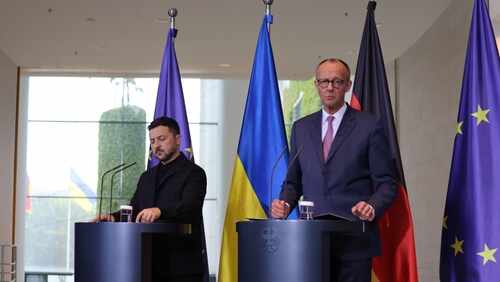
Germany’s new role as the West’s “control room” for Ukraine talks is accelerating decisions that could reshape Europe’s borders, U.S. commitments, and the price tag for taxpayers.
Story Snapshot
- German Chancellor Friedrich Merz hosted Ukrainian President Volodymyr Zelenskyy in Berlin for high-level talks tied to peace negotiations, military support, and Europe-wide security planning.
- Berlin’s meetings included coordination with U.S. negotiators and broader European partners, underscoring Germany’s rising influence in shaping a unified Western position.
- Merz and Zelenskyy stressed that pressure on Russia should continue while Ukraine’s defenses are strengthened, including air-defense support.
- Public statements emphasized ceasefire mechanisms, security guarantees, and Ukraine’s authority over any territorial decisions.
Berlin Talks Put Germany at the Center of Ukraine’s Next Phase
Chancellor Friedrich Merz’s meetings with President Volodymyr Zelenskyy in Berlin highlight how Germany is positioning itself as a central hub for coordinating Ukraine policy across Europe and with the United States. The most recent high-level engagement took place in December 2025, following an earlier Merz-Zelenskyy meeting in August 2025. The stated agenda focused on peace negotiations, military assistance, and a broader European security framework that is still taking shape.
Merz publicly framed the moment as an opening for a real peace process, while Zelenskyy stressed a core red line: Ukrainians must decide whether any territory is ceded or not ceded. That public stance matters because it narrows what negotiators can credibly offer and signals that any deal perceived as imposed from outside would face legitimacy problems in Kyiv. At the same time, confidential discussions with U.S. negotiators suggest an effort to align Western messaging before Russia tests for divisions.
Security Guarantees and Ceasefire Terms Drive the Negotiating Agenda
The most concrete theme running through the Berlin discussions is the demand for enforceable security guarantees tied to any ceasefire. Merz emphasized the need for substantial legal and material guarantees from the United States and European partners, arguing that a ceasefire has to be secured before territorial questions are addressed. That sequencing reflects a hard-earned lesson from past “paper promises”: without credible enforcement, ceasefires can freeze conflict without ending it, leaving Ukraine exposed and Europe destabilized.
The talks also emphasized that negotiating baselines may start from current contact lines, a detail that underscores how battlefield realities often shape diplomacy. For American readers, this is where limited-government instincts collide with strategic realities: security guarantees can deter future aggression, but they also risk becoming open-ended commitments if terms are vague. The full parameters of any guarantee package was not disclosed, leaving important questions about cost, duration, and enforcement unanswered in the public record.
Military Aid Focuses on Air Defense as Pressure Campaign Continues
Alongside diplomacy, Berlin’s meetings reinforced the continued flow of military assistance, especially air defense. Public documentation from the Ukrainian side referenced coordination that included two additional Patriot systems and missiles, a reminder that European security planning is increasingly tied to high-end capabilities traditionally associated with U.S. leadership. Merz and Zelenskyy also agreed that pressure on Russia should continue as long as Moscow takes no real steps toward peace, linking military support to a broader strategy of deterrence.
Sanctions, the “Shadow Fleet,” and the Reality of Economic Warfare
Diplomatic pressure also includes sanctions policy, with the European Union working on a 20th sanctions package and measures aimed at Russia’s so-called shadow fleet. That matters because sanctions are only as effective as enforcement and coalition unity allow. When restrictions leak through workarounds, citizens in democratic countries can end up paying more for energy and goods while adversaries adapt. The public materials indicate intent to tighten the screws, but they provide limited operational detail on how enforcement will be improved.
What This Means for U.S. Policy in Trump’s Second Term
From a U.S. perspective, the Merz-Zelenskyy meetings show European allies trying to present a coordinated front with Washington while negotiations remain fluid. With President Trump in a second term and Republicans controlling Congress, pressure is likely to remain high for measurable goals, clear burdensharing, and defined endpoints rather than blank checks. The research shows active coordination with U.S. negotiators, but it also confirms that key parts of the diplomacy remain confidential, making independent evaluation difficult for voters.
LIVE: Chancellor Merz meets Ukraine’s Zelenskyy in Germany #AssociatedPress https://t.co/AolfAzQTFk
— #TuckFrump (@realTuckFrumper) April 14, 2026
For Americans frustrated with elites and institutional failure, the Berlin track is a real-time test of whether Western leaders can deliver a durable outcome without drifting into indefinite commitments. Supporters of Ukraine will see Germany’s central role as a sign of European ownership. Skeptics will note that security guarantees and reconstruction plans can expand fast once bureaucracies lock them in. What is clear from the documented statements is that the next steps hinge on enforceable terms, unity among allies, and Ukraine’s say over its own territory.
Sources:
Press statement: Merz meets Zelenskyy
In Berlin, a meeting was held between Volodymyr Zelenskyy and Friedrich Merz