When a suspected highway gunman can vanish near a World Cup stadium while federal agents scramble for tips, it raises hard questions about whether America’s security state keeps us safe or just reacts after the damage is done.
Story Snapshot
- A multi-agency manhunt is underway for 22-year-old Oscar Sanchez‑Munoz, suspected in a deadly Kansas City highway shooting spree near World Cup games.
- The Federal Bureau of Investigation (FBI) is offering up to $25,000 for information leading to his arrest and conviction, warning he is armed and dangerous.[3]
- Police say the case spans at least six shootings across Kansas and Missouri, including a burned-out home and a failed standoff that let the suspect slip away.[1]
- The incident highlights deeper concerns many Americans share about broken public safety systems, media hype, and a government that seems better at press conferences than prevention.
What Police Say Happened Along the Kansas City Highways
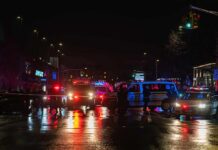
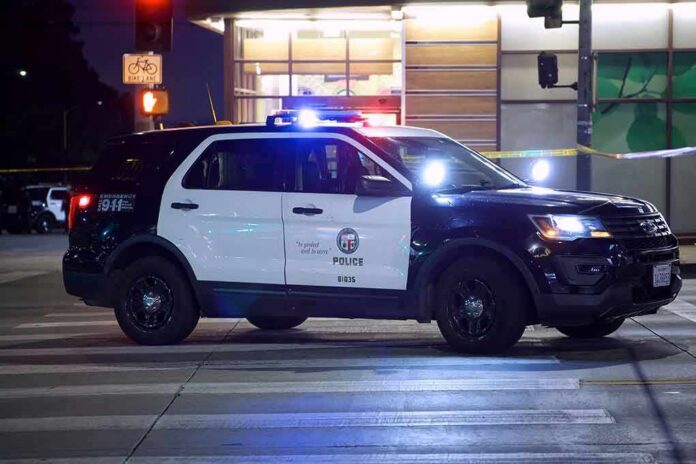
Law enforcement in Kansas City, Missouri, say a string of shootings hit drivers along Interstate 70 on a Tuesday night, leaving one person dead and four others hurt.[3] The attacks happened just miles from Arrowhead Stadium, where World Cup soccer matches were drawing huge crowds and global attention.[1] Police say drivers were targeted in quick succession from west to east, turning one of the region’s busiest corridors into a crime scene and raising fears about basic safety on the road.[3]
Investigators believe the same gunman is also tied to an earlier shooting on June 11 in Wyandotte County, Kansas, where shots hit a car carrying an adult and a child.[5] That incident led to a state warrant for criminal discharge of a firearm and an aggravated assault warrant with a $100,000 bond.[1] Taken together, authorities now say the suspect may be linked to at least six shootings across state lines, suggesting a cross‑border crime spree that regional agencies struggled to stop in time.[1]
Who Is the Suspect – and How Did He Get Away?
Federal and local officials have named 22‑year‑old **Oscar Sanchez‑Munoz** as the prime suspect in the Kansas City‑area shootings.[3] The FBI’s Kansas City field office describes him as a White and Hispanic man, about 5 feet 8 inches tall, 184 pounds, with brown hair, brown eyes, acne scars, and a tattoo on his right forearm.[1] Officials warn that he should be considered armed and dangerous and say anyone who spots him should call 911 rather than approach him.[2]
Police say that on Tuesday night, Sanchez‑Munoz barricaded himself inside a home in Independence, Missouri, east of Kansas City, triggering a standoff with heavily armed officers.[3] Around 12:45 a.m., the house caught fire; firefighters put out the flames, and then investigators, K‑9 teams, and state fire marshals searched the burned property but did not find him.[1] That failure, after a full tactical response, feeds long‑standing doubts about whether large, well‑funded agencies can deliver the basic competence citizens expect in moments of danger.
FBI Reward, Public Alert, and the Limits of “Manhunt” Justice
The FBI has now joined the hunt in full force, offering a reward of up to **$25,000** for information leading to Sanchez‑Munoz’s arrest and conviction in the Kansas City shootings.[3] Federal authorities rarely put this kind of money on the table unless they see a real ongoing threat, and they have amplified the message through a wanted poster and repeated public warnings.[2] Local police and the FBI are asking anyone with tips to contact 911, local crime‑stoppers, or an FBI office, underscoring how dependent the system is on ordinary citizens to fill gaps in government tracking.[2]
"The FBI’s Kansas City field office announced a reward of up to $25,000 for information leading to the arrest and conviction of Oscar Sanchez-Munoz, who is described as
a White and Hispanic man weighing about 184
⤴️⤴️⤴️⤴️ (WTF??) pounds."https://t.co/yU1k9aVwnx— Tony Fradelich (@TonyFradelich) June 21, 2026
At the same time, there has been no public release of a clear motive, detailed evidence, or a court ruling tying Sanchez‑Munoz beyond doubt to the crimes; he remains legally presumed innocent.[3] This tension is familiar: in high‑profile shootings, authorities rush to name suspects and reassure the public, while the actual proof arrives later, if at all. For many Americans on both the right and left, that pattern fuels distrust—of both violent criminals on the loose and of a justice system they feel has become opaque and politicized.
World Cup, Media Hype, and Fears of Copycat Violence
The shootings hit during World Cup matches at Arrowhead Stadium, a rare global spotlight on a Midwestern city already wrestling with crime and economic strain.[1] One of the wounded was an Uber driver reportedly taking fans to the game, and officers ended up driving the passengers to the match themselves, a small but telling picture of regular people caught in the middle while institutions scramble to respond.[5] The proximity to a major sports event raises the stakes far beyond Kansas City, because international visitors expect basic security that America’s leaders keep promising but rarely deliver in full.
Researchers have warned for years that nonstop media coverage of mass shooters can inspire copycats, especially when outlets fixate on the attacker’s face, backstory, and “count” of victims.[16] Studies in psychology and criminology suggest that intense, repeated coverage can provide a kind of script for unstable people who want fame or revenge.[17] Many Americans sense this problem already: they see networks jump on the latest tragedy for ratings while root causes—mental health crises, community breakdown, and a revolving‑door justice system—get far less sustained attention.
Deeper Questions: Public Safety, Trust, and a System on Autopilot
Events like the Kansas City manhunt touch nerves on both sides of the political aisle. Conservatives see yet another violent offender moving freely across borders while the government seems more focused on speech codes and international deals than on locking up dangerous criminals. Liberals see a system that only mobilizes this hard when headlines threaten national prestige and tourism dollars, while many urban neighborhoods live with daily violence and limited help. Both sides see a pattern: lots of press conferences, little lasting change.
Long‑term data on public mass shootings show that most attackers have a history of trauma, crisis, and prior criminal or violent behavior, and many leak their plans ahead of time.[20] That means these are rarely “bolt from the blue” events; warning signs tend to exist, but our patchwork of agencies and institutions often fails to connect the dots. Each new manhunt becomes another reminder that, for all the money spent and promises made, the federal and state systems still seem better at reacting to bloodshed than preventing it, leaving regular Americans to pay the price in fear, lost trust, and lives cut short.
Sources:
[1] Web – Manhunt underway for Kansas City suspect of mass shooting near World …
[2] Web – FBI offers $25,000 reward for arrest in Kansas City interstate …
[3] Web – Video FBI offers $25,000 reward for arrest of suspect in Kansas City …
[5] Web – suspected-kansas-city-serial-shooter-enters-third- day – Facebook
[16] YouTube – FBI searches for Kansas City shooting suspect
[17] Web – Does Media Coverage Inspire Copy Cat Mass Shootings?
[20] Web – [PDF] Mass Murder and the Mass Media: Understanding the Construction …