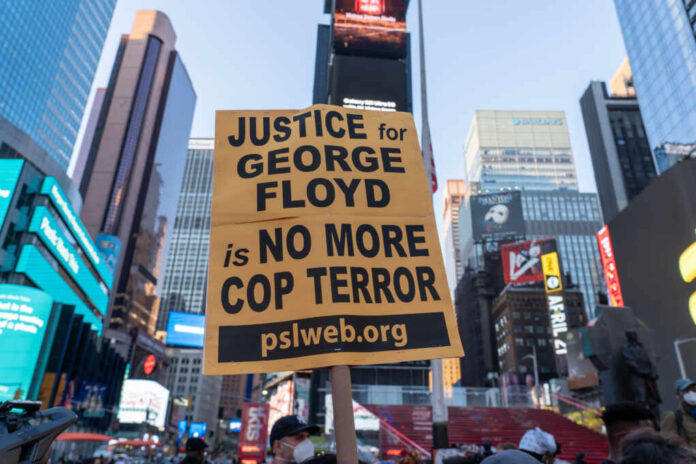
A high-stakes legal fight over Derek Chauvin’s conviction now threatens to reopen one of the most explosive cases of the last decade—and expose just how politicized justice became under the Left. Chauvin has filed a sweeping new post-conviction petition challenging his Minnesota murder conviction in George Floyd’s death. The filing attacks trial medical testimony, police-training claims, and jury instructions as legally flawed or misleading. While media chatter has suggested otherwise, both his state and federal convictions remain fully in force, but the case highlights how the Floyd era was used to push anti-police, anti-law-and-order agendas that many conservatives still distrust.
Story Highlights
- Derek Chauvin has filed a sweeping new post-conviction petition challenging his Minnesota murder conviction in George Floyd’s death.
- The filing attacks trial medical testimony, police-training claims, and jury instructions as legally flawed or misleading.
- Despite media chatter, Chauvin is not close to being freed; both his state and federal convictions remain fully in force.
- The case highlights how the Floyd era was used to push anti-police, anti-law-and-order agendas that many conservatives still distrust.
New Legal Challenge Targets the Foundations of Chauvin’s Conviction
Derek Chauvin’s new post-conviction petition in Minnesota goes after the core pillars that secured his 2021 conviction, arguing the original trial rested on unreliable specialist testimony and misdescribed law. The filing seeks to vacate his state conviction or, at minimum, obtain a new trial or evidentiary hearing. It contends trial doctors used non-standard methods to rule Chauvin’s restraint caused George Floyd’s death and that jurors received instructions that did not accurately reflect Minnesota homicide statutes.
The petition also challenges what jurors were told about Minneapolis Police Department training, especially the now-infamous knee-to-neck restraint seen worldwide. Senior MPD witnesses had insisted that Chauvin’s actions deviated from policy and training. The new filing counters with sworn statements from dozens of current and former officers claiming that similar neck restraints were in fact taught and considered consistent with department policy, directly contradicting the narrative that Chauvin went rogue that day.
Derek Chauvin is appealing his conviction of murdering George Floyd pic.twitter.com/KOygScPxTV
— ҒβΔ GΩDDΣSS✨ΔΠDRΣΔ (@FBAGoddess444) December 5, 2025
Media Narratives, Political Pressure, and the Question of a Fair Trial
The Floyd-Chauvin saga unfolded in a climate of nationwide riots, “defund the police” rallies, and corporate virtue signaling that many conservatives saw as weaponized guilt rather than sober justice. Prosecutors emphasized that Floyd died from restraint and compression, not drugs or heart disease, while defense authorities pointed to fentanyl, methamphetamine, and cardiac issues. Courts later rejected Chauvin’s claims that this environment denied him a fair trial, but the new petition argues that public hysteria and institutional pressures warped testimony and decision-making.
The filing leans on arguments amplified in the documentary “The Fall of Minneapolis” and the book “They’re Lying: The Media, the Left, and the Death of George Floyd.” Those works claim that political actors, legacy media, and activist groups drove a predetermined storyline: America as systemically racist, police as villains, and any dissenting specialist as suspect. For many on the Right, this case became a symbol of how quickly due process can bend when narrative and mob anger collide with a justice system already leaning left.
Strict Legal Reality: Why Chauvin Is Still Far from Walking Free
Despite growing chatter that Chauvin could soon be released, the legal reality is much tougher than headlines suggest. He already lost direct appeals through the Minnesota Supreme Court and the U.S. Supreme Court, making this a collateral attack under Minnesota’s strict post-conviction rules. Judges often treat such petitions skeptically, especially when issues could have been raised earlier. Even if an evidentiary hearing is granted, courts could ultimately decide the challenged testimony or instructions do not justify overturning the verdict.
Even more sobering for those hoping for a complete reversal, Chauvin is also serving a 21-year federal sentence after pleading guilty to civil-rights charges tied to Floyd and a separate incident. His state and federal sentences run concurrently at a low-security federal facility in Texas, with projected release dates in the mid-2030s depending on credit calculations. Overturning the state conviction alone would not automatically free him; the federal judgment would still stand unless separately attacked and vacated, a process not currently underway.
For conservatives who watched the Floyd unrest morph into calls to strip funding from police, loosen prosecution of violent offenders, and smear all officers as racists, Chauvin’s petition cuts to a deeper concern. If political pressure can reshape specialist testimony, rewrite accepted training practices, and steer jury instructions in a single politically charged case, the same machinery could be turned against anyone who stands in the way of progressive agendas. That fear is exactly why this new challenge, win or lose, will be followed so closely.
Watch the report: Chauvin Wants Out Of Prison After Conviction Of Murdering George Floyd
Sources:
- Derek Chauvin files for new trial, alleging faulty medical evaluation, jury instructions
- Ex-Minneapolis officer Derek Chauvin, convicted of George Floyd murder, files for new trial
- Derek Chauvin files appeal for second-degree murder conviction of George Floyd
- Minnesota Court of Appeals upholds murder conviction of Derek Chauvin for the death of George Floyd
- Chauvin files for new trial in George Floyd murder conviction
- Ex-Minneapolis officer Derek Chauvin seeks new trial in George Floyd case