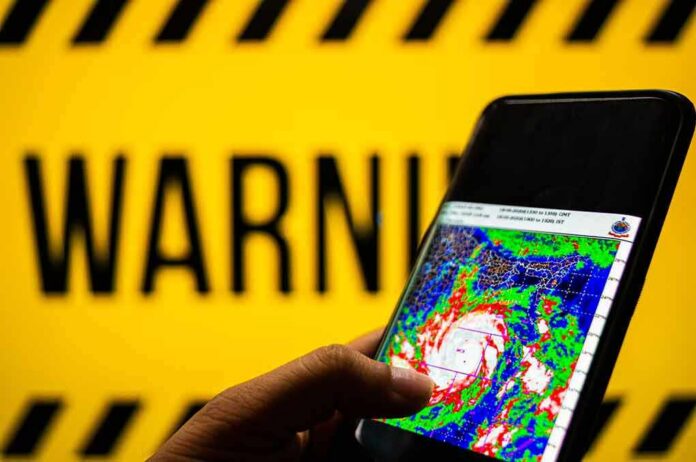
Hurricane Isaias regained strength and raced toward a Carolinas landfall with dangerous winds and storm surge, triggering focused warnings along the Southeast coast.
Story Highlights
- National Hurricane Center advisories warned of hurricane conditions and life-threatening storm surge for the Carolinas.
- Forecasts showed shifting watches and warnings as Isaias tracked up the Atlantic coast, not the northern Gulf Coast.
- Officials urged residents to prepare for coastal flooding, power outages, and fast-moving inland impacts.
- The case shows how changing forecasts can be misread when shared without location and time context.
NHC Forecasts Pinpointed a Carolinas Threat
National Hurricane Center forecasters said Isaias regained hurricane strength on the evening of October 9. They expected landfall that night with dangerous winds and storm surge along the Southeast coast, not the northern Gulf Coast. Advisories across several days documented warning areas and expected timing for coastal Florida, South Carolina, and North Carolina. Forecasters placed the storm center east of Charleston, South Carolina, as it accelerated toward the coast that night.
National Hurricane Center discussions flagged the risk of life-threatening storm surge for parts of northeastern South Carolina and coastal North Carolina. They cited inundation dangers along immediate shorelines and nearby waterways as the storm came ashore. This risk added to threats from strong winds, heavy rain, and possible tornadoes. Emergency managers urged residents to secure property, charge devices, and prepare for power outages. Utilities staged crews to restore service once winds dropped to safe levels.
Shifting Warnings Reflected Normal Forecast Updates
National Hurricane Center products showed changes as new data arrived. Along Florida’s east coast, a hurricane warning gave way to a tropical-storm warning as Isaias weakened there and moved north. Later, new aircraft data and model guidance supported a return to hurricane strength before landfall in the Carolinas. This update process is routine in tropical weather. Forecasts include time stamps because track and intensity can change over hours as the storm’s structure evolves.
Archived advisories, public discussions, and wind-probability products for Isaias span late September through early October 2026, showing a continuous record of forecasts and hazard messaging. These updates offered residents and local officials a common picture for planning evacuations, opening shelters, and deciding when to suspend bridge traffic. The steady cadence of advisories guided coastal preparations while keeping attention on the most likely impact zones.
Why Location and Timing Clarity Matters for the Public
Some social posts and videos later framed Isaias as a Gulf Coast landfalling hurricane. The official record instead tracked an Atlantic route with warnings for Florida’s east coast and the Carolinas. This kind of mismatch can happen when short clips strip out the location and time of advisories. Researchers and forecasters warn that such compression can blur the line between early forecasts and later conditions, and between prediction and confirmed impacts.
🌀🛢️ Hurricane Isaias Halts U.S. Oil Output
63% of Gulf of Mexico oil production shut down. Refinery operations also disrupted.
Markets in focus: Crude Oil, U.S. Energy Stocks#Oil #Energy #Hurricane #GulfOfMexico #Commodities
— HappyTrader42 (@HTrader42) October 10, 2026
The lesson for families and local businesses is simple. Check the latest National Hurricane Center advisory for your county and coastline before making a call. Look for the warning type, arrival time of winds, and surge risk. That habit helps cut through noise and keeps focus on the real threat where you live. Clear, time-stamped information supports faster decisions on boarding windows, staging generators, and moving people to higher ground.
Our hearts are with everyone impacted by Hurricane Isaias.
Food banks like Feeding the Gulf Coast and Second Harvest of the Big Bend are working alongside their communities.
We’re here for the road ahead.
Give now: https://t.co/A55TkOzUpt pic.twitter.com/RZdMCJXHM8
— Feeding America (@FeedingAmerica) October 10, 2026
Sources:
youtube.com, nhc.noaa.gov, prod-east-nhc.woc.noaa.gov, star.nesdis.noaa.gov