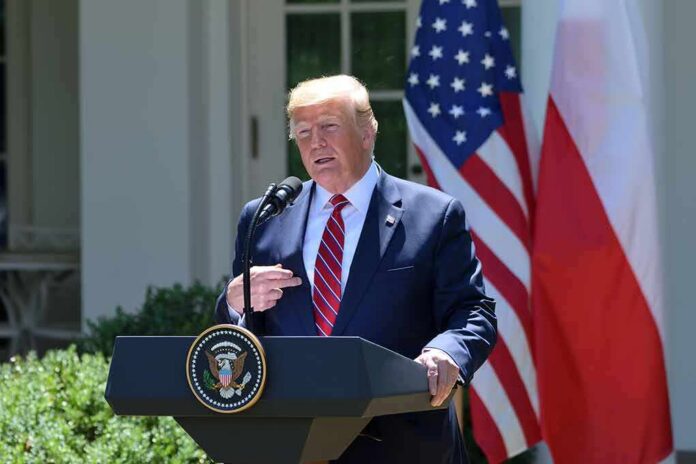
President Trump signed an executive order letting tax-free red-dyed diesel flow onto highways and deferring federal fuel taxes, a fast-track bid to cut freight and farm costs.
Story Snapshot
- Executive order temporarily allows off-road red-dyed diesel for highway use.
- Order defers the federal diesel excise tax through year-end, with review of next steps.
- White House directs Treasury, Transportation, and Agriculture to coordinate with states and industry.
- Move aims to ease diesel prices amid strain on trucking, farms, and supply chains.
What The Executive Order Does
President Trump signed the order in Grand Island, Nebraska, authorizing temporary highway use of red-dyed diesel and deferring the federal excise tax for the rest of the year. The White House says the Treasury Department will study ways to remove the obligation to repay deferred taxes. The action also tells federal agencies to work with states, industry, labor, and farmers to increase access to dyed fuel during the relief window. This shifts long-standing enforcement boundaries to address price pressure.
White House materials state the goal is to lower costs for Americans who rely on diesel for work and daily life. Diesel moves food, building supplies, and consumer goods. When diesel costs jump, shipping gets more expensive and prices rise at the store. The administration argues that broad, temporary access to tax-exempt fuel can ease those pass-through costs. News outlets reported the signing on stage, reflecting a push to message savings to truckers and farmers.
Why Red-Dyed Diesel Exists
Since the 1990s, federal rules have required red dye for untaxed diesel used off-road, like on farms or in construction equipment. The dye marks fuel that avoids the highway tax. Using it on public roads has been illegal, and states have long run enforcement to stop tax evasion. The current order carves a time-limited exception to that framework. The change uses executive direction and tax timing relief instead of the regular, tighter enforcement tools of past years.
Federal rules place the diesel tax at removal from the terminal rack, while dyed fuel leaves tax-free when properly marked. That clear line was designed to make cheating harder and audits simpler. Today’s policy pulls a different lever. It relaxes who can buy and use dyed fuel and delays when tax is due, aiming for quick relief. That is unusual compared to classic compliance cleanups, but it fits moments when leaders prioritize near-term costs over rigid lines.
Who Could Feel Relief First
Trucking fleets, farmers, and small contractors could see lower fuel invoices if suppliers pass through tax-free access and the deferral. The White House calls for coordination with state officials and suppliers to smooth distribution and keep fuel moving. Any price drop would depend on supply, local taxes, and how wholesalers adjust. Reporters note experts differ on how much pump prices will fall, but the order targets the biggest cost inputs in freight and farm work.
Trump expands access to tax-exempt dyed diesel to try to lower fuel costs https://t.co/Lsrbn35PCJ
— TIME (@TIME) October 6, 2026
Consumers could see slower price growth on groceries and goods if shipping costs ease. Families have faced years of higher bills from energy shocks and supply snarls. Many on the right blame green mandates and taxes; many on the left blame corporate power and weak wage growth. Both sides agree that Washington often moves slow while costs rise. This order signals a rapid-use tool the federal government can pull when everyday logistics face stress.
Limits, Timelines, And Next Steps
The relief is temporary. The order defers federal tax through year-end and asks Treasury to explore ways to remove or change repayment duties later. States still control their own fuel taxes and rules, and not all will match federal steps. The administration’s direction to Transportation and Agriculture seeks to reduce choke points that could blunt savings. If diesel markets stabilize, the federal government could tighten dyed-fuel rules again to normal guardrails.
Sources:
facebook.com, nytimes.com, cnn.com, wpxi.com, washingtonexaminer.com, govinfo.gov, comptroller.texas.gov, irs.gov, home.treasury.gov