A fire near a major UK rail hub exposed the fragility of critical infrastructure, stranding thousands of commuters and highlighting vulnerabilities that urban planners and rail operators can no longer ignore. A commercial building blaze in Chalk Farm, Camden, blocked the West Coast Main Line, disrupting power to rail lines serving major cities including Birmingham, Manchester, and Glasgow, and causing widespread delays during peak commuting hours. This incident forces a critical re-evaluation of current safeguards protecting Britain’s vital transportation networks in dense urban areas.
Story Highlights
- ower linCommercial building fire in Chalk Farm, Camden blocked the West Coast Main Line between London Euston and Watford Junction.
- 70 firefighters with 10 engines battled flames as roof collapsed, disrupting power to rail lines serving Birmingham, Manchester, Liverpool, and Glasgow.
- Thousands faced cancellations and delays up to 60 minutes on Friday morning, with Avanti West Coast trains held as far as Warrington.
- Fire’s proximity to overhead pes exposed critical weakness in UK’s busiest mixed-traffic rail corridor.
Friday Morning Inferno Cripples Major Transport Artery
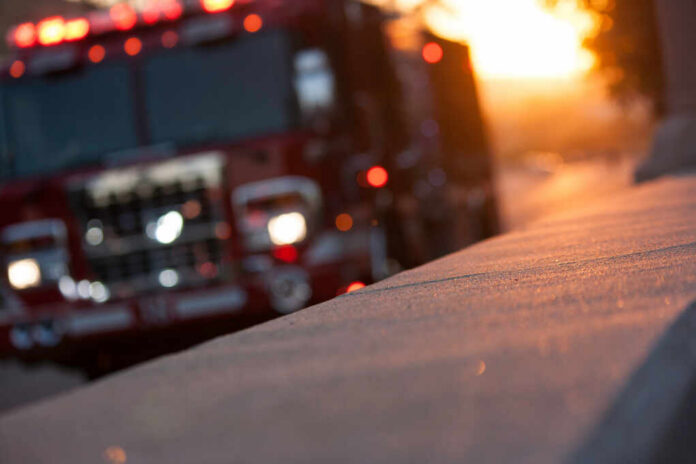
London Fire Brigade received emergency calls at 09:31 AM Friday after flames engulfed a single-storey commercial building on Regent’s Park Road in Chalk Farm, Camden. Ten fire engines and approximately 70 firefighters from Kentish Town, Holloway, and West Hampstead stations responded to the scene. The blaze rapidly spread to a neighboring property, causing the roof to collapse and generating thick smoke that reduced visibility across the densely built urban area. A 32-metre turntable ladder was deployed for elevated firefighting operations as crews worked to contain the escalating situation.
Fire blocks West Coast Main Line in London https://t.co/SKOruCzvz3 #fire #Infrastructure #London #Railfreight pic.twitter.com/l8rtfLxiqW
— RAILNEWSUK (@RAIL_NEWS_UK) January 30, 2026
Rail Network Paralyzed by Infrastructure Proximity
The fire’s location adjacent to the West Coast Main Line directly disrupted overhead power supply between London Euston and Wembley Central, blocking tracks to Watford Junction. This triggered immediate cancellations and delays exceeding 60 minutes for services operated by Avanti West Coast, London Northwestern Railway, London Overground, and Southern. Passengers traveling to Birmingham, Manchester, Liverpool, Glasgow, and other northwest destinations found themselves stranded during peak commuting hours. Avanti West Coast issued holds for intercity trains as far north as Warrington, demonstrating the cascade effect of a single localized incident on Britain’s rail backbone.
Commuters Bear the Brunt of Urban Vulnerability
National Rail authorized passengers to use alternative tickets and routes as the crisis unfolded, but thousands faced significant disruption to business travel, family plans, and daily commutes. Camden Council closed Adelaide Road between Winchester Road and Haverstock Hill to facilitate emergency response, adding local traffic congestion to the broader crisis. Chalk Farm residents contended with smoke hazards and potential evacuations while eyewitnesses reported dramatic scenes of the collapsing structure. The cause of the fire remained under investigation as of Friday morning, leaving questions about whether aging commercial properties in proximity to vital infrastructure pose systemic risks.
Critical Questions About Rail Resilience Surface
The West Coast Main Line has connected London to northwest England and Scotland since the 1830s, serving as an economic lifeline for millions. This incident exposes a troubling reality: Britain’s electrified rail systems depend on overhead power lines vulnerable to fires in adjacent structures, particularly in dense urban areas like Camden with mixed commercial and residential buildings. While no historical precedents matching this exact scenario emerged in available reports, the disruption underscores broader concerns about infrastructure protection in aging city centers. Rail operators and safety authorities must now confront whether current safeguards adequately shield critical transportation networks from foreseeable hazards, or if complacency has allowed dangerous gaps to persist.
London Fire Brigade emphasized that the cause remained unknown and urged the public to avoid the area as firefighting efforts continued. Network Rail coordinated with train operators to manage the blockage, issuing real-time passenger advisories through National Rail Enquiries. The collaborative emergency response demonstrated operational competence, yet the incident’s scale raises concerns about prevention rather than reaction. For commuters already frustrated by service reliability issues, this fire served as another reminder that infrastructure vulnerabilities directly impact their daily lives and economic productivity.
Watch the report: ‘Major disruption’ for passengers across UK as London building burns near railway tracks
Sources:
- Camden fire live updates as 70 firefighters blaze causing major train disruption – MyLondon
- Camden fire on London Euston train line – Investigation
- Fire near Euston station sparks major disruption to UK rail services | The Independent
- Fire delays West Coast Main Line trains from Euston