America’s constitutional order draws a bright, nonnegotiable line: the state may not enforce religious law, and no private creed overrides the supreme civil law of the land. The controversy erupts when that bedrock principle is fused to sweeping claims that “Sharia law” is poised to replace the Constitution—claims that, when examined, rely far more on rhetoric than on documented legal threats.
At a Glance
- The Constitution is supreme law; neither Islam nor any other faith can displace it in U.S. courts or government.
- Public remarks in Clarksville framed “Islamist extremists” and “Sharia law” as a national legal threat; cited evidence for an imminent imposition was not offered.
- Sharia for American Muslims typically denotes a personal religious-ethical framework; voluntary observance remains protected under the First Amendment.
- Conflating extremist ideology with ordinary religious practice obscures the real guardrails: constitutional supremacy and robust religious freedom for all.
What Was Said—and What It Actually Asserts
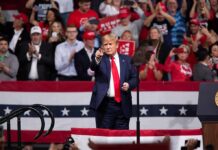
At a 2026 rally in Clarksville, Tennessee, Kid Rock introduced President Trump with a set of claims: that “Islamist extremists” aim to impose Sharia law in the United States; that no religious ideology can override the Constitution; and, in a provocative flourish, that America would “never be one nation under Mohammed.” Media coverage widely quoted those lines and noted the absence of concrete corroboration—no named organizations, bills, or court actions demonstrating a live effort to displace constitutional law with Sharia were presented.
Two distinct propositions are embedded in the speech. The first—constitutional supremacy over any religious code—is a settled principle of American law. The second—an imminent legal displacement by “Sharia”—is a factual claim that demands evidence commensurate with its scale. In Clarksville, that second claim was posited, not proved.
How U.S. Law Treats Religion, Including Sharia
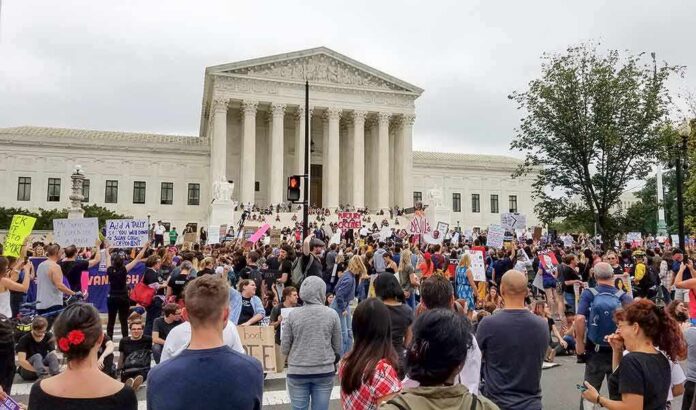
The First Amendment does two things at once. Through the Establishment Clause, it bars government from enacting or enforcing religious law; through the Free Exercise Clause, it protects individuals’ rights to live out their faith in personal life—prayer, fasting, diet, charity, family rites—so long as civic law is satisfied. That dual framework both rejects theocracy and secures pluralism. Congressional hearing materials summarizing mainstream constitutional analysis stress that for American Muslims, “Sharia” ordinarily denotes this voluntary, ethical-religious path, not a civil code to supplant the Constitution.
Constitutional-law scholarship presented to Congress is aligned on the same fault line: personal adherence to Sharia in one’s private life is protected religious observance; treating that observance as disfavored by the state would run afoul of both Free Exercise and Free Speech guarantees. The upshot is straightforward. Government may not establish or enforce religious law—Islamic, Christian, or otherwise—but it equally may not penalize citizens for privately following religious precepts that do not violate neutral, generally applicable laws.
Where the Real Legal Guardrails Are
Legal supremacy is not rhetorical; it is operational. Civil courts apply federal and state statutes and constitutions, not scripture. Private parties may agree to religious arbitration—Jewish beth din, Christian conciliation, or Islamic mediation—yet those decisions are enforceable in civil courts only if they comply with contract law and public policy. If an arbitral award conflicts with statutory rights or constitutional protections, a civil court will not enforce it. The bright line is compulsion by the state: the government cannot mandate religious conformity, and litigants cannot evade civil rights by cloaking violations in religious language.
This is why sweeping alarms about “Sharia takeover” need named mechanisms and actors. A credible legal threat would look like legislation establishing religious offenses, a court opinion elevating a religious rule over a constitutional right, or an executive policy privileging one creed’s dictates as binding on all. The reporting around the Clarksville speech identified none of these; it documented a political appeal, not a dossier of legal developments.
Rhetoric, Extremism, and Category Errors
There is nothing novel about warning against extremist ideologies that reject constitutional pluralism; democracies must take such rejectionists seriously. The category error is to treat a vast, internally diverse religious tradition as a monolith and to conflate violent or theocratic strands with the ordinary devotional life of millions. The policy cost of that error is real. It obscures the distinction between countering violent extremism or proscribing material support to terrorism—both well-established public objectives—and policing private religious observance, which is constitutionally protected.
Congressional materials capture this balance cleanly: the Constitution remains supreme; religious traditions cannot supersede civil law; and government may not target a religion for disfavor. Put differently, the American answer to both theocracy and religious persecution is the same: constitutionalism. Precision matters. If the concern is specific organizations advocating replacement of U.S. law, name them, cite indictments or documented plans, and describe the legal vector by which they would attempt it. If the concern is broader cultural change, say so, but do not mistake culture war for law.
Why This Debate Keeps Reappearing
Since the early 2000s, “Sharia” has functioned as a proxy term in American politics—standing in for disputes over identity, immigration, and security. Dozens of state-level “anti-Sharia” bills sought to bar courts from “considering” foreign or religious law, often redundantly, because courts already refuse to enforce religious norms that violate public policy. The recurrence of these measures signals perceived anxiety more than it reveals an operational legal risk. Meanwhile, academic and community research documents that American Muslims typically understand Sharia as a moral framework guiding everyday life, not a political program—evidence that reinforces the constitutional distinction between private observance and public law.
That cyclical pattern matters because it conditions public hearing: provocative phrasing can eclipse the defensible core (constitutional supremacy) and amplify the indefensible overreach (blanket suspicion of a faith community). The effect is a politics of heat over light.
How to Argue This Well—and Constitutionally
The disciplined way to engage is to separate four questions. First, reaffirm the nonnegotiable: government cannot enforce religious law, and civil courts apply civil law exclusively. Second, protect free exercise: private religious observance, including Sharia-informed life practices, is a right shared by all Americans. Third, identify threats with specificity: if an extremist group seeks to replace the Constitution, document the actors, mechanisms, and timeline. Fourth, police rhetoric: resist casting a billion-person faith as a legal menace; target violence and theocracy precisely, not devotion generally.
Done this way, the argument becomes stronger, not weaker. It defends a constitutional constant, rejects theocracy of any stripe, and sustains the pluralism that has long been the country’s competitive advantage. The rule of law does not need inflammatory framing to prevail; it requires clarity, fidelity to first principles, and evidence measured to the claims at hand.
Sources:
thegatewaypundit.com, nashvillescene.com, clarksvillenow.com, ground.news