A top federal prosecutor told Governor Gavin Newsom that new state laws will not stop federal election-fraud probes already underway in California.
Story Snapshot
- U.S. Attorney Bill Essayli said state laws cannot block federal election-fraud investigations and prosecutions.
- The U.S. attorney’s office confirmed “multiple” active election-fraud investigations in California months earlier.
- A federal prosecutor observed ballot processing in Los Angeles County as part of those efforts.
- The Justice Department later announced charges tied to petition signature schemes, showing cases are advancing.
Federal Prosecutor Says State Moves Cannot Block U.S. Election Cases
On September 19, 2026, U.S. Attorney Bill Essayli said no state law can prevent the United States Department of Justice from running lawful election-fraud investigations. He added that his office has started indicting election fraud in California and will keep investigating and prosecuting federal election crimes. His statement followed Governor Gavin Newsom signing new laws that add felony penalties for interference with state election systems and ballots, which his office framed as protections against outside meddling.
Essayli’s stance drew a sharp legal line: federal crimes are enforced by federal prosecutors even when states control how they run elections. That split has fueled months of tension. In June, the Associated Press reported that the U.S. attorney’s office in Los Angeles had opened multiple election-fraud investigations connected to California’s 2026 elections. The same week, political aides to Newsom criticized the unusual public comments during an active count, arguing prosecutors should not discuss open probes.
What Investigators Have Actually Done On The Ground
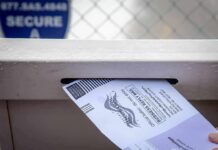
Federal officials did more than talk. Reporting described an assistant U.S. attorney visiting a Los Angeles County ballot processing center to observe how votes were counted. Essayli also said his office was working with the Federal Bureau of Investigation (FBI) on several probes in the region. Those steps show federal activity that is separate from California’s election administration, which remains a state function. They also signal that investigators were gathering facts before and after certification periods.
The Justice Department later announced charges in a multi-state action that included California. The department said six people were charged in California, Kansas, and Louisiana in cases tied to illegal voting activity or fraudulent voter registration schemes. Essayli said defendants in the California matter used stolen identities of registered voters to create fake signatures on ballot petitions, which is a federal crime when it crosses defined legal lines. That announcement shows at least one probe matured into formal charges.
Newsom’s Pushback And The Limits Of Each Side’s Claims
Newsom’s office has blasted the public disclosures about ongoing probes. In June, his spokesperson said credible prosecutors do not discuss active investigations while ballots are still being counted. The Los Angeles Times also reported that no credible evidence had been provided to show widespread fraud across the state, a key distinction between isolated crimes and system-wide corruption. Those points underline a narrow reality: federal cases can target specific schemes even if they do not prove mass fraud.
Essayli’s message, however, addressed a different question: who decides if a federal election-fraud case moves forward. His answer was clear. Federal law governs federal prosecutions, and state laws cannot shut them down. That claim tracks with long-standing practice. States manage voting and certification, but the Department of Justice prosecutes federal election crimes when it finds evidence that meets the law’s standards. His remarks signal that his office will act on leads even when political leaders object to the timing or the optics.
Why This Clash Matters For Voters Across The Spectrum
Conservatives worry that weak rules, loose oversight, and political pressure can hide misconduct. Liberals worry that heavy-handed federal actions can chill voting, target opponents, or disrupt state-run counts. This fight touches both fears at once. The federal cases show that real schemes can occur and be charged. At the same time, major outlets have noted the lack of proof of widespread fraud, which reminds readers that scale matters when judging election integrity.
For citizens who feel Washington and state capitals serve the powerful first, this story also highlights a deeper concern. Leaders trade accusations while investigators work the facts. The path forward is basic but hard: keep election systems open to careful federal criminal review when evidence exists, keep state processes transparent and orderly, and keep public claims tied to filed cases and proven facts. That balance protects honest voters and guards trust in results.
Sources:
pjmedia.com, ap.org, latimes.com, justice.gov, politico.com, californiaglobe.com, nypost.com