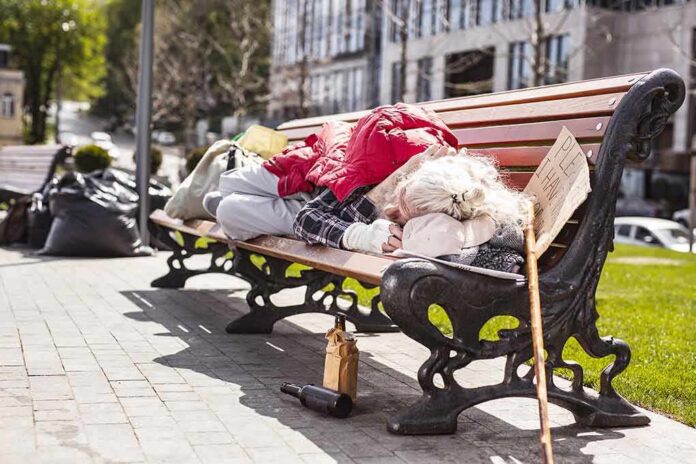
Trump’s homelessness order is now pushing states toward court-ordered treatment for people living on the streets, and that marks a sharp break from years of housing-first policy.
Quick Take
- Federal agencies have been told to help states expand civil commitment for some homeless people with mental illness or substance use disorders.
- The order also steers funding toward states that crack down on public drug use and encampments.
- Supporters say the policy can restore public order and move people into care.
- Critics say it risks criminalizing homelessness and widening involuntary treatment.
Federal Push Extends to State Courts
The White House order directs the Attorney General, with the Secretary of Health and Human Services, to seek changes that make civil commitment easier to use. It also tells federal agencies to help states and local governments adopt “maximally flexible” commitment and treatment standards. CBS News reported that, over the year after the order, federal agencies gave states a green light to expand civil commitment for homeless people with mental illness or substance abuse problems.
That matters because civil commitment can place a person in treatment without consent. The order covers people with mental illness who are a danger to themselves or others, or who are “living on the streets and cannot care for themselves.” That language gives states broad room to act, and it also leaves a lot of power in the hands of judges, hospitals, and local officials who decide who qualifies.
Funding Favors Enforcement-Heavy Policies
The order does more than talk about treatment. It also links federal support to bans on camping, loitering, and public drug use, while discouraging Housing First approaches that do not require treatment first. The National Homelessness Law Center said the directive calls on states to arrest and institutionalize people experiencing homelessness, while the National Board for Certified Counselors warned that it could criminalize homelessness.
That funding design helps explain why the policy has drawn such a strong reaction. In practice, it rewards states that use police, courts, and treatment systems together. The order also pushes federal officials to challenge court precedents and consent decrees that limit civil commitment, which signals a larger attempt to reshape the legal ground under homelessness policy, not just adjust one program.
Supporters and Critics Read the Order Very Differently
Supporters frame the policy as a public safety and treatment move for people who cannot care for themselves. NPR reported that the administration says some unhoused people need mandated care because they pose risks to themselves or others. A Utah summary of the order said it aims to restore civil commitment for certain people with mental illness who pose a risk to themselves or the public, or who cannot care for themselves in appropriate facilities.
Governor Shapiro recently used another national political fight to portray the Trump administration’s reconsideration of federal Olmstead guidance as an attack on people with autism, intellectual disabilities, and mental illness. I think Pennsylvanians deserve the rest of the…
— James Moore (@MooreForPA) July 24, 2026
Critics see something else. Harvard public health commentary called the order “a punitive approach,” while Prison Policy Initiative said it tries to disguise criminalization as care. The available reporting does not provide hard outcome data showing that civil commitment works better than voluntary housing and services for this group. What it does show is a policy shift toward coercion, with federal money and legal pressure aimed at making that shift easier to carry out.
Sources:
cbsnews.com, whitehouse.gov, ulct.utah.gov, kff.org, npr.org, nhchc.org, naacpldf.org, axios.com, hsph.harvard.edu, prisonpolicy.org, ldi.upenn.edu