
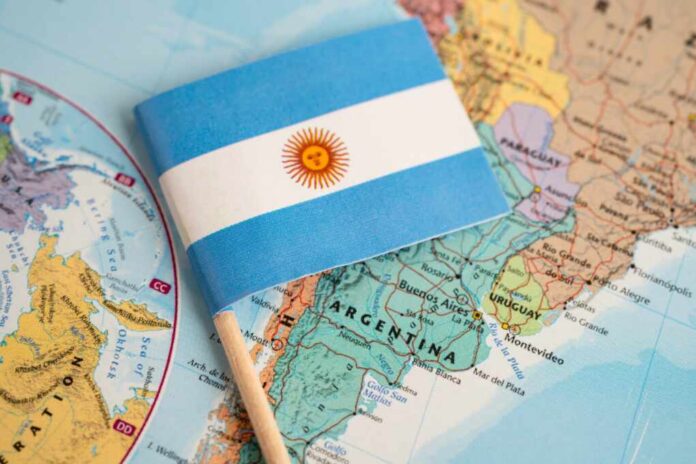
Argentina has reached a significant economic milestone, recording its lowest annual inflation rate in eight years, a drop largely attributed to the “shock therapy” economic policies implemented by President Javier Milei’s administration. In 2025, the rate fell to 31.5%, a notable decrease from previous triple-digit figures. While lauded as a success by supporters, the current rate remains high compared to global standards, and the aggressive austerity measures have prompted concerns about a potential recession and ongoing socioeconomic challenges.
Story Highlights
- Argentina’s inflation fell to 31.5% in 2025, the lowest since 2017.
- President Javier Milei’s reforms credited for the significant reduction.
- Despite improvement, inflation remains high compared to global standards.
- Further declines projected, but economic challenges persist.
Argentina Achieves Inflation Milestone
In 2025, Argentina recorded an annual inflation rate of 31.5%, the lowest in eight years, as reported by the Instituto Nacional de Estadística y Censos (INDEC). This represents a notable decrease from historically high levels, attributed to President Javier Milei’s economic policies. These policies, often referred to as “shock therapy,” have focused on devaluation, spending cuts, and deregulation to combat the nation’s chronic inflation issues.
Milei’s administration has been lauded by some as an “economic miracle,” successfully reducing inflation from over 100% under previous governments. Despite these advancements, the current rate remains significantly higher than the global average. Analysts suggest further declines to 25% by the end of Q1 2026, with a potential decrease to 19% by 2027. However, these projections depend heavily on continued policy effectiveness and economic stability.
ARGENTINA ACHIEVES LOWEST INFLATION IN 8 YEARS—A MILESTONE UNDER MILEI
In a significant economic achievement, Argentina closed 2025 with the lowest annual inflation rate in the past eight years.
President Milei's Economy Minister Luis Caputo announced that December's monthly… https://t.co/JgIMNilT7t pic.twitter.com/gvPg1LJAf1
— Argentina's Milei News 🇦🇷🤝🌎 (@ArgMilei) January 13, 2026
Historical Context and Current Challenges
Argentina’s battle with inflation dates back to the 1940s, characterized by periods of hyperinflation, such as the over 20,000% rate in 1990. Recent reforms have aimed to stabilize the currency and control fiscal deficits, a stark contrast to previous administrations’ reliance on subsidies and money printing. These changes have placed pressure on low-income households, particularly with food inflation at 28.2%, highlighting the ongoing socioeconomic challenges in the country.
The present economic strategy involves austerity measures that, while reducing inflation, risk potential recession. Critics argue that while inflation has decreased, the core rate remains elevated at 33.3%, indicating unresolved structural issues. The political implications of these economic conditions are profound, as they bolster Milei’s position ahead of upcoming elections, despite opposition from unions and Peronist factions.
Future Outlook and Opinions
Officials from Trading Economics forecast a continued decline in inflation rates, driven by the momentum of Milei’s reforms. However, the University of Michigan highlights potential recession risks due to the aggressive nature of these policies. As Argentina navigates these economic waters, the global community watches closely, considering the successes and shortcomings of the Milei administration’s approach to one of the world’s most persistent inflation problems.
While the reduction in inflation is a positive step for Argentina’s economy, the path forward remains fraught with challenges. Economic stability, social welfare, and continued reform implementation will determine the country’s ability to sustain these gains and achieve long-term prosperity.
Watch:¿POR QUÉ NO BAJA MÁS? La carne y los combustibles frenan la caída de la inflación
Sources:
Argentina’s inflation in 2025 fell to 31.5%, the lowest in 8 years
Argentina’s inflation in 2025 fell to 31.5%, the lowest in 8 years
Argentina Inflation Rate
An Analysis of Issues with the Argentine Economy Following Milei’s Inflation Reform